US Fed says inflation no longer main risk
Plus: Meta targets use of ‘Zionist’ in harmful social media posts; Joe Biden halts Democrat defections; French stocks tumble amid ongoing uncertainty.


Good morning. Here's what happened overnight and what you need to know today.

1.
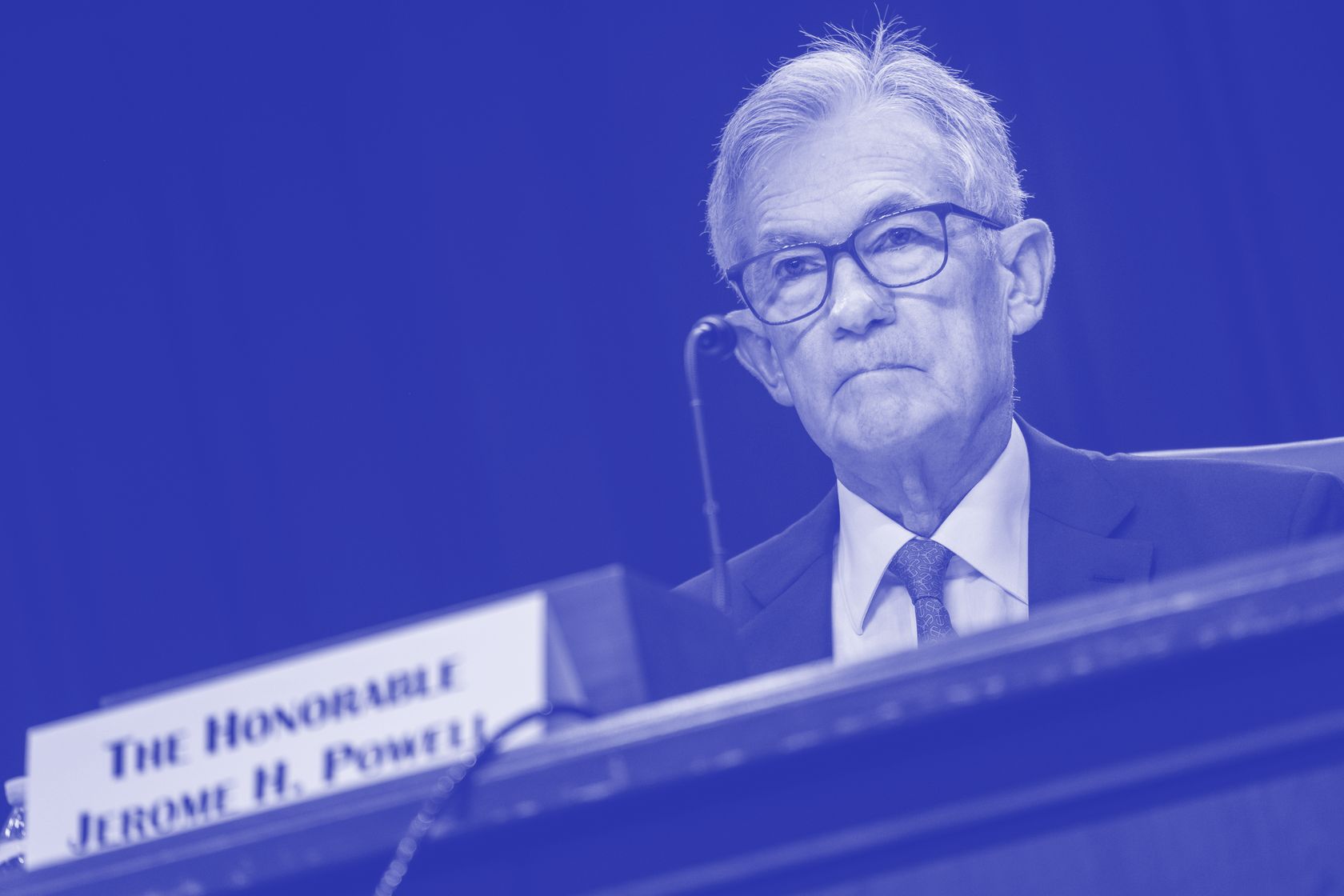
Fed’s balance: US Federal Reserve Chair Jerome Powell told Congress the US is “no longer an overheated economy” despite the inflation rate remaining above the 2% target, and that "more good data would strengthen" the case for central bank interest rate cuts. During a congressional hearing, Powell said the bank was shifting its focus from inflation risks to also considering the impact of high rates on employment, noting the labour market seemed “fully back at balance.” He cautioned, however, that premature cuts could stall inflation progress. “If we loosen policy too late or too little, we could hurt economic activity,” he said. “If we loosen policy too much or too soon, we could undermine the progress on inflation.” The Fed's preferred inflation measure rose 2.6% in the year to May, down from 7.1% in June 2022. Although unemployment remains relatively low at 4.1%, it has risen in the past few months. Powell also stressed the central bank’s decisions on rate cuts would be data-driven and independent of political influence as the 4 November election approaches. (Federal Reserve) (Capital Brief)(Reuters)(Bloomberg)
2.
Words policy: Facebook and Instagram parent company, Meta Platforms, has broadened its policy to remove posts using the word “Zionist” when the term is used to threaten or demean Jewish people or Israelis. In a blog post on Tuesday, the tech giant said while the word “Zionist” was often interpreted as supporters of a political movement, Meta recognised the term is sometimes used to perpetuate antisemitic stereotypes or incite harm. The term was previously only removed in narrow contexts. The updated policy now targets instances when the word is used with dehumanising comparisons, calls for harm, or denials of existence, even if the words “Israelis” or “Jews” are not explicitly mentioned. The change followed extensive consultations with academics and civil rights experts, the company said. It acknowledged challenges in policing its new policy, saying it cannot happen overnight. “There is a range of content that can potentially violate these policies and it will take time to train our reviewers and systems on these changes.” (Meta blog)(Bloomberg)
3.
Democrats divided: President Joe Biden temporarily halted public support defections from House Democrats, although the party remains divided on his candidacy following a troubling debate performance. In a series of meetings, including a two-hour session on Tuesday, House Democrats debated Biden's ability to defeat Donald Trump in the upcoming November election, but no consensus emerged on whether he should continue his campaign. Many lawmakers support Biden, but some, like Texas Democrat Lloyd Doggett, believe he should step aside to avoid risking his legacy and the party's future. Donors are also expressing growing concerns, with nearly 400 urging Biden to withdraw for the sake of democracy. Major party groups like the Congressional Black Caucus and the Congressional Hispanic Caucus remain supportive. Senate Democrats will have their own discussions on Tuesday, while the president hosts NATO leaders for a three-day summit where his mental acuity, energy levels and stamina will be scrutinised. (Bloomberg)(The New York Times)
4.
Wobbly markets: French stocks fell the most since mid-June as political uncertainty persisted following Sunday's inconclusive election results. The Cac 40 Index in Paris closed 1.6% lower, marking its largest decline since 14 June after President Emmanuel Macron's snap election announcement sparked market volatility. All sectors ended the day in negative territory, with software firm Dassault Systemes plummeting 5.5% after lowering its future outlook. Banks BNP Paribas and Societe Generale declined of 2.9% and 2.6%, respectively. The broader Stoxx Europe 600 dropped almost 1%, driven down by energy and industrial stocks. Germany's Dax fell 1.3%, while London's FTSE 100 dropped 0.7%. Meanwhile, US stocks remained relatively stable despite a slight dip in Treasuries, as Federal Reserve Chair Jerome Powell emphasised the need for more positive data to confirm inflation is on track to reach the 2% target. The S&P 500 and Nasdaq Composite edged higher to fresh intraday record highs following Powell's remarks to the Senate Banking Committee, only to pair back the modest gains and trade largely flat ahead of the close. (Financial Times)
5.
AI Videos: Captions, an AI-driven video editing startup backed by Index Ventures and actor Jared Leto, has secured USD60 million ($89 million) in funding, valuing the 2021-founded company at USD500 million. Index Ventures led the round, and was joined by existing investors Kleiner Perkins, Andreessen Horowitz and Sequoia Capital, along with new investor Leto. Founded by Gaurav Misra and Dwight Churchill, Captions allows users to create videos with photorealistic AI avatars, generate scripts and translate dialogue into multiple languages, making video production more accessible. But with AI video quality advancing swiftly, concerns about deepfakes have grown, particularly in a major election year. Over 10 million users have downloaded Captions, publishing nearly 3.5 million videos monthly, Misra told Bloomberg. The company plans to use the new funds to enhance its AI models and expand research and development. (Bloomberg)
6.
Taiwan techsplosion: Taiwan saw its fastest export growth since February 2022, fuelled by a dramatic increase in tech product shipments. Total exports in June climbed by nearly a quarter from the previous year, reaching USD39.9 billion ($59.2 billion), the Ministry of Finance said late Monday. Exports of computers and hardware skyrocketed over four times to USD6.6 billion due to high demand from emerging tech sectors. “Taiwan continues to ride the coattails of the artificial intelligence boom and cyclical tech cycle rebound, which will likely support exports in the coming months,” Gary Ng, a Natixis economist told Bloomberg. Exports of integrated circuits also resumed growth after recent declines. Shipments to the US surged by more 74% and those to ASEAN countries continued to rise, offsetting slower growth in China. Beatrice Tsai, the finance ministry’s chief statistician, said Taiwan is entering its peak export season, with July exports expected to remain stable or improve. (Bloomberg)
7.
Olympic vertiport: The French government approved the use of a barge on the River Seine as a vertiport for electric flying taxis during the Paris Olympics, despite opposition from Paris City Hall. Aeroports de Paris, the French capital’s airport operator, can build the vertiport near Austerlitz railway station, according to an official decree published Tuesday. European startup Volocopter does not have regulatory certification for commercial flights yet, but it expects to still conduct demonstration flights with its VoloCity two-seater aircraft during the games. The vertiport is allowed to operate until 31 December, with two flights per hour between 8 am and 5 pm, totalling 900 flights. However, it remains uncertain whether the flying taxis will indeed fly during the Olympics, as Paris City Hall vowed to take legal action against the authorisation, citing concerns about noise, emissions and excessive energy consumption, Bloomberg reported. (Bloomberg)
8.
Cattle to code: The South American country of Uruguay is emerging as a regional tech hub attracting founders from leading firms like online marketplace group MercadoLibre, digital bank Nu and software developer Globant, thanks to its favourable tax policies, pro-business regulations and stable conditions, according to a Bloomberg report. Uruguay’s IT exports, which have doubled to 4% of GDP in a decade, are exempt from corporate income taxes, drawing venture capital investments and tech giants like Microsoft and Google, who are expanding their presence there. The question is whether the 3.4 million people country, where cows outnumber humans 3-to-1, can offer enough qualified workers to sustain its growth. Uruguay is struggling to produce enough tech graduates to meet Big Tech’s demand and its high cost of living and small ecosystem deter junior talent from offshore. (Bloomberg)
