US growth slows to a weak 1.6%
Plus: Anglo American shares rise above BHP's price; Woodside set to keep investing in fossil fuels; TikTok tightens its control on US operations.
Good morning. Here's what happened overnight and what you need to know today.
Get Standup in your inbox Signed up to Standup
1.
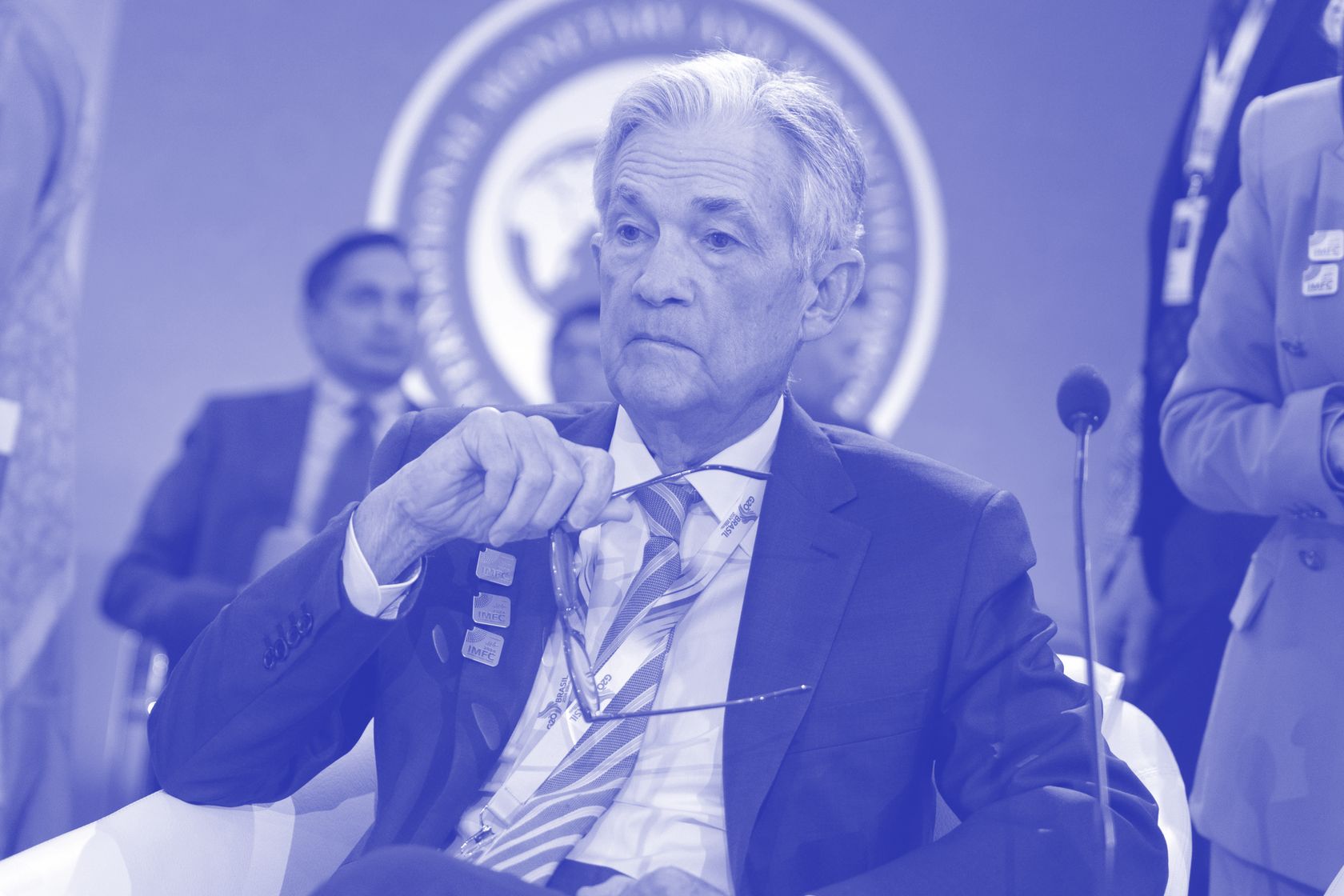
Snail's pace: The latest US economic data showed a significant slowdown in growth, with GDP expanding at a 1.6% annualised rate in the first quarter – far below expectations of around 2.5% and a sharp pullback from the 3.4% pace in the prior quarter. However, core inflation remained elevated at 3.7%, above the 2% target and defying hopes that the Fed's interest rate hikes would bring it down faster. This mixed data sparked a market selloff as investors pared back bets on the Fed cutting rates soon, despite the slower growth which would typically raise chances of such a move. The resilient labour market, high consumer spending and overall economic strength have thrown off projections, increasing concerns that sticky inflation could persist and complicating the outlook for additional Fed tightening. (Wall Street Journal)(Financial Times)
2.
Bid rise: Traders are bidding up shares of Anglo American above the implied value of BHP's £31 billion ($59.4 billion) takeover proposal, signalling expectations of a higher offer from BHP or the emergence of rival bidders. While the current premium over BHP's offer is modest at around 4%, takeover targets typically trade below the bid price to account for deal risks. Analysts and traders polled by Bloomberg expect mining giants like Rio Tinto and Glencore could enter the fray, or BHP may sweeten its bid, given Anglo American's attractive copper assets which are critical for the energy transition. The rally in Anglo American's stock price reflects the increasing demand and higher prices for copper amid supply constraints, with analysts noting BHP may need to pay a premium valuation for Anglo's copper business. (Bloomberg)

3.
Trumped up: The Supreme Court's conservative majority appeared inclined to narrow the scope of the criminal case against former President Donald Trump, who is accused of plotting to subvert the 2020 election. While not fully embracing Trump's arguments for absolute immunity, the justices expressed interest in broadly protecting the presidency going forward. Trump's lawyer argued for an extreme version of presidential immunity, suggesting that even ordering murders or staging a coup could be immune from prosecution. Justice Neil Gorsuch stated they were "writing a rule for the ages," and Justices Brett Kavanaugh and Samuel Alito suggested a ruling in Trump's favour could enhance democratic values by preventing prosecutions that could destabilise transitions of power. Justice Sonia Sotomayor, from the liberal minority, countered that a stable democracy requires good faith from public officials. The Court's ruling on whether Trump is absolutely immune from prosecution will be a major statement on the scope of presidential power and could determine whether his trial begins before the 2024 election, allowing evidence to be evaluated by jurors and voters. (The New York Times)(The Wall Street Journal)
4.
Activist rebuke: Woodside Energy plans to spend at least $18 billion over the next five years developing fossil fuel assets, despite growing investor opposition to its emissions reduction plan, with 58.4% of shareholders voting it down at this week's annual meeting. The energy major will spend an estimated $5.6 billion on the Trion deepwater oil project in the Gulf of Mexico, according to analysts at UBS, alongside a $5.5 billion commitment to the the Scarborough gas field off Western Australia and a handful. It will also spend on projects in Senegal, Bass Strait, the North West Shelf, and potential exploration and acquisitions. Major institutional investors like CalPERS, Florida's SBA, LGIM, Aware Super, AustralianSuper, HESTA and Allianz voted against the company's climate plan on Wednesday. (AFR)
5.
Diamond deal: Separate to its proposed takeover by BHP, Anglo American is contemplating selling its famed diamond unit De Beers, which has recently struggled amid lower commodity prices and challenging market conditions. The company recently held preliminary discussions with potential buyers, including luxury houses and Gulf sovereign wealth funds, about divesting the iconic diamond company it values at USD7.6 billion ($11.7 billion), though analyst estimates vary widely from $600 million to $4 billion. The potential sale comes as Anglo conducts a review of assets, with De Beers taking a $1.6 billion impairment charge in February due to the weak diamond market, which has seen rough diamond production decline amid uncertain economic conditions and slower growth in China. (Wall Street Journal)
6.
Iron fist: TikTok's Beijing-based parent company ByteDance has tightened control over the app's US operations in recent years, according to more than two dozen current and former employees speaking anonymously to the Financial Times. Despite TikTok executives claiming it is a separate "distributed" company, ByteDance has transferred staff from China to the US, including senior leadership, favoured hiring Mandarin speakers who can coordinate with counterparts in China, and managed out underperforming American workers through opaque performance reviews. Basic functions like content moderation and technical operations require coordination with Beijing. As tensions escalate with recently signed legislation to force a sale, insiders depict TikTok as deeply interwoven with ByteDance, overriding local leadership and prioritising alignment with Chinese operations as it pushes for rapid growth ahead of a planned IPO. (Financial Times)
7.
AI splurge: Mark Zuckerberg has vowed to make Meta the "leading AI company in the world", raising concerns among investors about escalating costs as he outlined plans to significantly increase spending on artificial intelligence infrastructure, models, and services over the coming years before generating much revenue from these new products. Despite Meta's revenue rising 27% in Q1 2024 to USD36.5 billion ($56 billion), shares plunged over 15% after hours as Zuckerberg hiked the capital expenditure guidance range to $37-$40 billion for 2024 and expenses guidance to $94-$96 billion, reversing his stance from 2023's "year of efficiency". While aiming to monetise AI through business messaging, ads and charging for large language models, the company argues the splurge on developing advanced AI capabilities like chatbots and wearables is necessary to keep pace with rivals like OpenAI, Microsoft, and Google in the intensifying AI race. (Financial Times)
8.
Muscle flex: The Abu Dhabi sovereign wealth fund ADQ, with USD199 billion ($305.4 billion) in assets under management, is using its investments to increase the UAE's "impact" abroad rather than purely seeking financial return. While over 80% of its capital is tied up domestically, it is making major deals in places like Africa, Turkey, and most notably providing USD24 billion to bail out Egypt in exchange for developing a coastal area there. It reflects a desire by the UAE to fill a geopolitical vacuum left by Saudi Arabia as it turns inward with its Vision 2030 agenda. ADQ's equity-style investments attempt to actively grow companies rather than just hold passive stakes, and administrators explicitly state expanding UAE influence is the primary goal. (The Economist)