US lifts Iran blockade as Vance tells Israel to ‘wake up’
Plus: Cheaper oil lifts Wall St, chipmakers; SpaceX plans USD20b bond sale: Bloomberg; Trump says Apple will build chips with Intel, shares jump.


Good morning. Here’s what happened overnight and what you need to know today.
1.
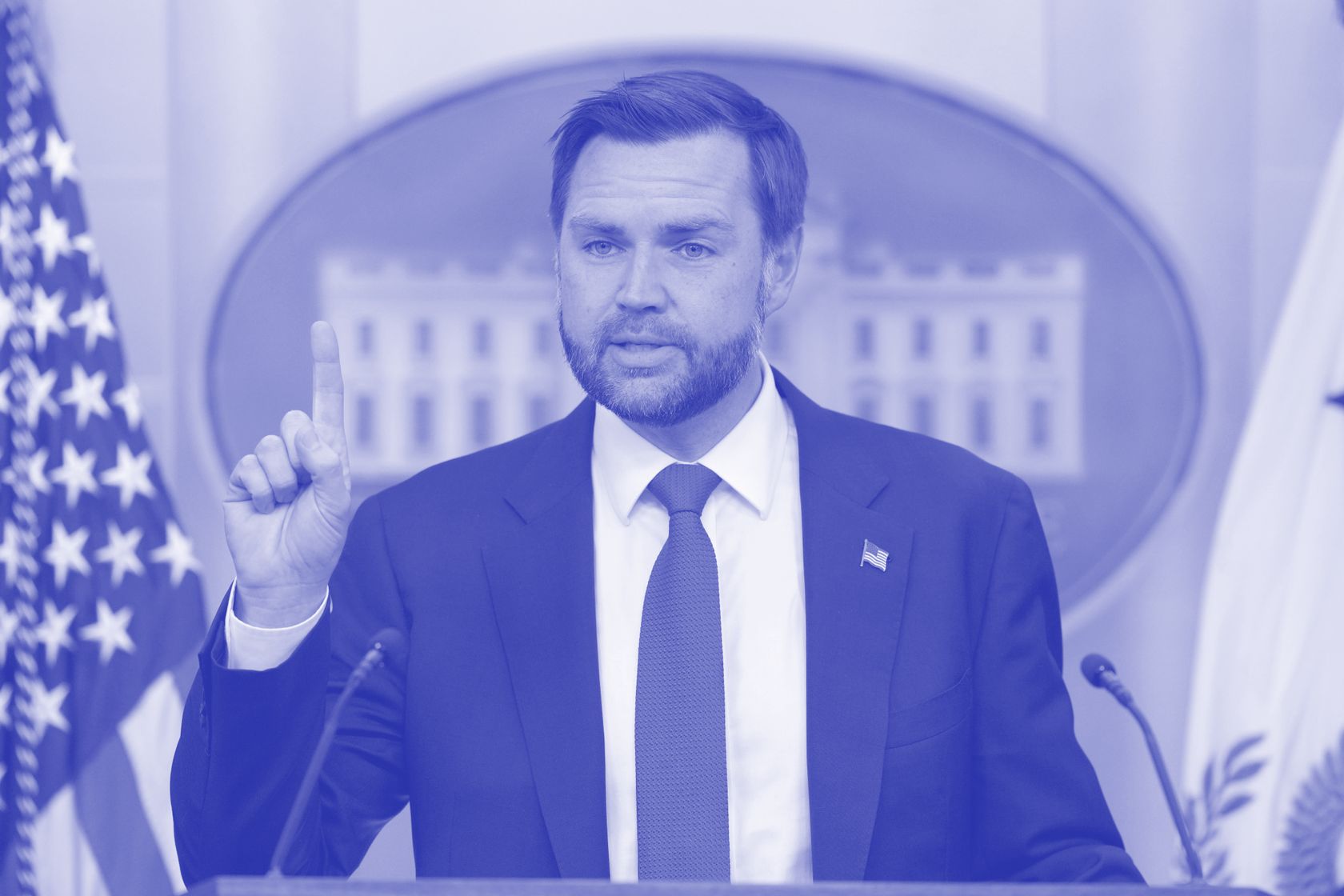
Open strait: The US lifted its naval blockade of Iranian ports and waived sanctions on Tehran, immediately allowing Iran to sell its oil freely and reopening the Strait of Hormuz, as a preliminary deal to end the war took effect. Iran will invite the UN’s nuclear watchdog to inspect its nuclear sites and begin identifying the locations of its enriched material, Trump envoy Steve Witkoff told US lawmakers in a private briefing, the AP reported. Meanwhile, Vice-President JD Vance, defending the agreement at a White House briefing, said the 60-day clock to negotiate Iran’s nuclear program had begun, and lashed out at Israeli critics of the deal. “Donald J Trump is the only head of state in the entire world who is sympathetic to the nation of Israel at this moment in time,” Vance said. He warned Prime Minister Benjamin Netanyahu’s cabinet that anybody in Israel who thinks their biggest problem is the US president needs to “wake up and smell the reality”. Vance also reminded the cabinet that two-thirds of the defensive weapons protecting Israel were built by Americans and paid for by US tax dollars. Israeli officials have criticised the deal for failing to curb Iran’s missile program and for constraining Israel in Lebanon. Iran’s supreme leader Mojtaba Khamenei, in his first response, said Trump had struck the deal “out of desperation” and that Iran would not submit to “excessive demands”. (BBC)(Reuters)(AP)(NYT)
2.
Risk off: Wall Street rallied as the new US-Iran deal eased inflation fears, with the S&P 500 climbing 1.08% and oil falling to its lowest level since before the war began in late February. Stocks joined bonds higher after the interim peace agreement took effect and the US declared an end to its naval blockade. A key gauge of chipmakers rose to a record, with Intel soaring after Trump said the firm would work with Apple to design and produce semiconductors domestically. Treasury yields fell after a jump the previous day driven by worries the Federal Reserve would need to raise rates to curb price pressures. SpaceX shares fell for a second straight day, after Bloomberg reported plans for a USD20 billion bond raising. Elsewhere, Accenture tumbled about 18% to its lowest since 2017 after trimming its revenue forecast, as investors fretted that AI is eroding its consulting business. (FT)(WSJ)(Bloomberg)(Reuters)
3.
Debt launch: Bloomberg reported SpaceX’s bankers are preparing to meet investors as early as next week to discuss a bond offering of at least USD20 billion. According to unnamed sources that spoke to the publication, the calls may begin on Monday. The satellite and AI conglomerate has told investors it has lined up investment-grade ratings from three bond graders for a debut launch, according to the report. Proceeds would refinance a USD20 billion bridge loan, which according to Bloomberg matures in September next year and makes up the bulk of SpaceX’s USD29.1 billion of long-term debt. Bank of America, Citigroup, JPMorgan Chase, Goldman Sachs and Morgan Stanley provided the bridge financing and are expected to run the deal, sources told the outlet. The financing follows SpaceX’s public debut last week that turned the loss-making company into one of the world’s most valuable public companies and Musk into the world’s first trillionaire. SpaceX shares fell 3.56%(Bloomberg)
4.
Core deal: Intel shares rocketed to a record after Donald Trump said Apple had agreed to work with the chipmaker to design and build semiconductors in the US. Confirmation from Intel, however, had not been public at the time of writing. “Apple has agreed to work with Intel to design and build its Chips in America,” Trump posted, without elaborating on the tie-up. Intel shares jumped as much as 11.87% to a record USD135.48, while Apple rose as much as 1.56%. Neither company has commented or expanded on the US president’s social media post. “I decided to help Intel because we need to design and build our Chips right here in America,” Trump said. Landing Apple would be a major win for Intel chief executive Lip-Bu Tan as he tries to attract foundry customers. Bernstein analyst Stacy Rasgon wrote in a research note that any early foundry relationship would likely be low-volume. The deal comes as a memory chip crunch forces device prices up, with Apple chief executive Tim Cook telling The Wall Street Journal that price increases are “unavoidable”. (Bloomberg)(WSJ)
5.
Cap in hand: The startup sector got its capital gains tax win yesterday, but big questions over eligibility, secondaries and holding periods are far from settled. Prime Minister Anthony Albanese and Treasurer Jim Chalmers backed down on contentious capital gains tax changes that have infuriated the startup sector and rattled large sections of the business community. Treasury released a consultation paper outlining a new Innovative Business CGT Concession, a targeted 50% capital gains tax discount for early investors in qualifying innovative startups, including founders, employees with share schemes and venture capital general partners. Central to the concession is a question Treasury has yet to resolve: what actually is a startup. Aussie Angels CEO Cheryl Mack welcomed the changes but warned the admin work “this is going to cause will be a headache and slow deals down”, she told Capital Brief. Employees accessing the concession through share schemes must hold for five years, up from three. Leigh Jasper, co-founder of Aconex, said “secondaries will be very heavily taxed”, noting liquidity is an important part of a mature venture ecosystem. And a $10 million lifetime cap on eligible gains adds further complexity. (Capital Brief)
6.
Name and shame: Federal and state chief justices wrote to their judges this week asking them not to criticise their colleagues or courts in public, after Justice Ian Jackman’s speech at the Rule of Law Education Centre last week. Jackman named and shamed six Federal Court judges for taking at least 2.3 years (and some much longer) to deliver judgments, and said he wanted no part of the courts’ self-congratulation about their performance. He also said delay was not his greatest concern for the rule of law. Instead, it was the way the High Court had usurped the power of parliament on immigration. The six named judges landed on the front page the next day. Federal Court Chief Justice Debbie Mortimer’s first move was to contact them. One, Lindsay Foster, died in 2021, so she reached out to his family. Mortimer then persuaded the other chiefs that an all-judges email was a good plan. According to Capital Brief’s Prima Facie newsletter, the emails all cited West Australian Chief Justice Peter Quinlan’s warning about the ‘hero judge’ who breaks ranks to publicly criticise colleagues (an unmistakable shot at Jackman) which Quinlan said can be more dangerous to the judiciary than the ‘bad’ judge. In his email, NSW Chief Justice Andrew Bell also reminded judges that he alone spoke for the court, and that anyone planning a speech should let him know beforehand. (Capital Brief)
7.
Cloud cover: Sharon AI co-founder and CEO James Manning admitted the Nasdaq-listed Australian neocloud is taking longer than planned to land on the ASX, but not because of a lack of investor demand. The company yesterday announced it had secured USD1.6 billion ($2.27 billion) in new equity and convertible debt to fund a new collaboration with Nvidia, in a round almost thirteen times the size of its Nasdaq IPO earlier this year. Manning told Capital Brief the raising “was very, very well bid,…I think that reflected both the demand profile, but also a real emphasis from our investors to accelerate the rate at which we’re growing.” The raise was anchored by former OpenAI researcher Leopold Aschenbrenner’s hedge fund Situational Awareness and funds managed by Oaktree Capital Management. Manning, who previously said he was “very committed” to listing in the June quarter, admitted it was difficult to provide “exact timing” but said the company is “intending to lodge its prospectus in the coming weeks”. (Capital Brief)
8.
Working data: Equity Clear lead Noga Edelstein wants Australia’s venture industry to stop trying to fix the women and start fixing the system. The non-profit last night launched a national standard for tracking how funding opportunities move through investor pipelines, not just where they end up. For years the standard response to Australia’s gender funding gap was more accelerators, pitch coaching and programs, yet the numbers didn’t move. “What I started to realise was we were not shifting the matrix,” Edelstein told Capital Brief. By mid-2023, 13 venture groups had pledged to publicly disclose funding data. By the SXSW Sydney launch in October 2024 that had grown to 65 firms. But the data published was incomparable, with different definitions and collection points. When Blackbird interrogated its own numbers, head of impact Kate Glazebrook said female co-founding teams that reach its investment committee are currently more likely to receive a yes than all-male teams. That suggests the gap is being produced earlier in the pipeline, where no one is looking. The report, Show Us the Data, drawn from six months of consultation with more than 160 organisations, recommends a national pilot of a shared pipeline diversity reporting standard. Edelstein said women-only teams drew just 2% of total venture capital deployed in 2025, down from 4% the year before. (Capital Brief)
