US plans sanctions on Chinese banks
Plus: Spotify shares surge on a profitable quarter; AFP boss Reece Kershaw criticises social media giants; US traders increase bets on a future rate rise.
Good morning. Here's what happened overnight and what you need to know today.
Get Standup in your inbox Signed up to Standup
1.
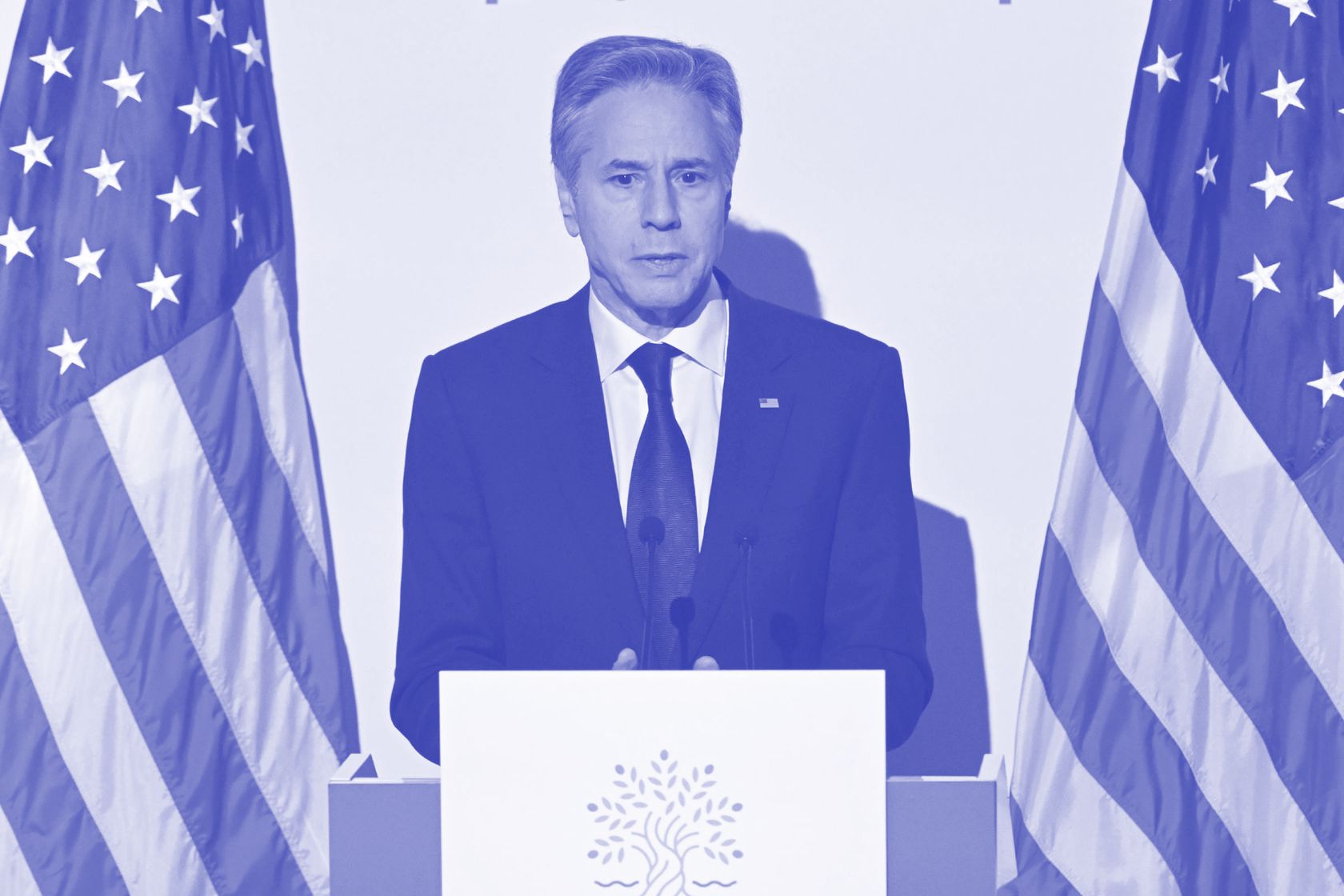
Bank on it: The US is drafting sanctions that could cut off some Chinese banks from the global financial system, a threat aimed at pressuring Beijing to curtail its exports of commercial goods with military applications to Russia. Despite heeding initial warnings against arming Russia, China has become the primary supplier of crucial dual-use items like circuitry, aircraft parts and machinery – allowing Moscow to rebuild its military production capacity decimated by over two years of war in Ukraine. As allies worry Russia could outlast Ukraine through attrition, the US hopes the risk of Chinese banks losing access to the dollar system and disrupting Europe ties will persuade Beijing to change course on exports. But the threat faces challenges, as little-known regional Chinese banks have gradually replaced major lenders in facilitating deals. (Wall Street Journal)
2.
Burn notice: Australian Federal Police boss Reece Kershaw has accused social media companies like X Corp of "pouring accelerant on the flames” of disinformation following Australia's recent stabbing attacks. Kershaw's comments were released ahead of his address to the National Press Club in Canberra alongside ASIO director-general Mike Burgess. Kershaw will allege that social media companies are “refusing to snuff out the social combustion on their platforms”, and that his "door is open" to leaders like Elon Musk and Mark Zuckerberg to discuss the issue. In his address, Burgess will criticise recent moves by companies like Meta towards expanded end-to-end encryption on their messaging platforms, which he will argue compromises ASIO's ability to investigate Australian extremist networks. (Capital Brief)

3.
Revenue stream: Spotify shares surged by as much as 16% after the audio streaming giant reported making a profit in the first quarter of 2023. It marks the biggest intraday gain for the Swedish company in almost two years. Spotify added new features and boosted subscribers, with paid subscribers growing 14% year-over-year to 239 million, in line with estimates, while total active users across free and paid plans reached 615 million, slightly below forecasts. Spotify raised prices last year for the first time in over a decade and plans another hike soon, introducing new pricing tiers including a lower-cost music-only plan. Total revenue grew 20% to €3.6 billion ($5.9 billion) with net income of €197 million and a record €168 million in adjusted operating profit. Spotify expanded into audiobooks last year across six markets so far – including Australia – as it cut back on podcast staff and programming while renewing its deal with podcaster Joe Rogan. (Bloomberg)
4.
Health kick: A new Productivity Commission report suggests that Australia's healthcare spending can be stretched further by leveraging digital technologies like AI, electronic health records and remote care models. Healthcare spending, currently accounting for 10% of GDP, is projected to increase as the population ages. The report found that Australia ranks third among 28 high-income countries in healthcare productivity when adjusting for risk factors and age, with 3% annual multifactor productivity growth from 2011 to 2018, driven mainly by quality improvements like new cancer therapies. High obesity and alcohol consumption rates are highlighted as risk factors. "Australia's healthcare spend is big and getting bigger, but we are seeing significant return on that investment through better health outcomes," said productivity commissioner Catherine de Fontenay. (Capital Brief)
5.
Rate shift: Traders have significantly increased bets that the US Federal Reserve could raise interest rates again in the next 12 months, reflecting a major shift in market expectations driven by stronger than anticipated economic data, persistent elevated inflation, and hawkish remarks from some policymakers. This shift in expectations from the start of 2024 – when rate cuts were broadly anticipated – has roiled bond markets, sending the two-year Treasury yield to a 5-month high above 5%. While the consensus still leans towards one or two quarter-point rate cuts this year, the potential for further rate increases to combat inflation is being taken more seriously by investors. Last week, John Williams, president of the New York Federal Reserve, said he did not "feel urgency" to cut rates due to the current state of the US economy. (Financial Times)
6.
Career change: The US Federal Trade Commission has banned most employers from using noncompete contracts that prevent workers from joining rival firms, marking a significant policy change aimed at protecting workers' economic freedom and labour mobility. The rule prohibits companies from enforcing existing noncompete agreements, except for senior executives, and bans employers from imposing new noncompete contracts on senior executives in the future. This regulation marks the first time in over half a century that the FTC has issued a mandated, economy-wide change impacting how companies compete for labour. The Biden administration pushed for stricter limits on non-competes as part of its broader antitrust enforcement agenda. The controversial rule faces an imminent legal challenge from business groups. Non-competes have proliferated in the US in recent decades, now affecting around 20% of the country's workers. (Wall Street Journal)
7.
Court report: Donald Trump's "hush money" criminal trial continues in New York, with witness David Pecker, the longtime publisher of The National Enquirer, telling the court he used his tabloid to assist the former president's 2016 campaign. This is crucial to the prosecution's argument that Pecker, Trump and political fixer Michael Cohen were working to conceal several sex scandals in order to actively support Trump's presidential bid and not just his personal reputation. A hearing was also held about Trump's social media posts during the trial, which prosecutors argued were witness tampering and intimidation. Trump's lawyers argued in response that he should be free to respond to "political attacks" during a presidential election in which he is a candidate. (The New York Times)(Wall Street Journal)
8.
Phone woes: iPhone sales in China plummeted 19% in the March quarter, according to Counterpoint Research, marking the worst performance of Apple's smartphone in the country since 2020. Apple fell to third place in the fiercely competitive Chinese market, roughly tied with the rapidly rising Huawei which saw almost 70% sales growth, highlighting the local company's resurgence in the premium segment once dominated by Apple. The weakness is notable as the first quarter typically sees elevated sales around the Lunar New Year. With global iPhone shipments down almost 10% in the first quarter of 2024, according to IDC data, there are concerns about Apple's ability to sustain growth ahead of its next flagship iPhone launch. (Bloomberg)