US, China say progress made in trade talks
Plus: Meta signals it may pay levy instead of media deals; India-Pakistan truce holds despite mutual accusations; Microsoft may give up OpenAI equity to keep AI access, says FT.

Good morning. Here's what happened overnight and what you need to know today.

1.
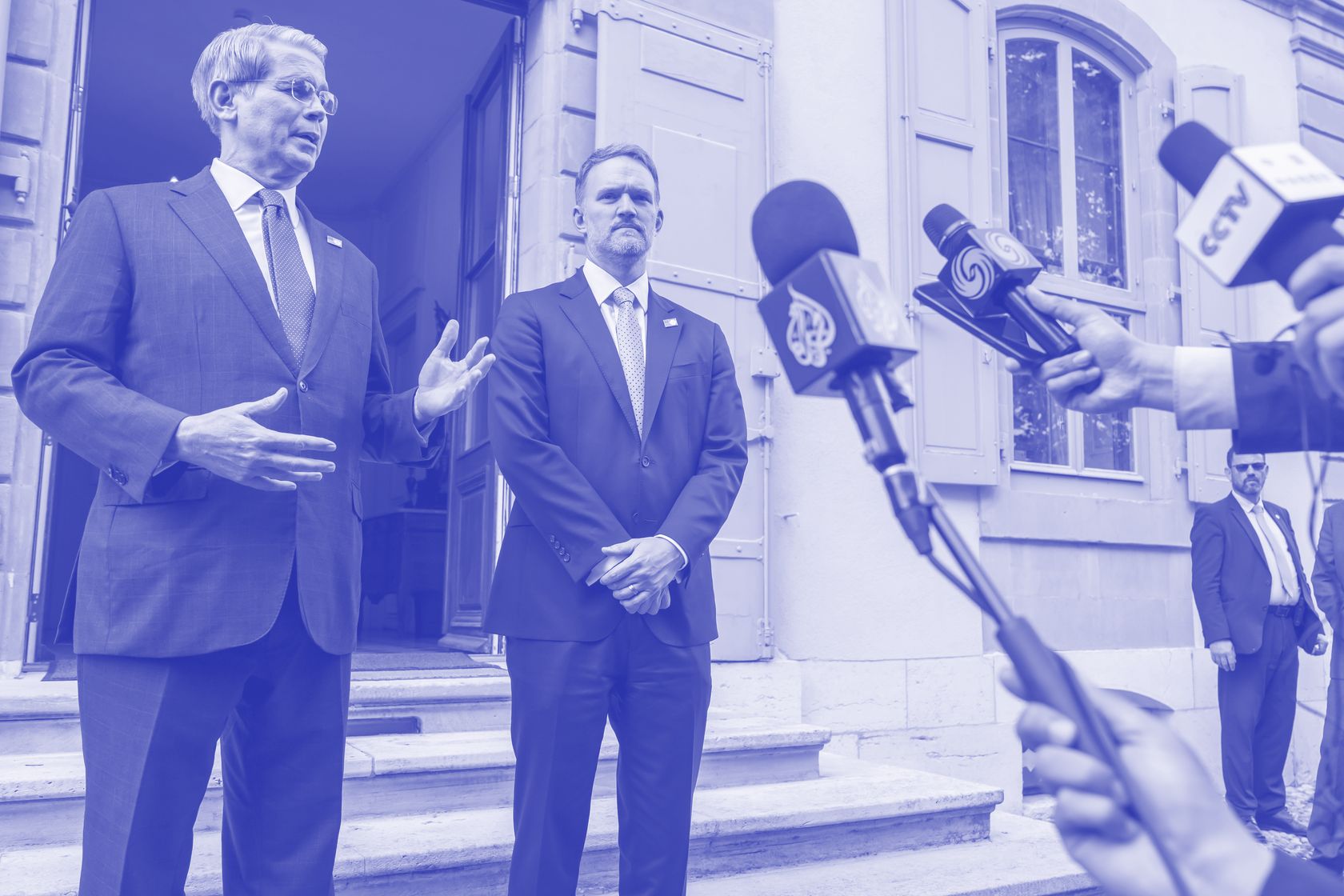
Total reset: Donald Trump said “great progress” was made during trade talks with China over the weekend, as the countries push for an agreement after escalating tariffs put a near-standstill in two-way trade worth USD600 billion ($934 billion). US Treasury Secretary Scott Bessent and Trade Representative Jamieson Greer said a deal was reached with China to cut the US trade deficit, following two days of talks in Geneva. Bessent described “substantial progress” and said details would be released tomorrow. Greer said “it's important to understand how quickly we were able to come to agreement, which reflects that perhaps the differences were not so large as maybe thought.” No mention was made of reducing the 145% US tariffs or China’s 125% retaliatory duties. Chinese state media said the US’ "reckless abuse of tariffs" had destabilised the global economic order, but that the talks represented "a positive and necessary step.”(Capital Brief)(Xinhua)(FT)
2.
Platform levy: Meta is leaning towards paying a flat charge rather than striking new commercial deals with news publishers, industry sources told Capital Brief, as the media sector awaits Prime Minister Anthony Albanese’s appointment to replace outgoing assistant treasurer Stephen Jones. The News Bargaining Incentive, unveiled by Jones in December, targets platforms with more than $250 million in Australian revenue, allowing them to offset a levy by making deals with publishers. Meta, which previously signed $70 million in deals before walking away, has indicated in private talks it may opt to pay the charge, sources told Capital Brief. The proposal took effect on 1 January but has not been legislated. Victorian MP Dr Daniel Mulino and NSW Senator Tim Ayres are among the frontrunners to replace Jones as assistant treasurer. (Capital Brief)
3.
Fragile truce: A ceasefire between India and Pakistan held on Sunday, despite the nuclear-powered nations accusing the other of violating the truce. On Saturday, US President Donald Trump announced that the countries agreed to a “full and immediate” ceasefire brokered by the US, adding that the US would increase trade with both nations and work to find a solution to the Kashmir dispute. Hours after the truce was agreed, Vikram Misri, India’s foreign secretary, accused Pakistan of repeatedly violating the agreement, which Pakistan then denied and accused India of violating the truce. Explosions and gunfire that had been reported overnight Saturday died down by Sunday morning, holding through to Sunday evening. Despite the ceasefire, Reuters reports that there is no change in position from the Indian government regarding its decision to pull out of the Indus Water Treaty, which protects hydro flows to Pakistan, supplying around 80% of Pakistan’s irrigated agriculture. (Capital Brief)(US Department of State)(Capital Brief)(Reuters)
4.
Terms & conditions: OpenAI and Microsoft are revising the terms of their partnership to allow the ChatGPT makers to launch a future IPO and preserve Microsoft’s access to leading AI models, the FT reports. A key issue is the amount of equity in OpenAI’s new for-profit business Microsoft will receive in exchange for the over USD13 billion ($20.2 billion) it has invested to date. Microsoft is reportedly open to forgoing some of its equity stake to retain access to new technology developed by OpenAI beyond the 2030 cutoff. Sources told the FT that the negotiations cover the terms of a wider contract (which runs until 2030) drafted when Microsoft first invested USD1 billion into OpenAI in 2019. Last week ChatGPT unveiled plans to restructure under nonprofit control, scrapping its plans to move power to its for-profit arm. The new corporate model has been demanded by investors who want to ensure that an “IPO becomes possible” in the future. (FT)(Capital Brief)
5.
War talks: Ukraine will meet for talks with Russia only once Vladimir Putin agrees to a 30-day unconditional ceasefire, President Volodymyr Zelensky said on Sunday. Zelensky said that it is a positive sign that the Russians “have finally begun to consider ending the war,” and that “we expect Russia to confirm a ceasefire – full, lasting, and reliable – starting tomorrow, May 12th, and Ukraine is ready to meet.” A day earlier, Putin proposed direct talks with Ukraine on 15 May to be held in Istanbul, but he did not address the ultimatum tabled by Western countries that Russia must move forward with the temporary truce or suffer new sanctions. European leaders met with Zelensky on Saturday in Kyiv to discuss a ceasefire plan, telling Trump that if Putin refuses the 30-day ceasefire, European countries will impose new sanctions on Russia. Trump last week threatened to impose sanctions on the side that does not agree to the ceasefire. (Capital Brief)(Zelensky X)(Reuters)(Axios)
6.
Privacy payout: Google has agreed to pay USD1.375 billion ($2.1 billion) in a settlement in principle with Texas to resolve two lawsuits alleging the company violated users’ data privacy, Texas Attorney General Ken Paxton said. The lawsuits covered three Google products—Incognito, Location History and biometrics—and alleged violations of Texas consumer protection laws. Paxton said Google “secretly tracked people’s movements, private searches and even their voiceprints and facial geometry.” Google did not admit wrongdoing and said the agreement settles “a raft of old claims” and does not require product changes. Paxton described the settlement as a “major win for Texans’ privacy” and said it surpasses all past settlements by other states with Google over similar issues. (CNBC)(Reuters)
7.
Sky favour: The Trump administration is preparing to accept a luxury Boeing 747-8 jumbo jet from Qatar’s royal family for use as Air Force One until shortly before Trump leaves office, after which ownership would transfer to his presidential library foundation, according to ABC News. The plan, potentially the most valuable foreign gift ever received by the US, is expected to be announced during Trump’s trip to Qatar. Legal reviews by Attorney General Pam Bondi and White House lawyer David Warrington found the arrangement “legally permissible,” the publication reported. Qatar’s US media attaché said “no decision has been made.” (NYT)(ABC)(Bloomberg)
8.
Sales drive: China’s passenger car sector recorded a surge in retail sales in April, growing 14.5% on the year to reach roughly 1.76 million units. The data from the China Passenger Car Association (CPCA) released Sunday shows that recent policies to boost consumption have driven up sales in the country, which has seen total retail sales for passenger cars reach 6.87 million units year-to-date. Sales of EVs and hybrids (known as new energy vehicles, NEVs) increased 39.9% year-on-year in April and comprised 50.8% of the month’s total car sales. Beijing’s subsidy scheme for individuals who trade-in old cars for NEVs covered 2.71 million cars as of April 24, softening the impact on consumer confidence as US tariffs continue to bite Chinese exports and trade between the two economies. Last week, China’s largest automaker, BYD, said it aims to sell 50% of its cars outside the Chinese market by 2030. (Reuters)(Reuters)
