Wall St claws back losses as Iran war kills rate cut hopes
Plus: One Nation set to become official Opposition in new Capital Brief/Demos AU polling; Iran knocks out 17% of Qatar’s LNG capacity; Pentagon seeks USD200b top-up as Trump flip-flops on South Pars.

Good morning. Here’s what happened overnight and what you need to know today.
1.
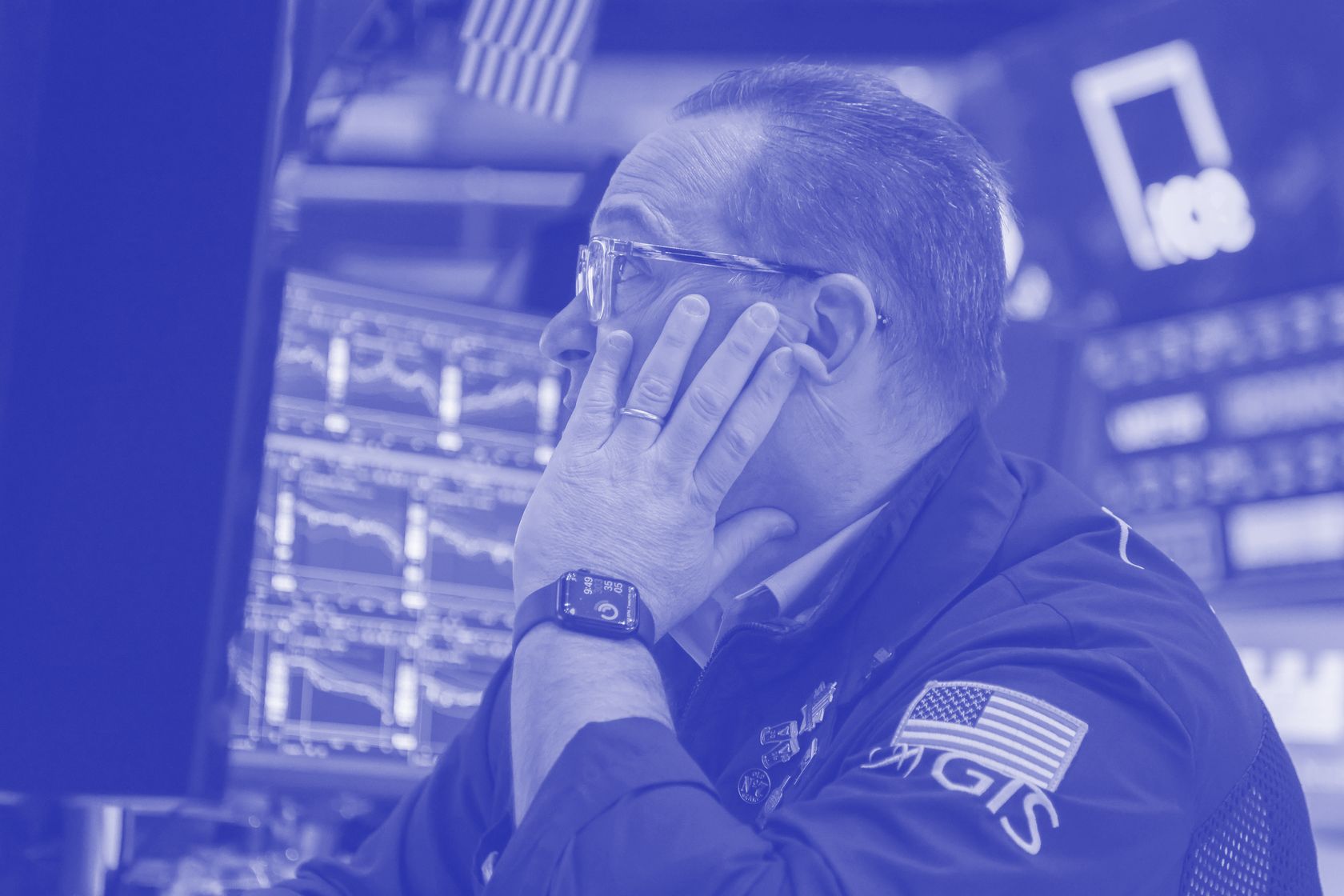
Paring losses: Fear of stagflation swept global markets as investors abandoned bets on a quick end to the Iran war and priced in a protracted energy shock. European gas prices surged as much as 35% to their highest since the conflict began, while Brent crude briefly touched USD119 a barrel before falling back near USD109 and WTI near USD95. The Brent-WTI spread had blown out to USD17 a barrel intraday, according to Bloomberg, its widest in about four years. The widening gap is being seen as a sign that European and Asian assets face a more severe stagflationary shock than their US counterparts. Gold fell as much as 5%, aluminium dropped as much as 8% and silver slid as much as 14% in intraday trading, with aluminium and silver clawing back some of those losses. The Stoxx Europe 600 dropped 2.4% in a broad-based slide with every sector except energy declining, the FTSE 100 fell 2.4%, Japan’s Nikkei slid 3.4% and the Australian benchmark is poised to extend losses at the open, with ASX 200 futures down 0.5% after falling 1.7% yesterday. Wall Street’s S&P 500 recovered to trade roughly flat, up 0.04% in afternoon New York trading, with the Nasdaq up 0.03% and the Dow off just 0.04%, as Israel said it would hold off on any further attacks on Iran’s natural gas field on Trump’s request, and the US authorised delivery and sale of Russian crude oil. Government bonds also fell, pushing yields higher globally as traders bet central banks would be forced to raise rates to contain the inflationary shock. UK two-year gilt yields jumped more than 30 basis points, their biggest single-day rise since the Liz Truss crisis of 2022, as the Bank of England said it “stands ready to act” on inflation. The US Fed, Bank of Canada, Bank of Japan, ECB and BoE all held rates steady this week, and cuts look increasingly distant. Futures bets now show a roughly 75% chance US rates remain on hold through December, while LSEG-compiled data points to a Fed cut only in mid-2027. Traders are now pricing in two BoE hikes by year-end. (Bloomberg)(WSJ)(Reuters)(FT)(Capital Brief)
2.
Total wipeout: The Nationals face a total wipeout and One Nation would easily become the official Opposition if an election were held today, according to exclusive new polling that also suggests Pauline Hanson’s party is winning male voters. The latest Capital Brief/Demos AU poll, published today, shows One Nation on course to seize all of the Nationals’ current lower house seats, relegating the Coalition to minor party status — with a seat count as low as nine. It also finds that, for the first time, more men would now give their first preference (29%) to One Nation than Labor (28%) — while Hanson’s party leads the Coalition in all age and gender brackets. If the poll’s predictions were born out at an election, Hanson’s party would win between 46 and 55 seats nationally, with Labor still on course for a majority government with a total of between 77 and 86. DemosAU has the Coalition set to lose the vast majority of its lower house MPs, with an estimate of between nine and 17 seats. (Capital Brief)
3.
Gas hit: Iran’s strikes on Qatar’s Ras Laffan complex have knocked out 17% of the country’s LNG export capacity for three to five years, QatarEnergy CEO Saad al-Kaabi told Reuters, with an estimated USD20 billion ($28.3 billion) in lost annual revenue and no prospect of production resuming until hostilities cease. Two of Qatar’s 14 LNG trains and one of its two gas-to-liquids facilities were damaged in the strikes, sidelining 12.8 million tonnes per year of LNG. The report notes ExxonMobil also holds stakes in both damaged trains: 34% in train S4 and 30% in train S6. Shell is a partner in the damaged GTL facility, which will take up to a year to repair. QatarEnergy will declare force majeure on long-term contracts for up to five years for supplies bound for Italy, Belgium, South Korea and China, Kaabi said. The fallout extends well beyond LNG. Qatar’s condensate exports will drop by around 24%, LPG by 13%, helium output by 14%, and naphtha and sulphur by 6%, the executive said. The implications, Reuters noted, range from LPG used in restaurants in India to South Korea’s chipmakers, which rely on Qatari helium. The damaged units cost approximately USD26 billion to build, al-Kaabi said, adding that Qatar’s massive North Field expansion project had stalled and could be delayed by more than a year. “The scale of the damage has set the region back 10 to 20 years,” he said. (Reuters)
4.
Don’t do it: Donald Trump appeared to contradict his own account of Israel’s attack on Iran’s South Pars gas field, telling reporters in the Oval Office he had told Netanyahu “don’t do that”, just hours after posting on Truth Social that Washington “knew nothing” about it. Three Israeli officials also told Reuters the strike was in fact US-coordinated. Iran also claimed to have seriously damaged a US F-35 fighter jet, with CNN reporting the aircraft made an emergency landing at a US base in the Middle East. Israel separately said it had struck Iran’s navy in the Caspian Sea for the first time. At the White House, Trump pressed Japanese Prime Minister Sanae Takaichi to “step up” on the Strait of Hormuz, saying he’d heard Japan sourced over 90% of its oil through the waterway — to which Takaichi nodded. Meanwhile, the UK, France, Germany, Italy, the Netherlands and Japan issued a joint statement expressing readiness to contribute to efforts to secure the strait. Of that, Trump said allies were “getting much nicer” about securing the strait, but added: “as far as I’m concerned it’s too late.” Earlier, at a press conference, Hegseth confirmed the Pentagon had asked Congress for USD200 billion for the war, saying only that the figure “could move, obviously. It takes money to kill bad guys.” Elsewhere, a Russia Today correspondent and cameraman were wounded by an Israeli airstrike while filming in southern Lebanon, the Russian state broadcaster said, accusing Israeli forces of deliberately targeting the crew despite press markings on their vests. Both were treated for light injuries.(NYT)(Bloomberg)(Reuters)(FT)(Capital Brief)
5.
Bezos build: Jeff Bezos is in early talks to raise USD100 billion ($141 billion) for a fund that would acquire manufacturing companies and use AI to accelerate their automation, The Wall Street Journal reported citing unnamed sources. The fund, described in investor documents as a “manufacturing transformation vehicle,” would target major industrial sectors including chipmaking, defence and aerospace and rival SoftBank’s USD100 billion Vision Fund in scale. Bezos has travelled to the Middle East to meet sovereign wealth fund representatives and more recently visited Singapore as part of the fundraising effort, according to the WSJ report. It comes after Bezos was recently appointed co-CEO of Project Prometheus, a startup building AI models that can understand and simulate the physical world. Bezos plans to deploy the company’s technology to boost the efficiency and profitability of businesses owned by the fund. Separately, Project Prometheus is also in talks to raise up to USD6 billion, and recently appointed David Limp, CEO of Bezos’s rocket company Blue Origin, to its board. (WSJ)
6.
Sharks circle: A US short seller which published a scathing report on ASX-listed IperionX in November may be gearing up for a second swing at the critical minerals company after an accounting error spooked shareholders and wiped 22% off its share price on Monday. New York-based Spruce Point Capital Management — whose short report warned investors that IperionX could be “significantly overvalued” — suggested the error may warrant a “closer look” at the company. “IperionX, a company promoting its ability to ‘revolutionize’ the titanium industry pooh-poohed our concerns about its PP&E and internal control issues in our forensic report from Nov 2025,” Spruce Point founder and chief investment officer Ben Axler wrote in a LinkedIn post. “While reporting increased losses and providing no real update about press releases claiming ‘prototype’ ‘orders’, IPX issues a massive correction for an error in their PP&E. “We stand behind our research which highlighted financial reporting risks and challenges with commercialization of technologies unproven at scale,” Spruce Point told Capital Brief. (Capital Brief)
7.
The coal face: The development of new greenfield mines will be banned under a new policy put forward by the NSW state government on Thursday. Under the ‘NSW Coal Industry 2026-50’ policy, the Minns government said that while the government will not consider applications for new “greenfield” coal mines, extensions to existing operations will continue to be considered. Any such extensions would be subject to “strict project-by-project approval processes and robust regulatory frameworks.” Additionally, there will no longer be NSW government investment in coal exploration and existing coal licences will continue under ‘use or lose it’ renewal rules. The policy will mean that nine existing applications for coal exploration licences on greenfield sites will be terminated. NSW Natural Resources Minister Courtney Houssos said coal mining is a “high-value industry in NSW” and that the sector currently employs about 23,800 people directly, and contributed $2.7 billion in royalties in 2025. NSW Minerals Council CEO Stephen Galilee said the decision to “no longer support potential new coal mines is disappointing.” (NSW Government)(Capital Brief)
8.
House always wins: Independent federal MPs are calling on Anthony Albanese to create a federal gambling regulator after the emergence of a multi-billion online keno industry operating completely outside of rules designed to protect problem gamblers. Capital Brief revealed on Thursday that Victoria, the Northern Territory and the ACT had in recent years issued licences to gaming companies allowing them to offer 24-hour keno games drawn every three minutes, allowing punters to spend up to $20,000 per hour on the games. On Thursday, ACT Independent Senator David Pocock said the Capital Brief report highlighted the need to implement Murphy’s call for a federal gaming regulator. “This is one of the most predatory industries in Australia,” Pocock said, “they exploit loopholes.” Independent MP for WA seat of Curtin, Kate Chaney, said the Murphy inquiry had heard of “endless loopholes” exploited by the gambling industry, which was why it had recommended the creation of a federal regulator. (Capital Brief)
