Wall St falls as AI spending stokes investor angst
Plus: NRF CEO defends slow start as fund ramps up deals; Apple acquires secretive AI start-up Q.AI in facial-sensing intel buy; Dow cuts 4,500 jobs as AI-driven layoffs spread.

Good morning. Here's what happened overnight and what you need to know today.
1.
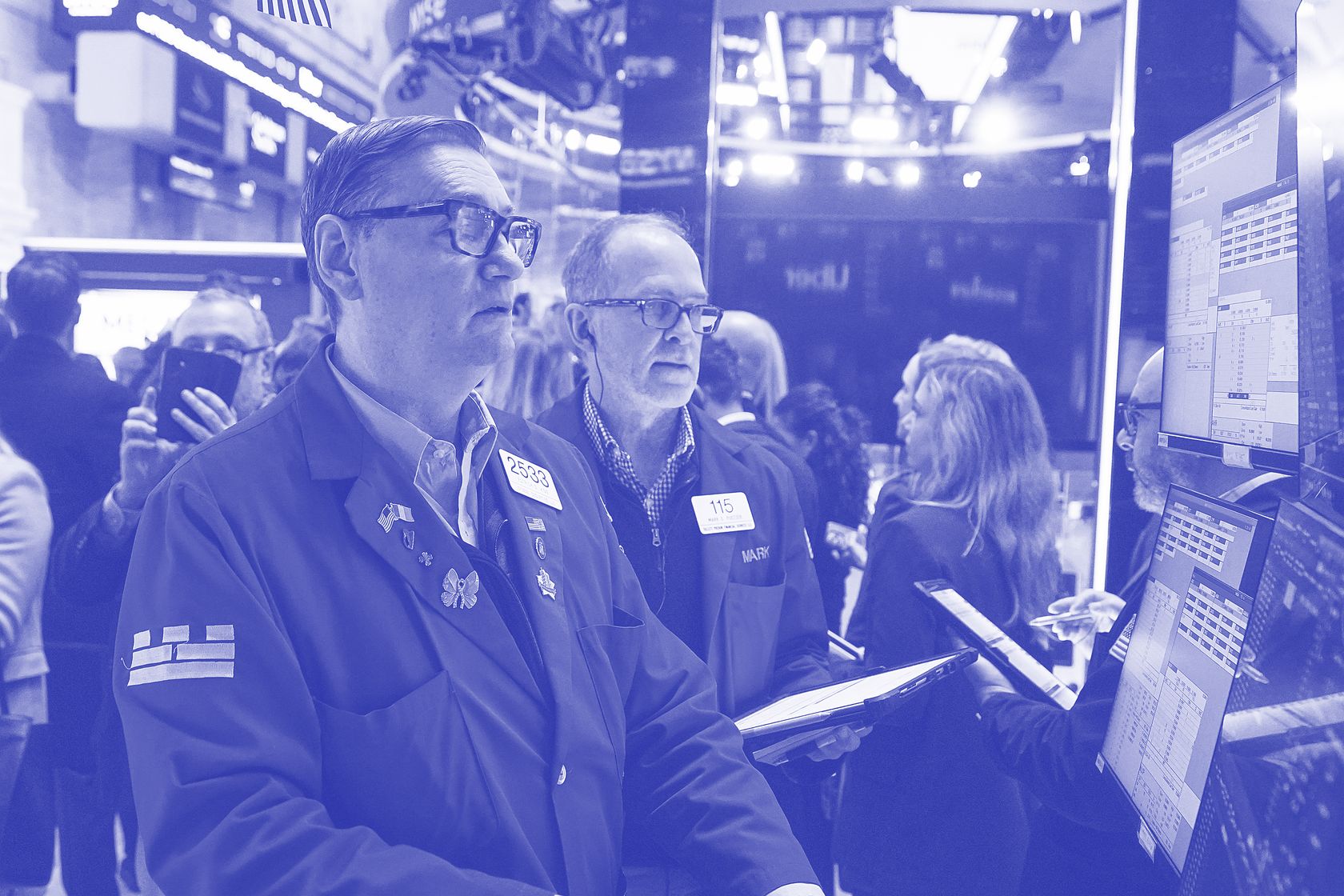
AI angst: Wall Street slid to over one-week lows as investors reacted to another wave of heavy AI-related spending from megacap tech firms and questioned whether the returns will justify the investment. Microsoft dropped over 12.5% in its steepest fall since 2020, after cloud revenue disappointed and spending on its OpenAI alliance surged. Tesla reversed early gains to be 1.8% in the afternoon, after it outlined record capital expenditure plans. SAP slumped 16% on weak cloud guidance, while software stocks including ServiceNow, Salesforce and Adobe also fell sharply. Meta bucked the trend, rising over 10% on a strong revenue outlook and a 73% increase in this year’s capex budget. Some believe investors are starting to reweight portfolios away from big tech and towards sectors more exposed to the real economy. Oil jumped above USD70 on US-Iran tensions, gold rose to a record above USD5,500 before retreating, and Bitcoin fell below USD85,000. Meanwhile, Donald Trump said he would name a new Fed chair next week. (WSJ)(Bloomberg)(Reuters)(Capital Brief)(FT)
2.
Delivery year: David Gall’s first year at the helm of the National Reconstruction Fund (NRF) has not been all smooth sailing. But the former NAB executive told Capital Brief that over the long run and “with the benefit of hindsight, it’ll look obvious” how the $15 billion fund’s aim to develop Australia’s industrial capability all “fits together”. The NRF has announced $200.7 million worth of investments in January alone as it aims to hit an FY26 investment target of $1.5 billion. Beyond FY26, the fund is aiming to ramp up its annual investment targets by $500 million in each year to FY29, when it will be $3.55 billion. Reflecting on the internal challenges over the last year — including an Australian National Audit Office report finding that $436 million worth of investment was made without it adopting a formal financial strategy — Gall said the corporation’s “leadership and leadership capability has evolved”. (Capital Brief)
3.
Apple next: Apple acquired Israeli start-up Q.AI, a secretive company whose technology analyses facial expressions and whispered speech, in a deal valued at close to USD2 billion, the Financial Times reported citing people familiar with the terms. GV (formerly Google Ventures) and a backer of Q.AI, said in a blog post the acquisition is Apple’s “second-largest” in its history. The deal is expected to help Apple close the gap with Meta, Google and OpenAI in the race to build AI-powered wearable devices. Founded in 2022 by Aviad Maizels, Yonatan Wexler and Avi Barliya, Q.AI has operated largely in secret and has developed applications for its machine learning and imaging technology in headphones and glasses, using “facial skin micro movements” to communicate silently. Apple’s senior vice-president of hardware technologies Johny Srouji said Apple is “thrilled to acquire” a team that is “pioneering new and creative ways” to apply imaging and machine learning. The acquisition follows Apple’s partnership with Google on Gemini. It also comes ahead of its Q1 earnings after the market close, with analysts forecasting revenue of USD138.4 billion and earnings per share of USD2.68. iPhone revenue is expected to rise 13% to USD78.3 billion and revenue out of China is expected to jump nearly 18%, according to Bloomberg. (FT)(GV)(Reuters)(Yahoo Finance)
4.
Fewer jobs: US chemicals giant Dow will cut about 4,500 jobs and use AI and automation to streamline operations, the company said in a statement. The move is expected to deliver at least USD2 billion in near-term operating EBITDA benefits, including USD500 million this year. Dow said it will take USD1.1-1.5 billion in one-time charges, with up to USD800 million in severance. The announcement follows a wave of recent job cuts by major firms citing efficiency drives and AI adoption. Amazon on Wednesday confirmed 16,000 corporate job cuts, completing plans for around 30,000 since October. Earlier this week Pinterest also said it will lay off under 15% of its approximately 5,200 staff as part of “transformation initiatives” that include shifting resources to AI roles and reshaping its sales and go-to-market approach. Home Depot also recently announced it will cut 800 corporate jobs at its Atlanta store support centre. Earlier this week, Morgan Stanley said AI-driven job losses were hitting the UK harder than any other major economy, with British companies reporting an 8% net job loss due to AI over the past year, double the international average. (Dow)
5.
Airwaves for sale: Nine Entertainment is set to announce the sale of its national radio network as early as this morning, according to media reports. The Australian reported that staff across the Nine network have been invited to a series of meetings on Friday to discuss implications of the sale. Sources told the Australian Financial Review that interests associated with billionaire publican Arthur Laundy were set to acquire the business. A consortium led by former major Nine shareholder John Singleton, Australian Digital Holdings and Sports Entertainment Group were all reported to have submitted bids for the network. The sale comes after the media giant spent a month reviewing formal submissions to take over the talkback radio network which includes 2GB, 3AW and 4BC stations. The deal would mark the second major sale for Nine Entertainment over the past 12 months, after selling its 60% stake in real estate website Domain to US firm CoStar. (AFR)(The Australian)(SMH)(Daily Telegraph)(Capital Brief)
6.
Top shareholder: Blackstone is in advanced talks to become the single largest shareholder of Hong Kong’s New World Development, one of the city’s most indebted property developers, Bloomberg reported citing people familiar with the matter. The deal would mark a pivotal moment for the company, as the Cheng family, one of Hong Kong’s richest, could relinquish control. The family holds about 45.24% of New World through Chow Tai Fook Enterprises, according to LSEG data, but it’s unclear how much Blackstone would acquire or pay. The company said in a statement its controlling shareholder had been approached by several potential investors but no agreement had been reached. Bloomberg reported the deal would allow Blackstone to restructure the firm while the company continues selling assets to shore up liquidity, including targeting HKD27 billion in disposals by June. New World had a market capitalisation of HKD28 billion based on its last closing price Thursday, with shares up 56% this month. (Bloomberg)(Capital Brief)
7.
Euro FTA revived: The European Union (EU) approached Australia to revive stalled free trade agreement (FTA) talks, Capital Brief can confirm, as middle powers scramble to respond to US President Donald Trump upending the global order. Negotiations collapsed in 2023, when the parties were unable to agree on Australian access to Europe’s agricultural market among various sticking points. The EU approached Australia to revive the talks after Trade Minister Don Farrell met with his EU counterpart last year. Australia remains open to negotiations, and minister-to-minister talks are expected within months. A spokesperson for Farrell insisted that Australia remained “committed” to closing the deal, but warned agriculture was a red line. “A deal with the EU must include new, commercially-meaningful access for Australian agriculture, including beef and sheep meat,” the spokesperson told Capital Brief. This would cut across the interests of many agriculture-dependent EU member states and while it may not be a concern for every country, each member state must approve a trade deal. (Capital Brief)
8.
Imports rise: The US trade deficit widened sharply in November to USD56.8 billion ($80.8 billion) as imports rebounded and exports declined, with the gap nearly doubling from the previous month, Commerce Department data showed. The 94.6% increase was the largest monthly rise since 1992 and exceeded all projections in a Bloomberg survey of economists. Imports rose 5%, driven by capital goods and a surge in pharmaceutical shipments, while exports fell 3.6%. Adjusted for inflation, the goods deficit reached USD87.1 billion, the highest in four months. Bloomberg reported recent trade volatility reflects shifting US tariff policy under President Donald Trump, with notable increases in non-monetary gold and pharmaceutical trade. Gold exports fell in November, while deficits with China and Canada widened, the gap with Mexico narrowed slightly. (Capital Brief)(Bloomberg)(US BEA)
