Wall Street jumps but rally stalls on tariff reality
Plus: Coalition’s nuclear bill could pass $5 trillion, says think tank; Albanese sets up minerals play for US trade talks; Trump mulls slashing China tariffs as economy cools.

Good morning. Here's what happened overnight and what you need to know today.

1.
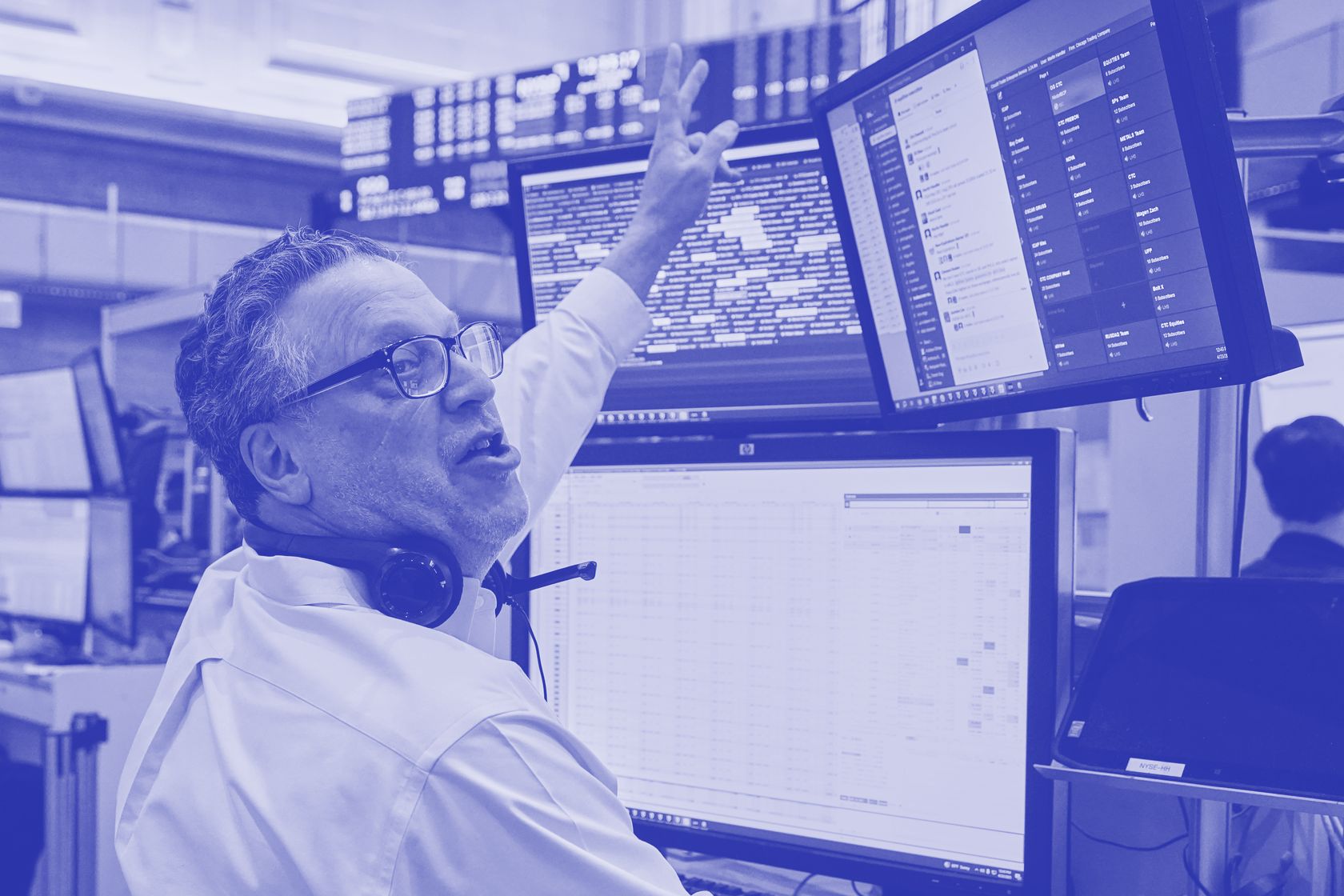
Tariff dangle: Wall Street stocks surged overnight after revived hopes for progress in the US-China trade dispute and President Trump’s assurance late Tuesday (Wednesday AEST) that he had “no intention of firing” Federal Reserve Chair Jerome Powell. The rally eased after Treasury Secretary Scott Bessent told reporters Wednesday there would be “no unilateral reduction” in tariffs and that a de-escalation with China would require movement from both sides. Bessent also said a full trade rebalancing could take two to three years. Trump had said Tuesday that tariffs on Chinese goods would “come down substantially”. The S&P 500 rose 1.6%, the Nasdaq 2.5%, and the Dow 1.1%. Tesla shares jumped 5.4% after Elon Musk said he would “significantly” scale back work with the Trump administration, despite a 71% plunge in 1Q profit. Boeing rose 6% after a smaller-than-expected 1Q loss. Bitcoin climbed 3.1% and gold fell 2.9%. (WSJ)(FT)(Bloomberg)
2.
Nuclear blowout: The Coalition's nuclear plan would cost the Australian economy at least $4.3 trillion by 2050, new analysis by independent public interest think tank Climate Energy Finance has found. The estimates put costs accumulating to $4.3–$5.2 trillion by 2050, 13 to 16 times the $331 billion price tag assumed by Frontier Economics, which was cited by the Coalition to support its nuclear plan. The costs include an estimated $3.5 trillion in cumulative undiscounted lost GDP through 2050 and $111–332 billion in unaccounted-for nuclear capital expenditure costs. The new data follows Dutton’s policy U-turn on electric vehicle tax breaks on Wednesday, which he had committed to just two days prior. When Dutton was asked on Monday if he would repeal the discount for EVs if he became PM he said, “we don’t have any proposals to change those settings.” The Coalition also pledged to scrap Labor’s $16 billion student debt relief plan, which aims to cut HELP balances by 20%. (Capital Brief)(Capital Brief)
3.
Trump card: Anthony Albanese outlined plans to establish a Critical Minerals Strategic Reserve, which could be used as a bargaining chip in negotiations with the Trump administration to ease tariffs. Should Labor be re-elected, it would make an initial investment of $1.2 billion in the reserve, including through a $1 billion increase in the existing Critical Minerals Facility, taking the government’s total investment to $5 billion. Labor expects the strategic reserve and the expansion of the Critical Minerals Facility to operate in tandem with its $7 billion Critical Minerals Production Tax Incentive (part of the Future Made in Australia package). Critical minerals are increasingly becoming a flashpoint in the US-China rivalry as they are essential components of modern technologies like electric vehicles, wind turbines and smartphones, as well as advanced defence technologies. “It will mean we can deal with trade and market disruptions from a position of strength,” Albanese said. (Capital Brief)
4.
Diffusing tensions: The Trump administration is reportedly weighing a sharp cut to China tariffs, reducing them from 145% to between 50% and 65%, according to WSJ sources. The White House is considering a tiered system, similar to a House committee proposal, with 35% tariffs on non-sensitive goods and at least 100% on items deemed strategic. The shift in tone buoyed markets, with global stocks rising on the report. Meanwhile, US business activity slowed in April, according to PMI data, indicating a loss of momentum before any deal announcement. Public sentiment is also cooling: A Reuters/Ipsos poll showed only 37% approve of Trump’s economic handling, down from 42% after his inauguration, when he promised to “supercharge the economy”. (Capital Brief)(WSJ)
5.
Beige blues: “Pervasive” uncertainty over Trump’s shifting tariff plans loomed large across the US in recent weeks, the Federal Reserve said Wednesday (Thursday AEST) in its Beige Book. Economic activity was little changed, with most districts reporting slight to modest declines and only five noting slight growth. Prices rose across districts, with many firms receiving supplier notices about rising costs and planning to pass these on to consumers. Consumers rushed to buy vehicles and nondurable goods ahead of price hikes, though non-auto spending declined. “Uncertainty around international trade policy was pervasive across reports,” the Fed said, referring to qualitative data from its 12 regional districts. “The outlook in several Districts worsened considerably.” Employment was “little changed to up slightly,” with declines in government-funded roles. “Several districts reported that firms were taking a wait-and-see approach to employment,” with “scattered reports of firms preparing for layoffs.” According to Bloomberg, “tariff” appeared 107 times in the report, and “uncertain” 89 times. (Capital Brief)(Fed)(Bloomberg)
6.
Silent listing: Treasurer Jim Chalmers has directly raised with ASX chairman David Clarke the exchange’s decision to let James Hardie shift its primary listing without a shareholder vote, but signalled he is reluctant to intervene despite widespread investor anger. James Hardie has agreed to buy NYSE-listed Azek for USD8.7 billion ($13.4 billion), which would move the combined group’s primary listing to New York. The ASX gave little detail on why it waived the usual shareholder vote, typically required when more than 15% of stock is issued. ASX chief compliance officer Daniel Moran said a vote “would impose additional transaction costs and timing and execution risk, and put listed entities at a competitive disadvantage to unlisted” ones. The ASX is already under scrutiny from the RBA, which has criticised its corporate culture and warned it was losing confidence in its ability to manage critical infrastructure. In a letter to chairman Clarke, major investors have demanded the bourse overhaul its policies. (AFR)
7.
Rule breakers: The European Union has fined Apple €500 million ($890 million) and Meta €200 million for breaching the Digital Markets Act. The penalties follow a year-long investigation into Apple’s App Store rules, which the Commission found blocked developers from directing users to alternative offers. Meta’s “pay or consent” model was deemed to deny users meaningful control over their personal data. Meta claimed the decision went beyond a fine, calling it a “multi-billion-dollar tariff” that forces a business model change and degrades user experience. The EU reportedly delayed the announcement to avoid clashing with the Trump administration during trade talks with the US. Google and X are expected to face similar scrutiny next. (Capital Brief)(EC)
8.
Golden handcuffs: Goldman Sachs shareholders have approved a vote on USD80 million ($125.4 million) in executive bonuses at the bank’s AGM on Wednesday, with 66% of the vote in favour of paying out the sums to CEO David Solomon and president John Waldron. Proxy adviser Glass Lewis had earlier recommended investors cast vote against the compensation plans, citing the bank's "continued inability to align pay with performance," including excessive retention awards of a combined USD160 million given to Solomon and Waldron in January. The bonuses, which vest in five years, are an effort by Goldman's board to retain the senior leaders, and signal Waldron's place as Solomon's likely successor. Goldman’s board argued that the sums aligned with the executives’ performance in creating shareholder value, with Goldman’s earnings per share rising to USD40.54 in 2024, up 77% from a year earlier. (Bloomberg)(Reuters)
