Wall Street rallies as soft jobs data lifts odds of US rate cut
Plus: Australia to send $95m more to Ukraine, expand Russian sanctions; Real-world tests reveal major gaps in EV battery claims; Microsoft disputes report of reduced AI sales targets.

Good morning. Here's what happened overnight and what you need to know today.

1.
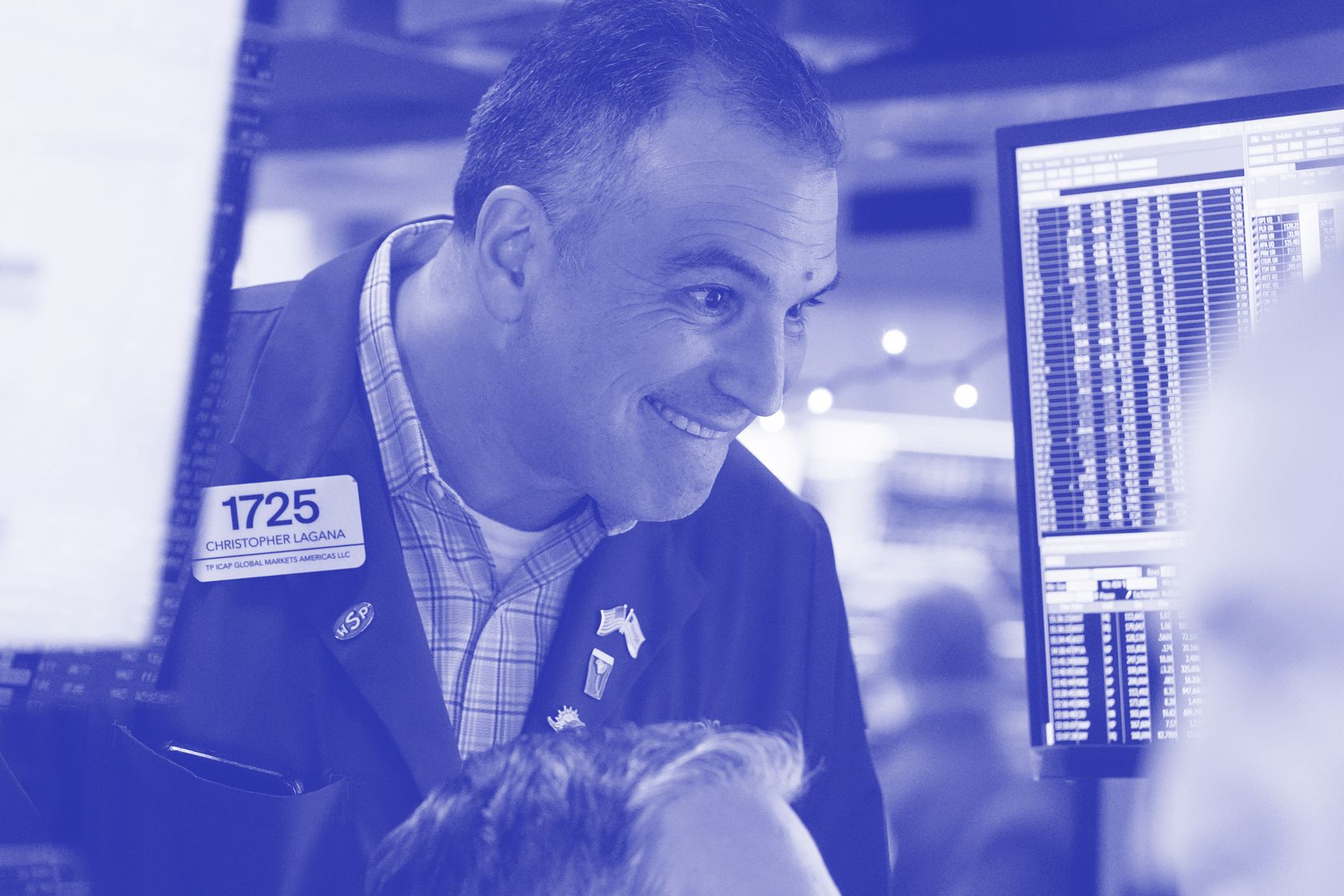
Sure cut: Wall Street climbed on Wednesday as investors priced in a widely expected Federal Reserve rate cut next week, following fresh signs of weakness in the labour market. The Dow was almost 1% higher in afternoon trading, while the Nasdaq was lagging 0.25% higher and the S&P500 was up 0.37%. Treasury yields eased across the curve, and Bitcoin extended its rally above USD92,000. The move followed ADP data showing US private payrolls fell in November by the most since early 2023, led by sharp job losses at small businesses. Wage growth also cooled. Analysts and economists expect the figures will tip the Fed toward another cut, even as policymakers remain divided. Natural gas futures rose to a three-year high amid forecasts for the coldest December since 2010. Delta Air Lines said the recent government shutdown would reduce fourth-quarter profit by USD200 million. Macy’s posted stronger-than-expected sales and raised its annual forecast but warned of cautious consumer spending, sending shares lower. American Eagle Outfitters jumped after lifting its outlook, and Dollar Tree also reported stronger-than-expected earnings and a rosier outlook. And highly shorted consumer products company iRobot Corp was over 75% higher amid a rumoured White House announcement on support for the US robotics industry. (WSJ)(Bloomberg)(Reuters)
2.
War funding: The Albanese government announced plans to send a $95 million funding boost to Ukraine’s war effort and slap Russia’s shadow fleet with additional sanctions. The funding announced by Defence Minister Richard Marles and Foreign Minister Penny Wong includes $43 million in tactical air defence radars, munitions, and combat engineering equipment, $2 million for advanced drone technologies and $50 million for NATO’s Prioritised Ukraine Requirements List (PURL), marking the first time Australia has contributed to the program. The funding brings Canberra's total defence support to $1.7 billion since Moscow's invasion of Ukraine began in February 2022. The sanctions on Russia’s shadow fleet will apply to 45 Russian ships which have been used to try and get around sanctions on Russian oil. Wong said that as a result of the actions Australia has taken, “direct Australian imports of Russian energy products have fallen from $80 million, before Russia's invasion, to zero." (ABC)(AFR)(SMH)(Capital Brief)
3.
Flat battery: New data from the Australian Automobile Association (AAA) found that the real-world driving range of four popular electric vehicles (EVs) comes in between 3% and 31% shorter than the distance advertised to consumers. The worst performing EV of the four tested, MG Motor’s MG4, had a 31% variation from its advertised battery range. The best performing car was the Tesla Model Y which achieved a 3% range variation between the advertised range and the real-world range. The Kia EV3 saw an 11% variation and the Smart #1 notched a 13% variation. The figures reinforce consumer concerns about vehicle range and recharging, with AAA polling showing that 60% of people who identify as likely EV buyers see these as their “main concerns or hesitations” preventing them from buying an EV. AAA managing director Michael Bradley said the improved information “means buyers can worry less about running out of charge and make the switch to EVs with confidence”. (AAA)(Capital Brief)
4.
Microsoft’s targets: Microsoft denied a report from The Information that several divisions lowered quotas for sales growth of certain AI products after many salespeople missed their targets in the fiscal year to June. A spokesperson told media the report “inaccurately combines the concepts of growth and sales quotas” and that “aggregate sales quotas for AI products have not been lowered.” The publication cited two salespeople in the Azure cloud division saying targets were reduced in July, including one US unit whose quota to grow Foundry sales was cut from 50% to roughly 25% after fewer than one-fifth of staff hit their original goal. Microsoft declined to comment on a separate claim that Carlyle Group reduced its spending on Copilot Studio following difficulties integrating it with other software. After the report, Microsoft’s shares fell by nearly 3% before trimming losses to be 1.5% in the afternoon. The company recently reported record capital expenditure, and flagged very tight demand for AI services at least until June 2026. Revenue at Azure rose 40% in the September quarter, helped by strong demand from developers including OpenAI. (The Information)(Reuters)(Bloomberg)
5.
Going up: Yesterday’s softer-than-expected GDP figures offered only fleeting relief to markets, with economists warning the RBA is still likely to lift rates eventually. The economy expanded 0.4% in the September quarter, well below the 0.7% forecast, though upward revisions to earlier quarters kept annual growth near expectations at 2.1%. A 0.5 percentage point drag from inventories – largely due to mining maintenance – masked stronger underlying momentum. HSBC chief economist Paul Bloxham told Capital Brief that although the RBA is expected to stay on hold next week, the rate easing cycle that began in February is firmly in the rear view mirror. “The next move will be up," he says. "The question is how long are they on hold for." Reserve Bank governor Michele Bullock told Senate Estimates inflation is still not back within target, with headline inflation at 3.8% in October, above the RBA’s 3.3% forecast. “Have we done it yet? No,” she said. Goldman Sachs said growth was better than it looks, with a broad-based shift to private demand and a rebound in productivity. Business investment rose 7.6%, helped by spending on data centres. CBA, AMP, NAB, EY and Deloitte expect a long pause. Oxford Economics said a hike “can’t be ruled out”, while EQ Economics’ Warren Hogan is calling for an urgent move before Christmas. (Capital Brief)
6.
Lucrative ventures: BHP Ventures says it has delivered returns to its parent company through successful exits after just five years in operation. Since its launch in 2020, the unit has made about 30 investments. It invests directly from BHP’s balance sheet and operates globally, with staff spread across the US, Singapore and Australia. Speaking to Capital Brief, BHP Ventures vice-president Laurel Buckner said the group was established as “the corporate venture capital unit of BHP”, with a mandate to back technologies that align directly with the company’s long-term priorities. Buckner said that global spread was deliberate and that BHP’s value to startups lies in its ability to offer more than just funding. AI now underpins many of the technologies the group supports. Buckner said the shift was impossible to ignore, even as every company now claims some form of AI capability. (Capital Brief)
7.
Define sovereign: The Albanese government's ambition to develop 'sovereign AI' capability in Australia has already piqued the interest of local and multinational technology firms hoping for a piece of the action, despite uncertainty and confusion over what the term actually means. In a foreword to the National AI plan released this week Industry and Innovation Minister Tim Ayres said "building sovereign capability in AI" will help drive Australia's economic resilience and competitiveness. But which companies and technologies count as sovereign was not explicitly defined. Australian Information Industry Association CEO Elizabeth Whitelock told Capital Brief that from consultation with the Industry Department earlier this year, she believes the government's sovereign AI plan is tilted towards a definition that prioritises local access to technology rather than requiring Australian ownership. There are of course limits to foreign ownership, when viewing sovereignty through the lens of national security. "We don't choose to say, deploy DeepSeek," she said. (Capital Brief)
8.
On TikTok: TikTok will invest more than 200 billion reais ($57 billion) to build a data centre in Brazil, its first project in Latin America. The facility will run entirely on clean energy from wind parks, TikTok Brazil’s head of public policy Monica Guise said in a statement. The company is partnering with developer Omnia and renewable energy provider Casa dos Ventos. President Luiz Inácio Lula da Silva called it “something extraordinary” for Brazil’s technological development and linked the investment to broader ambitions for AI. Meanwhile, AI Forensics, a Paris-based nonprofit, reported that 354 TikTok accounts using generative AI posted 43,000 videos in one month, generating 4.5 billion views. Many of the posts featured sexualised depictions of women or anti-immigrant narratives. Less than 2% of the content was labelled as AI-generated, and some accounts used fake news formats or appeared to depict underage girls. The researchers said some accounts evaded TikTok’s moderation systems for months. TikTok said in a statement the claims were “unsubstantiated” adding it removes harmful content and blocks millions of bot accounts. Finally, at a summit in New York, Hillary Clinton said young Americans are being persuaded to support the Palestinian cause by social media, particularly TikTok, saying some Gaza videos circulating on the platform are “totally made up”. (Capital Brief)(Bloomberg)(Guardian)The Independent)( Hollywood Reporter)
