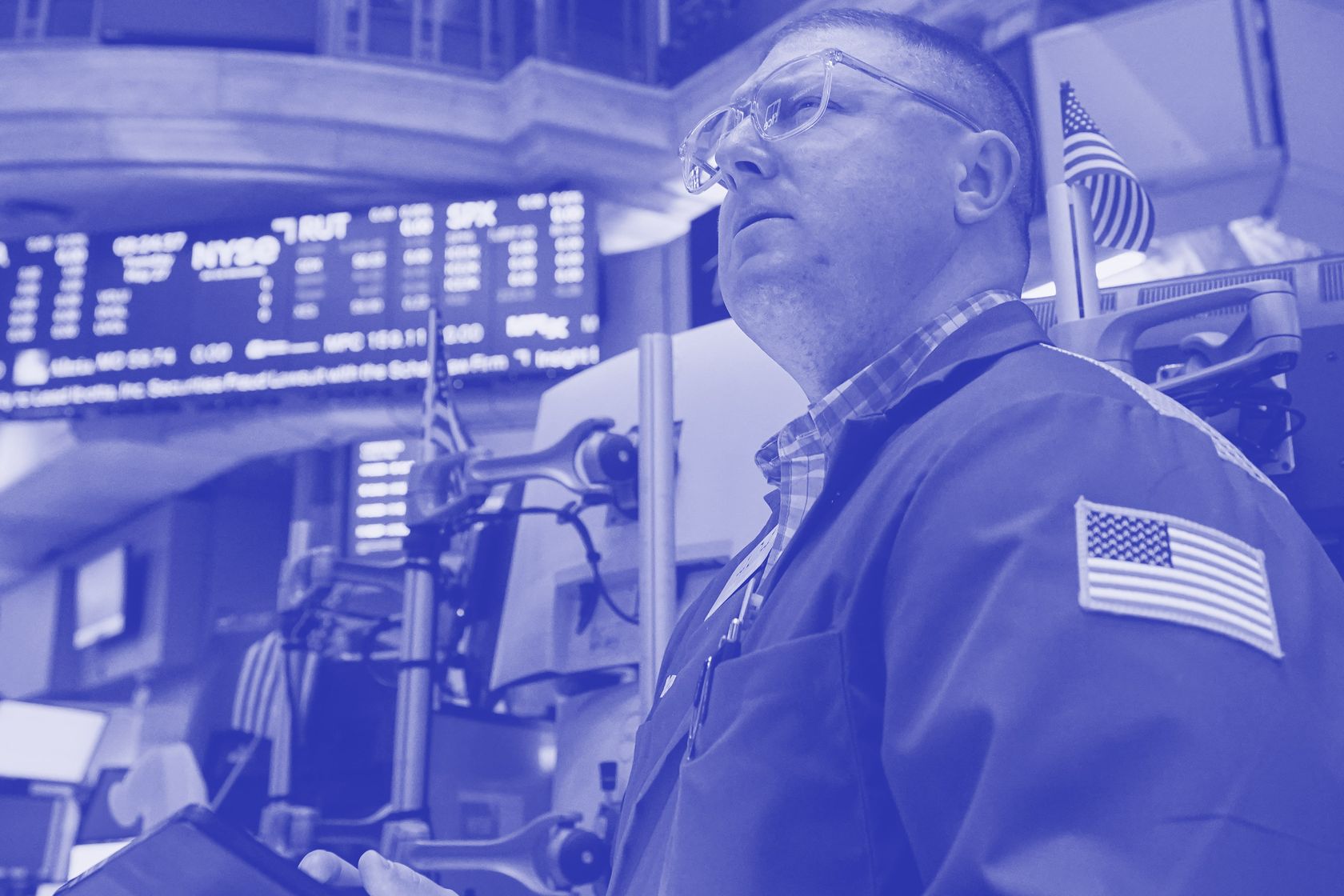
Wall Street rallies on tariff delay and confidence
Plus: Germany considers curbs on military exports to Israel; US halts student visa interviews, weighs social media checks; Greens promise to back Labor if it revives Whitlam’s legacy.
Good morning. Here's what happened overnight and what you need to know today.
Get Standup in your inbox Signed up to Standup
1.
Tariff rally: Wall Street kicked off the week with a rally after Donald Trump delayed 50% tariffs on the EU until 9 July, following a call with European Commission President Ursula von der Leyen. The S&P 500 rose 2.05%, the Nasdaq gained 2.47%, and the Dow climbed 1.78%, also boosted by a sharp rebound in US consumer confidence. Nvidia booked gains ahead of its earnings report tomorrow, while shares in Temu-owner PDD Holdings plunged after reporting a 47% fall in first-quarter profit. Treasuries rallied, with the yield on the 30-year note dropping below 5%. Gold futures fell roughly 2%. Meanwhile, the US government is poised to receive a so-called “golden share” in US Steel as part of Nippon Steel’s proposed acquisition, Nikkei reported. (WSJ)(Reuters)(Bloomberg)
2.
German realignment: Germany is considering curbs on military exports to Israel as its government signals a shift away from supporting the country’s offensive in Gaza. While Germany is one of Israel’s biggest weapons suppliers, Chancellor Friedrich Merz said on Tuesday the extent of the country’s backing would be revisited in internal government talks, as “We are appalled by the terrible suffering of the civilian population…The massive military strikes by the Israeli army in the Gaza Strip no longer make any sense to me as to how they serve the goal of fighting terrorism and freeing the hostages.” European Commission President Ursula von der Leyen also called Israel’s operations targeting civilian infrastructure “abhorrent” on Tuesday. Noting that Germany should refrain from lecturing Israel publicly given its historical responsibility, Merz said that if “international humanitarian law is now really being violated — then Germany…must also say something about it.” (Bloomberg)(Reuters)
3.
Student block: The Trump administration ordered a halt to new student visa interviews as it considers expanding social media vetting of applicants, according to a diplomatic cable obtained and reported by Politico. The State Department cable instructs consular sections to stop scheduling appointments for student or exchange visitor visas (F, M and J categories) “effective immediately,” with further guidance expected soon. The administration is weighing vetting all student visa applicants’ social media posts, shares and comments for potential national security threats or antisemitism. Over a million foreign students in the US contribute nearly USD43.8 billion ($68 billion) to the economy, according to NAFSA. The move follows earlier measures targeting university students, including those involved in pro-Palestinian protests, and efforts to block international enrolments at Harvard. The administration is moving to cancel all remaining federal contracts with Harvard University, while Trump on Monday threatened to divert an additional USD3 billion in grant money from the school. (Capital Brief)(Politico)(Bloomberg)(The Guardian)
4.
Whitlam wannabes: New Greens leader Larissa Waters pledged to support the Albanese government if it pursues progressive reforms, declaring this Parliament will show whether Labor remains “the party of Whitlam”. In an exclusive interview with Capital Brief, Waters said the Greens won’t simply “tick and flick anything Labor bowls up” but will give them the power to pass a progressive agenda. “It will be very telling: Are they the Labor Party of Whitlam, or are they not?” she said. Despite losing three lower house seats, the Greens hold the Senate balance of power. Meanwhile, in an op ed for Capital Brief, Senator Andrew Bragg criticised Labor’s plan to tax unrealised gains on super accounts over $3 million, arguing it creates a “serious conflict of interest” by leaving the Prime Minister’s defined benefit pension calculation out of the legislation, with the Treasurer given unilateral power to decide how it applies. (Capital Brief)(Capital Brief)
5.
Tech tie-up: Salesforce confirmed it will acquire Informatica for USD8 billion ($12.4 billion), at USD25 cash per share. Informatica shares surged 17% to USD22.55 on Friday after reports emerged that the deal had been revived. The companies first discussed the deal in 2024, which would have valued Informatica in the realm of USD10 billion, but the talks stalled after the parties could not agree on terms. After Salesforce bought MuleSoft, Tableau Software and Slack Technologies between 2018 and 2023, the company eased off M&A activity as activists including Elliott Investment Management and Starboard Value began to circle. Salesforce has a current market capitalisation of over USD260 billion. Marc Benioff, chair and CEO of Salesforce said: “By uniting the power of Data Cloud, MuleSoft, and Tableau with Informatica’s…advanced data management capabilities, we will…significantly strengthen our position in the $150 billion-plus enterprise data market.”(Capital Brief)(Salesforce)(WSJ)(Capital Brief)
6.
Full circle: Circle is targeting a valuation of up to USD6.7 billion ($10.4 billion) on a fully diluted basis in its NYSE IPO, as the world’s second largest stablecoin filed its listing application with the SEC. Circle said that it will offer 24 million shares for USD24 to USD26 each, planning to raise up to USD624 million when it floats. Cathie Wood’s ARK Investment Management said it is interested in buying up to USD150 million of the shares in the IPO. US legislation on stablecoins is currently making its way through Congress, which could support the sector if it is approved. While the SEC said it does not deem stablecoins to be securities in April, Circle warned that if stablecoins are classified as securities, its business could be materially affected. This week Trump’s media company announced that it plans to raise USD3 billion to buy cryptocurrencies including Bitcoin. (Capital Brief)(Circle)(SEC)(FT)
7.
Bitcoin till: Block Inc is launching a feature to allow businesses that use the company’s Square point-of-sale terminals to accept payment in bitcoin. The bitcoin payments feature is expected to start rolling out in the second half of 2025 and reach all eligible sellers in 2026, subject to regulatory approvals, the company said. Customers will scan a QR code at checkout to initiate the payment, which will be facilitated via the Lightning Network. The rollout began this week at Bitcoin 2025 in Las Vegas, where attendees can scan and pay for T-shirts, hoodies and hats at the BTC Inc pop-up store. The feature builds on Block’s “Bitcoin Conversions” tool, launched in 2024, which lets merchants automatically convert a portion of their daily sales into bitcoin. Over 1,000 sellers have opted into the program. (Block)(Bloomberg)
8.
Road block: Mineral Resources revised down its iron volume guidance for Onslow Iron as its troubled haul road continues to pose challenges. A statement released to the ASX on Tuesday evening says that Onslow Iron volume guidance has been revised to 7.8 to 8.0 million tonnes (Mt) from 8.5-8.7 Mt previously. The reduction relates to lower-than-expected availability of contractor road trains for haulage and below-forecast daily cycles, despite a steady ramp-up of haulage volumes and “as-expected performance of MinRes jumbo road trains.” Images shared by the AFR show MinRes’ 330 tonne road trains driving at a third of their usual speed as the key road between the mine and shipping port remains under construction. Earlier this year MinRes flagged issues with the new road which is half owned by Morgan Stanley Infrastructure Partners, and committed to spend $230 million on repairs and upgrades. (Capital Brief)(ASX)(AFR)(Capital Brief)