Wall Street slides as tariff pain grows
Plus: Australia declines China's trade call to ‘hold hands’; EU and Australia to restart free trade deal talks; Trump’s Fed nominee Michelle Bowman vows bank rules overhaul.

Good morning. Here's what happened overnight and what you need to know today.

1.
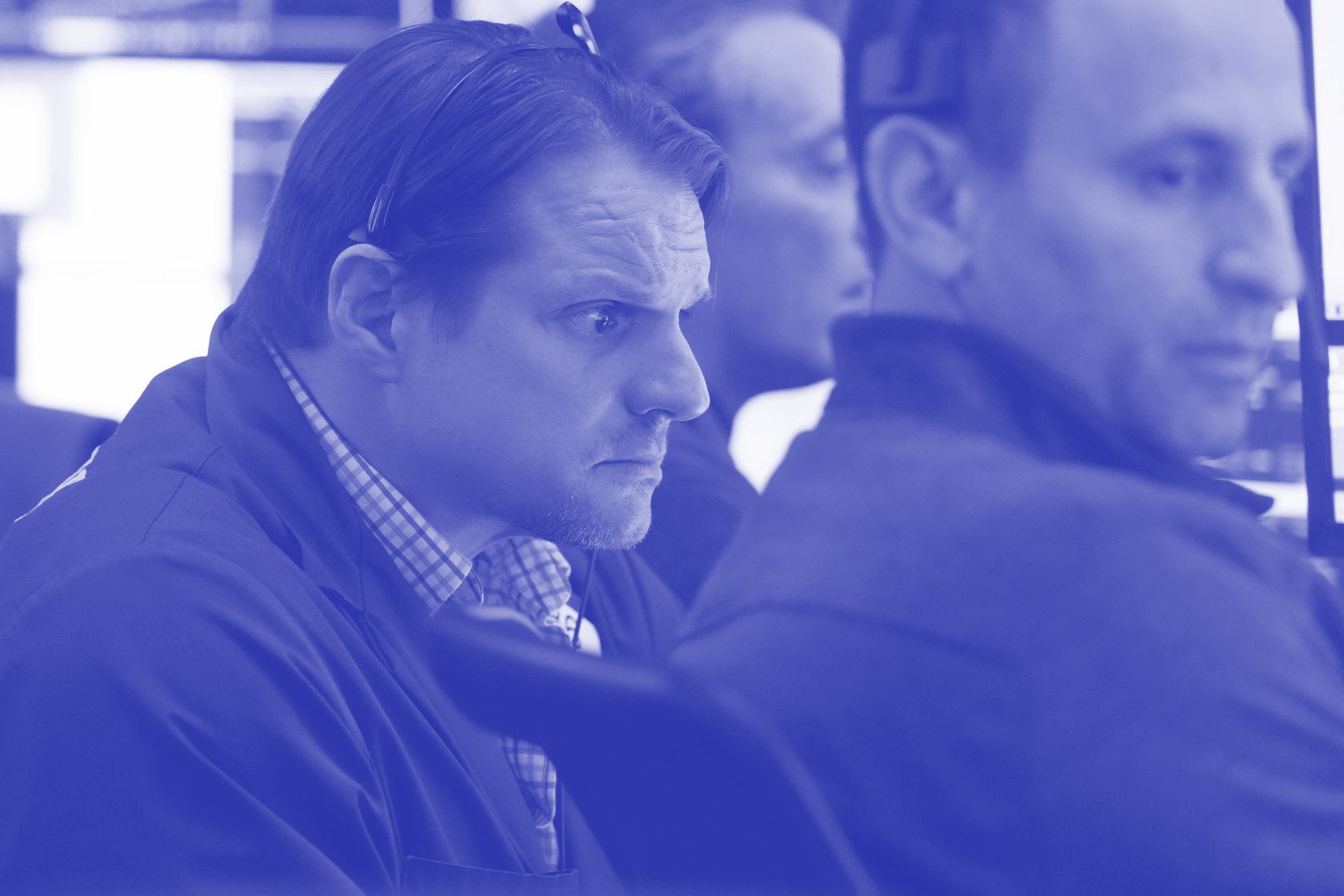
Tariff tremor: Wall Street plunged Thursday as the White House confirmed Chinese imports now face a minimum 145% tariff, deepening fears over escalating trade tensions. The S&P 500 fell as much as 6.3%, the Nasdaq 7.2% and the Dow 5.4%, partly reversing Wednesday’s historic rally after President Trump paused some tariffs. Traders cited confusion, volatility and recession risks with stocks later retracting about half of their losses and the bond selloff continuing. The 145% figure includes the 125% tariff on China announced Wednesday, plus a 20% fentanyl-related levy imposed earlier this year. Existing tariffs of 25% on steel, aluminium, cars and select goods remain. A 10% blanket import tax on most other trading partners is in effect, with higher duties due from 9 July if no deals are struck. Tariffs on low-value Chinese imports will rise from 90% to 120%. Postal duties will increase from USD75 to USD100 in May, and from a previously scheduled USD150 to USD200 from June. Yale researchers estimate an average effective tariff of 25.3%, the highest since 1909. (Bloomberg)(Reuters)
2.
Handhold declined: Australia will not align with China to counter US tariffs, Deputy Prime Minister Richard Marles said on Thursday, rejecting a proposal from Chinese ambassador Xiao Qian to “join hands” on trade. In an opinion column in The Age, Xiao said China was ready to work with Australia amid escalating trade tensions. Marles told Sky News: “We are not going to be holding hands with China in respect of any contest that is going on in the world.” He added Australia would build economic resilience by strengthening trade ties with the EU, Indonesia, India, Britain and the Middle East. China is reaching out to other nations in an attempt to form a united front as the US escalates tariffs, including through talks with the EU. Beijing has signalled it is open to talks but bracing for battle, vowing to “fight to the end” if needed, while preparing economic stimulus to shore up consumption and steady markets. (Capital Brief)(Capital Brief)
3.
Free trade: Australia and the European Union are set to reopen free trade negotiations, with EU trade chief Maros Sefcovic expected to visit after the 3 May election. Trade Minister Don Farrell held an online meeting with Sefcovic on Thursday, describing it as “warm and constructive” and saying it “went much longer than it had intended to”. “We’re not that far apart,” Farrell said, citing “a mutual recognition the world has changed” and a shared desire to progress talks. European Commission spokesperson Olof Gill said the meeting covered a possible timeline. The meeting was requested by Australia, according to the Sydney Morning Herald. While detailed concessions on agricultural access—an issue that stalled talks in 2023—were not discussed, Australian officials viewed Sefcovic’s travel plans as an encouraging sign. Business groups estimate a deal could eliminate about 98 per cent of tariffs and deliver a $6 billion boost to trade.(SMH)(AFR)
4.
Fed’s message: Federal Reserve Governor Michelle Bowman, nominated by Donald Trump to be the Fed’s vice chair for supervision, told the Senate Banking Committee she would overhaul how the central bank monitors large banks, pursue “pragmatic” rules and apply “cost-benefit analysis” to new regulations. She said the regulatory system is “overly complicated and redundant,” with “conflicting and overlapping requirements” imposing “unnecessary and significant costs.” Senator Elizabeth Warren accused Bowman of prioritising “the interests of Wall Street” and questioned her about the financial impact of Trump’s tariffs. Bowman responded, “I think it’s unclear at this point since we don’t know... what their effects on the industries will be.” Meanwhile, Chicago Fed President Austan Goolsbee called Trump’s tariffs a “stagflationary shock.” Kansas City Fed President Jeff Schmid said he would prioritise curbing inflation over employment if the two conflict, while Dallas Fed economist Pia Orrenius said current immigration enforcement could cut GDP growth by one point and raise inflation by 0.3 points. (Reuters)(Bloomberg)(US Senate)
5.
Holding fire: RBA governor Michele Bullock has refused to bow to pressure to give guidance on earlier rate cuts, saying it is too early to make the call. On Thursday night, Bullock said both "financial market and economic volatility" can be expected as the tariff process unfolds. The RBA chief soothed concerns, distinguishing the current market turmoil from previous market events like the 2008 GFC, and emphasised that the Australian financial system is "strong and well placed to absorb shocks from abroad." Keen to avoid “adding to the uncertainty,” Bullock said the bank’s focus remains on its dual mandate for price stability and full employment. The comments come as economists and markets revise their expectations of rate cuts, with the latter eyeing an outsized 50 basis point cut in May. The timing of rate cuts was also a point of contention during Wednesday’s Treasurer’s debate after the Shadow Treasurer accused Jim Chalmers of “forecasting interest rates.” (Capital Brief)
6.
Suite shift: At its Create Summit in Los Angeles, Canva unveiled what it called its “largest product drop” since founding. Visual Suite 2.0 marks a strategic pivot for the Australian tech unicorn as it moves beyond design into productivity tools. It introduces Canva Sheets for data visualisation, Magic Studio at Scale for automated content generation, a conversational AI design interface and unified design formats in single files. Canva’s annualised recurring revenue has grown to $US3 billion, up from $US2.5 billion in October, with 230 million monthly users and 25 million paying customers. AI tools are now used 800 million times a month — a 700% year-on-year increase. Its $US250 million acquisition of Leonardo.Ai underpins its Phoenix image model. Canva — recently valued at $49 billion – last week made redundancies in its technical writing team, which co-founder Cliff Obrecht told The Australian were due to workflow changes, not AI. (Capital Brief)
7.
Sub sale scrutiny: Australia’s purchase of nuclear-powered submarines under AUKUS faces renewed pressure amid concern that transferring the US submarines to Canberra may reduce deterrence to China, Reuters reported. In Washington, consternation is growing over Australia’s reluctance to even discuss using the three Virginia-class submarines against China, with experts and documents warning that removing them from the US fleet could weaken deterrence in the Indo-Pacific. In a recent multilateral war game simulating a US ally response to a Chinese blockade of Taiwan, Australian Defence Force commanders did not use nuclear-powered submarines to strike Chinese targets in the South China Sea, instead focusing on defending Australia’s northern approaches with airpower, drones and missiles, said Bryan Clark, who ran the exercise. These concerns were echoed in a US Congressional Budget Office report in February and in March testimony on Navy shipbuilding delays, which warned that selling the submarines without replacements was risky given Canberra had not made it clear whether its military would join the US in a conflict over Taiwan. (Reuters)
8.
VCs or opportunists: Airtree, Main Sequence and other Australian venture capital firms are encouraging their portfolio companies to focus on runway and profitability as they anticipate a bumpy ride ahead. While the tariffs introduced — and then softly walked back — by Trump are largely aimed at physical goods, Airtree partner James Cameron told Capital Brief that Australia’s software developers shouldn’t be complacent. "If you're running a software startup and your customers (or your customers' customers) sell physical goods, you should be prepared for increased churn risk, longer sales cycles, and tightening budgets — similar to what we saw in the early COVID period." Elaine Stead, principal at deep tech investor Main Sequence says it’s a good time to extend runway and where possible pivot to a clearer path to profitability, while Archangel Ventures partner Rayn Ong said it’s important to help portfolio companies “focus on mission-critical software that help their customers run a tighter ship in this environment." (Capital Brief)
