Wall Street swings wildly amid Trump’s new China tariff threat
Plus: Trump quashes tariff pause hopes, calls headlines “fake news”; Bonds retreat after rally while credit markets stall; Wall Street leaders hit out at Trump's tariffs.
Good morning. Here's what happened overnight and what you need to know today.
Get Standup in your inbox Signed up to Standup
1.
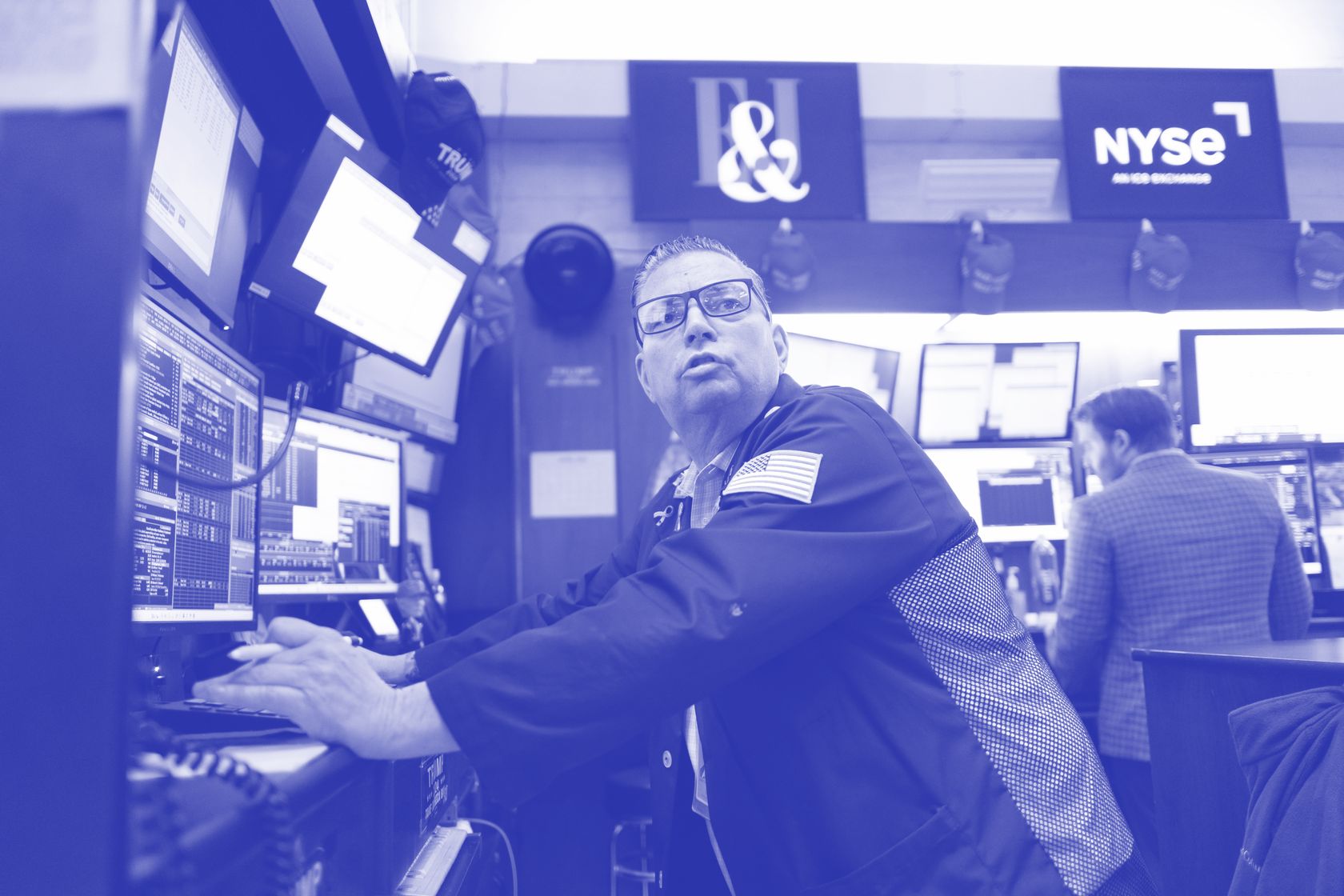
Poke the bear: US stocks careened through a manic Monday of volatility as President Donald Trump threatened to raise tariffs further, including an additional 50% on China if it does not withdraw its retaliatory tariffs. The Dow Jones plunged as much as 1,700 points before swinging to a gain of nearly 900, then turned lower again after the White House called a rumour of a 90-day tariff pause “fake news.” The S&P 500 fell more than 20% below its recent record at one point and saw a 7% intraday swing, its biggest since 2020. It was trading 0.48% lower late in the afternoon session. The wild moves followed frenzied markets in Asia and Europe. Hong Kong’s Hang Seng fell 13.2%, its worst since 1997, and the ASX slid 4.2%, its worst trading day since 2020. ASX futures were pointing to a flat start to Tuesday’s trading session. (Capital Brief)(FT)(Bloomberg)(Reuters)
2.
Tariff thunder: President Donald Trump threatened to impose an additional 50% tariff on China unless Beijing withdraws its 34% retaliatory tariff immediately. In a Truth Social post on Monday (Tuesday AEST), Trump said if China doesn’t pull back by 8 April, the 50% levy would come on top of the ‘reciprocal’ 34% duty, with both taking effect Wednesday, 9 April. He called China “the biggest abuser” on trade and blamed past US leaders. He dismissed reports of a tariff pause as “fake news” and claimed falling oil prices were a policy win. Trump also said “all talks with China... will be terminated” and talks with other countries would begin “immediately.” The new tariffs add to a prior 20% duty on China tied to fentanyl trafficking. The threat comes as markets plunge for a third day, with the Dow down as much as 4.4% Monday and the S&P 500 nearing bear territory. Indexes across Asia also suffered heavy losses. (Capital Brief) (Donald Trump)
3.
Bond burnout: US bond markets showed signs of exhaustion after their biggest weekly rally since August. Credit markets stalled as Treasuries weakened in a volatile session on Monday with yields across all maturities briefly higher by at least 15 basis points. Yields on 30-year bonds fell to 4.32%, then rose to 4.62% and landed at around 4.60% in late afternoon, NY time. 10-year yields climbed above 4.15% after dipping below 3.9%. Traders’ bets on Fed cuts this year now fluctuate between three and five, with four now priced in the swap market – the first expected in June. Meanwhile, credit markets remained frozen, with no new bond offerings announced for a third day, as recent volatility prevents issuers from pricing deals. Fed Governor Adriana Kugler warned tariffs pose more urgent inflation risks than growth concerns, while former Federal Reserve Bank of New York president Bill Dudley said stagflation has become the US’s best-case scenario. (Capital Brief)(Bloomberg)(Reuters)(WSJ)
4.
Tipping point: Wall Street executives spoke out against President Trump’s decision to impose sweeping global tariffs, after a market selloff erased several trillion dollars in value. JPMorgan CEO Jamie Dimon said tariffs will “likely increase inflation,” slow down growth, and threaten “potentially disastrous” fragmentation of economic alliances. In a letter to shareholders, he also encouraged the US to actively seek further free trade agreements, particularly with allies like Australia. BlackRock boss Larry Fink said “most CEOs I talk to would say we are probably in a recession right now” and warned stocks could fall another 20%. Billionaire investor Stanley Druckenmiller said he does “not support tariffs exceeding 10%.” Bill Ackman – whose Pershing Square fund is down 15% this year from big losses in Alphabet and Brookfield – warned the US is “heading for a self-induced, economic nuclear winter” and called for a 90-day pause. And Elon Musk criticised Trump’s trade adviser and called for a US-Europe free-trade agreement. Despite backlash, Trump defended the tariffs, and Commerce Secretary Howard Lutnick told bank CEOs “nothing’s going to change.” Markets remain volatile, with the S&P 500 near bear market territory. (Capital Brief)(JP Morgan)(Bloomberg)(FT)(WSJ)
5.
Tariff response: The European Commission said Monday (Tuesday AEST) it had offered a “zero-for-zero” tariff deal to the US to avert a trade war, while also proposing 25% retaliatory tariffs on a range of US imports in response to Trump’s steel and aluminium tariffs. The measures are planned to begin on 15 April, with a second tranche from 1 December. A preliminary list was shortened, removed bourbon, wine and dairy, after Trump threatened a 200% tariff on EU alcoholic drinks. Meanwhile, Israel pledged to “eliminate” its trade deficit with the US. Trump said Japanese Prime Minister Shigeru Ishiba agreed in a phone call to begin Cabinet-level talks on the planned 24% tariff on Japan’s exports, describing the negotiations as operating under “tough but fair parameters” and repeating claims Japan had “treated the US very poorly on Trade.” Japan and South Korea are sending delegations to Washington, and The Philippines said it would reduce tariffs on US goods. Trump said talks would begin with countries willing to cooperate warning that “any country that retaliates” would face “substantially higher tariffs.” (NYT)(Reuters)
6.
11th hour: Star Entertainment has been brought back from the brink after accepting a $300 million rescue package from Bally’s Corporation. The embattled entertainment group announced the deal will see Bally’s issue convertible notes at a conversion price of 8 cents per share, equating to a 56.7% stake in Star. Star will receive its first $100 million tranche by Wednesday, with the balance to follow after a shareholder vote and regulatory nods. The board intends to approve the deal. Star said that should it receive a potential $100 million injection from its largest shareholder, pub baron Bruce Mathieson, Bally’s will trim down its investment to $200 million. The group has been under extreme financial pressure as it manages ongoing regulatory probes and a collapse in revenue. Star's shares have been suspended from trading since 3 March after failing to file financials. Star first confirmed reports of Bally’s proposal in March. (Capital Brief)(The Star)
7.
Phone redirected: Apple plans to send more iPhones to the US from India to offset the high cost of China tariffs, The Wall Street Journal reported citing unnamed sources. The adjustments are a short-term stopgap while the company seeks an exemption from President Trump’s tariffs, which raise levies on Chinese goods to at least 54%, compared with 26% on Indian goods. Apple’s heavy reliance on China for manufacturing has spooked investors, contributing to an about 20% decline in its shares—the worst three-day performance in nearly 25 years. The iPhone makes up about 50% of Apple’s revenue. Bank of America analyst Wamsi Mohan said Apple will make about 25 million iPhones in India this year, around 10 million of which would normally supply the local market. Redirecting all of them to the US could meet about 50% of American demand. Apple also plans to spend over $500 billion in US manufacturing. (WSJ)
8.
Coalition implosion: Senior party sources have confirmed to Capital brief that Peter Dutton’s scrapped work-from-home policy never went to shadow cabinet, leaving it riddled with risk. Some frontbenchers even voiced concerns about the policy prior to it being announced. The revelation raises serious questions about the way policy has been formulated by the Opposition, as Dutton seeks to reset his ailing campaign in the first leaders debate against Anthony Albanese on Sky News this evening. The decision to backflip on the work-from-home crackdown, and scale back public service cuts to natural attrition rather than forced redundancies, is widely seen internally as a necessary course of action. But it has opened Dutton up to fresh questions on his policy offering, including how he will pay for everything he has promised. Capital Brief outlines how the policy derailed the Coalition’s campaign before it officially began. (Capital Brief)