Wall Street wobbles as Big Tech earnings loom
Plus: Blackout paralyses Spain and Portugal; NZ rewrites laws to protect Aussie banks; Canada votes as Trump tension lifts Liberals.

Good morning. Here's what happened overnight and what you need to know today.

1.
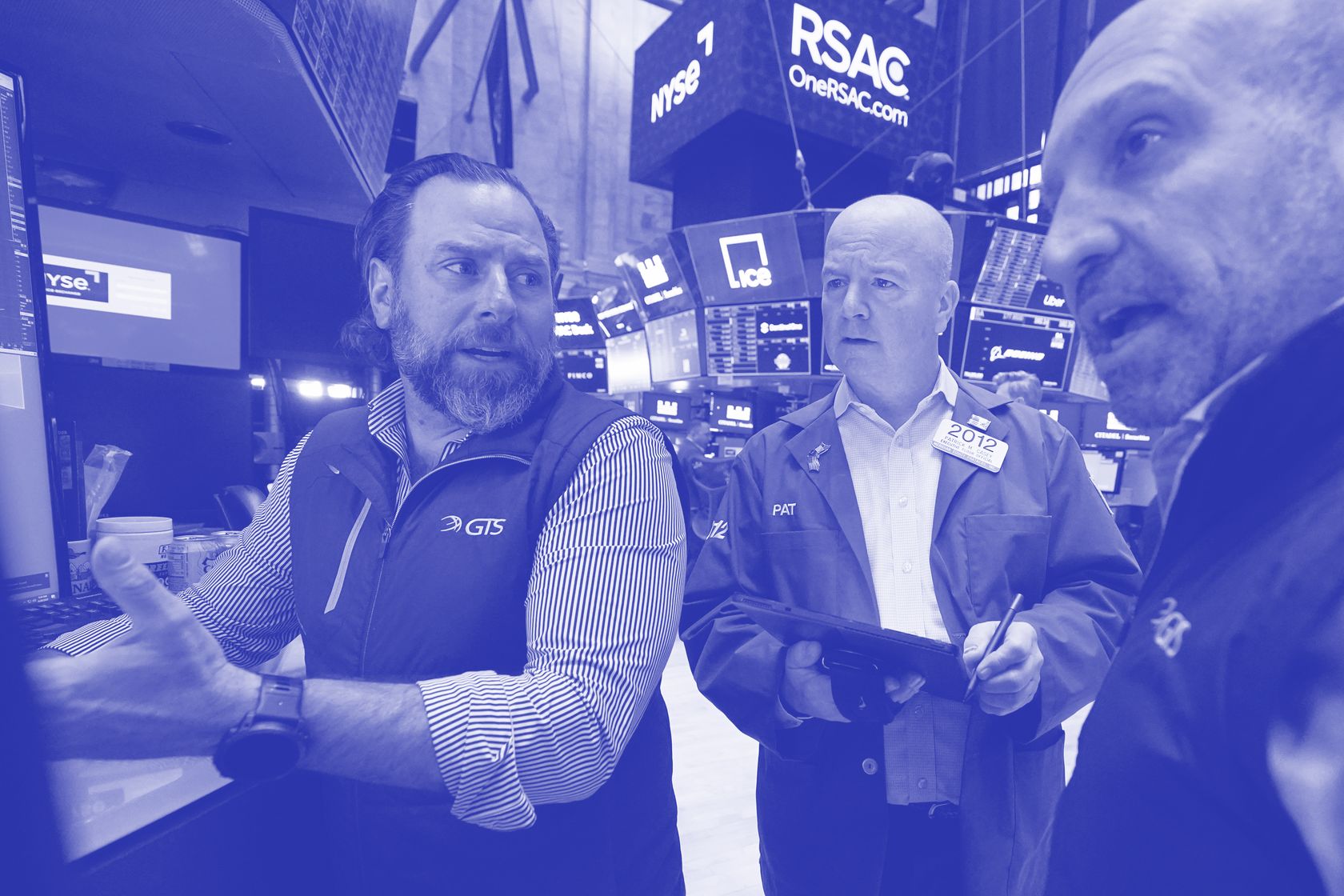
Tech turbulence: Wall Street traders braced for one of the busiest weeks of the year as US stocks churned, with earnings from the “Magnificent Seven” and key economic data on deck. The S&P 500 spent most of the session in the red, after its longest winning run since January, weighed down by megacaps including Nvidia and Amazon after reports that Huawei is preparing to test a rival AI chip. The S&P 500 closed 0.06% higher, the Nasdaq dropped 0.10%, and the Dow gained 0.28%. Treasury Secretary Scott Bessent said it is up to China to de-escalate trade tensions, highlighting progress with 15 to 18 countries and a potential deal with India. JPMorgan’s trading desk turned tactically bullish on US equities, predicting that Big Tech earnings and trade deal announcements could lift stocks, but warned the rally’s momentum could fade within weeks. Treasury yields declined, Bitcoin rose, as recession risks remain high. Microsoft, Apple, Meta and Amazon report results this week. (WSJ)(Bloomberg)
2.
Power cut: Most of Spain and all of Portugal were hit by a major blackout on Monday, with public transport, traffic lights, telecoms networks and airports all without power, bringing the European nations to a standstill. Spain’s grid operator Red Electrica explained that sharp power swings, called oscillation triggered the widespread blackout. Oscillation occurs when grid frequency, which normally stays pretty steady around 50 hertz and maintains grid stability, starts moving rapidly. This happened just after midday in Spain, and triggered a chain reaction that led to the power cuts. All of Repsol’s oil-processing units in Spain, which would typically process about 775,000 barrels a day of crude, suffered disruptions because of the blackout. Bloomberg reported the stock market operated normally in both countries, with Spain’s Ibex35 trimming earlier gains shortly after the blackout hit. The outage also briefly affected France. (Bloomberg)(Reuters)(Capital Brief)
3.
Canada votes: Canadians are voting in an election that will decide who leads the country through President Trump’s tariffs, annexation threats and economic turmoil. Pre-election surveys show Prime Minister Mark Carney’s Liberal Party with a slight advantage over Pierre Poilievre’s Conservatives, with Liberals at 41% or 43% and Conservatives at 39%, according to Abacus Data and Leger polls. Trump’s aggressive rhetoric and tariffs have upended the campaign, helping the Liberals recover from trailing by over 25 points just months ago. Surveys show voters prefer Carney to stand up to Trump, while Poilievre has focused on cost of living, housing and deficit issues. But his tonal and ideological similarities to Trump have put off some voters. Liberals lead in Ontario and Quebec, while Conservatives dominate Alberta and Saskatchewan. Canada’s first-past-the-post system gives Liberals an advantage because their support is more efficiently spread across key regions. Other parties, including the New Democrats, Greens and Bloc Québécois, are projected to win small numbers of seats. (NYT)(Bloomberg)(BBC)
4.
Kiwi credit: Australia’s banks have secured an extraordinary win in New Zealand, with the Luxon government proposing to retrospectively change existing laws to prevent a major class action against Commonwealth Bank and ANZ. The lawsuit, filed by Russell van Hout in 2021, centres on disclosure failures affecting more than 170,000 mortgage customers of ANZ and CBA’s ASB Bank subsidiary, and follows settlements with the Commerce Commission. According to the New Zealand Herald, ANZ agreed to pay $35 million to over 100,000 customers and ASB $8 million to 73,000 customers, but borrowers argue they were short-changed. The proposed law changes would allow courts to reduce or deny compensation, addressing government concerns that large payouts could reduce credit access and competition. Scott Russell, leading the action, labelled the move an “outrageous use of power,” while the banking lobby says it will bring clarification and certainty. (The Australian)(AFR)
5.
Symbolic ceasefire: Russian President Vladimir Putin announced a three-day ceasefire from 8 May to 10 May, when he will host international leaders to commemorate victory over Nazi Germany in WWII. In response, Ukraine's Foreign Minister Andrii Sybiha called for an immediate ceasefire lasting "at least 30 days". White House press secretary Karoline Leavitt told reporters on Monday that President Trump wants to see a permanent ceasefire to end Russia's war in Ukraine and that Trump is growing increasingly frustrated with Putin and Zelensky. Over 20 ceasefires have been attempted since the outset of the war, with the most recent 30-hour Easter truce seeing both sides accuse each other of violating the agreement. Earlier on Monday, Kyiv said that it is close to signing a minerals framework deal with the US after Trump conceded the US would not factor in past military aid, while North Korea confirmed that it had sent troops to fight for Russia in the war in Ukraine. The news comes as 49 Australian-pledged tanks promised to Ukraine six months ago are yet to leave the country amid delays by the Trump administration and uncertainty over who will foot their $150 million annual upkeep. (BBC)(The Australian)
6.
Betr bet: Betr has acquired a 19.9% stake in Pointsbet Holdings, two months after Pointsbet’s board rejected a bid from the rival wagering group. Betr will become the registered holder of 66,013,329 shares, equivalent to 19.9% of issued share capital, according to an ASX announcement on Monday. Over the weekend, the AFR reported Betr was securing fund manager support for a $100 million-plus equity raising via Ord Minnett and Morgans to bankroll its Pointsbet offer. Sources told the AFR Betr’s bid is largely unchanged from earlier this year, but the raising would remove “funding uncertainty.” Betr’s February offer valued Pointsbet at up to $360 million, competing with a $353 million proposal from Japanese group Mixi. Pointsbet previously rejected Betr’s (formerly Bluebet) offer, citing funding issues and potential shareholder value risks. Betr says further detail will be provided alongside an announcement on the proposed capital raising. (Betr)(AFR)(Capital Brief)
7.
‘Aussie Cossack’: Independent candidate Matthew Camenzuli, who is trying to unseat Energy Minister Chris Bowen, has denied any link to Australia’s most prominent pro-Russian propagandist after “The Aussie Cossack” urged his supporters to back his campaign. Simeon Boikov, who has been living in Russia’s Sydney consulate for more than two years after avoiding an arrest warrant for allegedly assaulting a 76-year-old man at a pro-Ukraine rally, has posted at least 25 times on social media supporting the IT millionaire and former Liberal Party executive’s campaign in McMahon. This included a Telegram post organising a rally in Fairfield over the weekend, attended by some of Boikov’s supporters but not Camenzuli himself. Boikov has also urged his supporters to recruit volunteers, fill pre-poll rosters, and created a bot encouraging people to share ballot papers for Camenzuli. Camenzuli’s campaign told Capital Brief it has “no connection” to Boikov and has not received any donations from him. (Capital Brief)
8.
America first: IBM plans to invest USD150 billion ($233.4 billion) in the US over the next five years, including more than USD30 billion for research and development in American-manufactured mainframes and quantum computers. The investment comes as part of a broader wave of corporate spending commitments following President Trump's election and tariff threats. IBM is one of the largest tech employers in the US, and Arvind Krishna president and CEO said the company plans to remain the “epicenter of the world's most advanced computing and AI capabilities." Companies including Apple, Eli Lilly, and Nvidia have similarly announced billion-dollar investments in US manufacturing since Trump took office. IBM reported about USD33.6 billion in research and development spending globally in the past five years, with total operational expenses in that period coming to USD141.8 billion. (IBM)(CNBC)(Bloomberg)(Capital Brief)
