Walmart becomes biggest retailer to pass on tariff costs
Plus: Trump tells Apple to stop building iPhones in India for US; Australia won’t join US push against China, says Farrell; Oil prices plunge as Trump signals Iran talks progress.

Good morning. Here's what happened overnight and what you need to know today.

1.
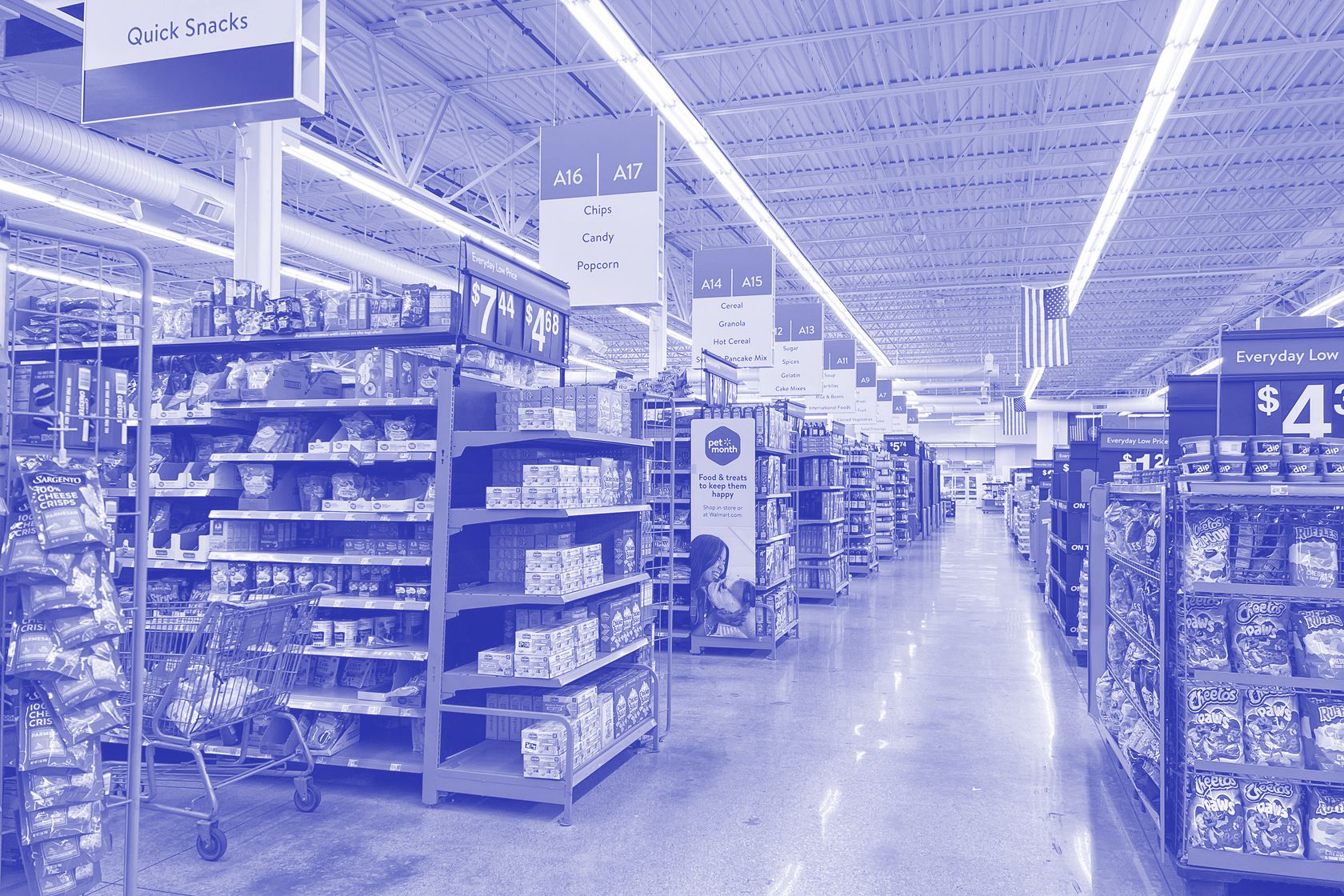
Tariff price: Walmart posted strong quarterly results, but the world's largest retailer said it will raise prices later this month due to higher tariff costs. For the quarter ended 30 April, US same-store sales rose 4.5% and adjusted earnings were 61 cents per share, both beating estimates. US e-commerce sales rose 21%, with Walmart’s online business posting a quarterly profit for the first time. CEO Doug McMillon said the retailer will try to keep grocery prices low but cannot absorb all tariff costs. Some prices already have increased. The “magnitude and speed at which these prices are coming to us is somewhat unprecedented in history,” CFO John David Rainey said. Despite a US-China truce cutting levies on Chinese goods to 30%, Rainey said that’s still too costly. “We're very pleased and appreciative of the progress that has been made by the administration to bring tariffs down ... but let me emphasize we still think that's too high”. Meanwhile, US retail sales growth slowed in April and producer prices unexpectedly dropped due to weakening demand for services. (Capital Brief)(Walmart)(WSJ)(Reuters)
2.
Trump ask: Donald Trump asked Apple CEO Tim Cook to stop building factories in India to build devices for the US, in efforts to skirt US tariffs on Chinese-made goods. “I had a little problem with Tim Cook yesterday,” the US president said. “I said to him, Tim… you’re coming in with USD500 billion but now I hear you’re building all over India, I don’t want you building in India.” After shipping 600 tonnes of iPhones to the US from India last month, Apple plans to shift the assembly of all US-sold iPhones (over 60 million) to India as soon as next year. Trump said that Apple will be “upping their production” in the US as a result of the conversation. Apple has not responded to the comments publicly. Meanwhile, Shein is also reportedly looking to circumvent US tariffs by leasing 15 hectares to build a warehouse in Vietnam, according to Reuters. (Capital Brief)(FT)(Axios)(Reuters)(Bloomberg)
3.
Trade sides: Trade Minister Don Farrell said Australia will resist pressure from the Trump administration to gang up on Beijing over trade, as China is a substantially larger buyer of Australian exports. In 2023–24, exports to China were worth $212 billion, compared to $37 billion to the US. “We don’t want to do less business with China, we want to do more,” Farrell told The Australian Financial Review. He said the government is not rushing to seek relief from US tariffs and “will only do a deal if it’s in our national interest.” Following Anthony Albanese’s re-election, Ambassador Kevin Rudd met US Commerce Secretary Howard Lutnick and Trade Representative Jamieson Greer, and a revised proposal to remove tariffs on Australian goods was lodged. Farrell said trade with China had effectively recovered since Beijing lifted bans and tariffs on $20 billion worth of goods. He also said removing Australia’s luxury car tax was an option in EU trade talks. (AFR)
4.
Slippery deal: Oil prices slumped after Trump said that the US administration could soon reach a deal with Iran on its nuclear program. Prices for international benchmark Brent crude slid as much as 3.7% to USD63.64 ($99.33) a barrel and West Texas Intermediate dropped as much as 4.1% to USD60.57 a barrel, after Trump said that Washington was in “serious negotiations” with Tehran. “We’re in very serious negotiations with Iran for long-term peace…we’re getting close to maybe doing a deal.” A top Iranian adviser earlier told NBC News that Iran was ready to sign a nuclear deal which would see Tehran forgo highly enriched uranium in exchange for the lifting of all sanctions. Meanwhile, the International Energy Agency warned that global oil demand will slow for the remainder of the year as economic headwinds and record EV sales curb use. (FT)(Bloomberg)(CNBC)(IEA)
5.
Crypto breach: Hackers had near-constant access to some of the most valuable customer data of Coinbase, the largest US crypto exchange, since January, according to sources cited by Bloomberg. Coinbase said attackers bribed overseas customer service representatives to steal names, birth dates, addresses, nationalities, government-issued ID numbers, some banking details and account information, then demanded a USD20 million ($31.2 billion) ransom. Coinbase began noticing unusual activity in January and fired the agents involved. Chief Security Officer Philip Martin said access was not persistent, and agents’ access was pulled as soon as improper sharing was detected. Coinbase received the ransom demand on 11 May, but instead of paying, it is offering a USD20 million bounty for information leading to the attackers’ arrest and conviction. Less than 1% of monthly transacting users were affected. The incident could cost Coinbase up to USD400 million and comes as the company is set to join the S&P 500. Shares fell as much as 8.83%.(Bloomberg)(Capital Brief)
6.
Much ado: The Australian researcher at the centre of Sam Altman’s attempted ousting as CEO, Helen Toner, says OpenAI’s recently announced restructure plans are not as dramatic as they may seem. OpenAI’s commitment to remain governed by a nonprofit was heralded by many as a “backtrack” and a "big reversal", but the former board member told Capital Brief that may not be the case. “A lot of what they’ve announced about the structure they’ll be going through with is actually very similar to what they had previously [said].” Toner explained that a December missive issued by OpenAI saw the company state it would seek to transform its for-profit arm into a Public Benefit Corporation (PBC) and make the nonprofit “one of the best resourced in history”. That is largely in line with the new structure OpenAI’s board outlined on 5 May, though many had expected a complete pivot to a traditional for-profit model. (Capital Brief)
7.
Missing targets: Chinese e-commerce giant Alibaba missed expectations for its fiscal fourth quarter, reporting revenue of 236.45 billion yuan ($51.2 billion) for the three months to 31 March, slightly below the 237.24 billion yuan forecast. Net income fell to 12.4 billion yuan, well short of the 24.7 billion yuan expected. Shares dropped as much as 8.5%, with investors concerned Alibaba is losing ground to rivals Tencent and JD.com, despite heavy AI investments. According to Reuters calculations Ant Group, in which Alibaba holds a 33% stake, reported a 31% year-on-year drop in quarterly profit to 5.4 billion yuan for the three months to 31 December, as the company funnelled funds into artificial intelligence and other revenue-boosting projects. (Capital Brief)(Alibaba)
8.
Monetary methods: Fed chair Jerome Powell said officials are weighing changes to key parts of its monetary policy framework, including how they think about shortfalls in US employment and approach their inflation target. Powell said the current framework, designed at a time of persistently low interest rates and low inflation, must adapt to “significant” changes in the economic environment since 2020, including “more frequent, and potentially more persistent, supply shocks”. The framework review, begun this year, is expected to conclude “in coming months” and is not likely to influence current interest rate decisions, which remain at 4.25% to 4.5%. Meanwhile, JP Morgan chief Jamie Dimon said US recession remains a possibility as the Trump administration’s tariff policies continue to rattle markets. And in an investor letter seen by the FT, hedge fund Elliott Management warned that Trump’s tariffs could lead to a “capital flight” from the US and a significant fall in value of the currency and US assets. (Reuters)
