Western leaders condemn Israeli strikes on Rafah camp
Plus: PNG estimates more than 2,000 buried in landslide; Guyana President supports Chevron-Hess deal ahead of key vote; China unveils US$47.5b fund to bolster chipmaking.

Good morning. Here's what happened overnight and what you need to know today.

1.
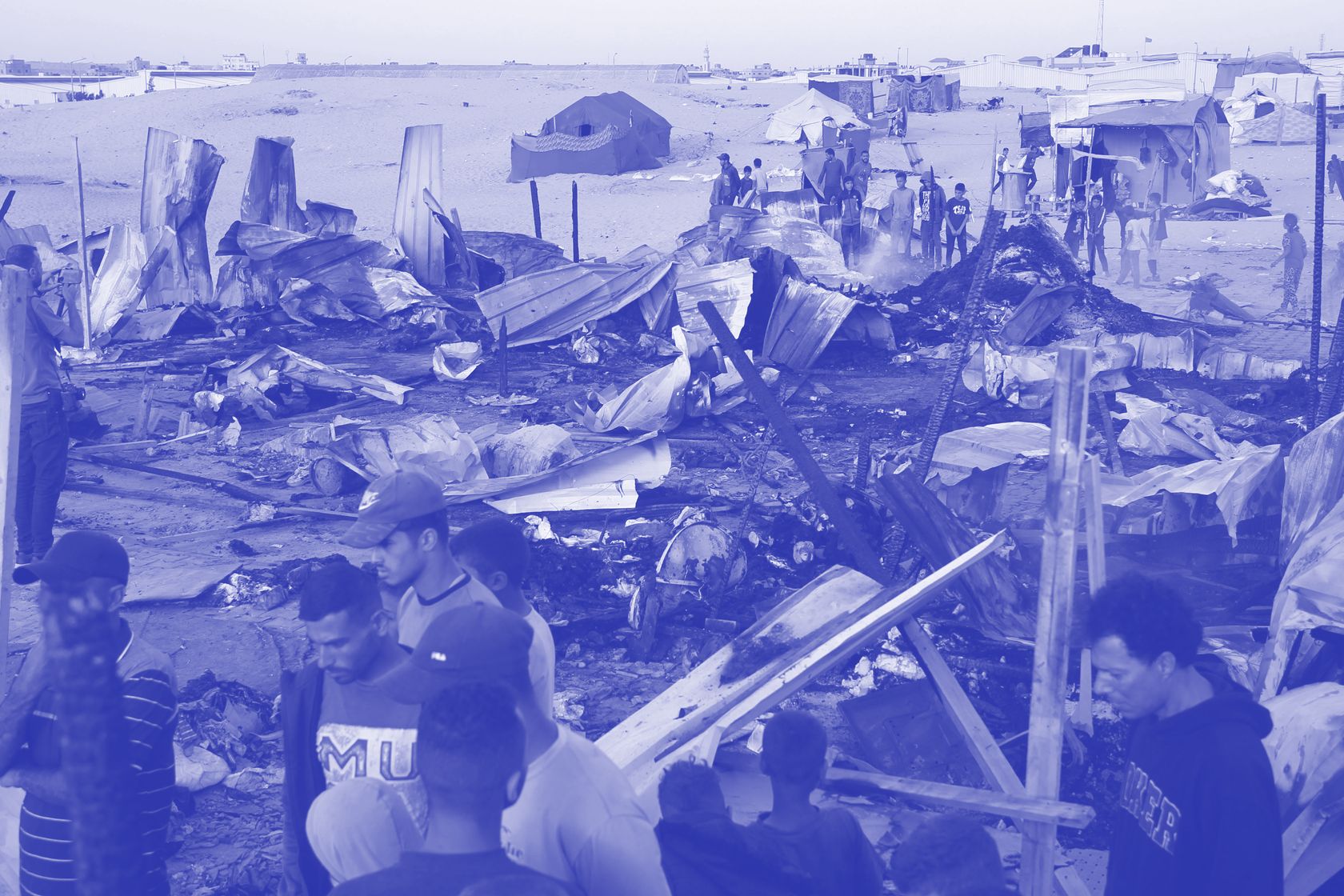
Israel-Hamas war: Leaders of western nations have decried Israel’s strikes on a camp for displaced people in Rafah, southern Gaza, which killed at least 35 civilians early Monday morning. Fires and explosions tore through the camp in Rafah’s Tal-as-Sultan neighbourhood, prompting a host of leaders to condemn Israel’s attacks. French President Emmanuel Macron called for a ceasefire on X, adding that he was “outraged by the Israeli strikes that have killed many displaced persons in Rafah. These operations must stop. There are no safe areas in Rafah for Palestinian civilians.” Italy’s defence minister Guido Crosetto said the attacks could no longer be justified during a television interview, while European diplomats are demanding that Israel comply with the International Court of Justice’s (ICJ) ruling on Friday that Israel must "immediately halt its military offensive in Rafah." EU foreign policy chief, Josep Borrell, said that the rulings of the ICJ are binding and must be implemented. Foreign ministers for Germany and Spain echoed Borrell’s comments. Late last week, Ireland, Spain and Norway announced plans to officially recognise the Palestinian State, after the ICC issued an application for arrest warrants for leaders of both Israel and the Hamas Islamist group. (Financial Times)(Bloomberg)
2.
PNG landslide: Papua New Guinea’s National Disaster Centre has said it believes at least 2,000 people are feared dead following a landslide in the remote Enga region on Friday last week. Initial estimates had put the death toll at around 670 people, however, according to an update from the disaster agency that figure is now considered a major underestimation. “The landslide buried more than 2,000 people alive and caused major destruction to buildings, food gardens and caused major impact on the economic lifeline of the country,” Lusete Laso Mana, acting director of the National Disaster Centre, said in a letter written to the UN. The recovery efforts remain challenging and dangerous as the ground is unstable and the landslip is continuing to shift slowly. (CNN)
3.
Ogling oil: Guyana’s President, Irfaan Ali, has said he would support Chevron’s proposal to join the ExxonMobil consortium running the country’s USD150 billion ($225.33 billion) offshore oil project. The comments come ahead of a key Hess shareholder vote on Chevron’s USD53 billion takeover bid, in efforts to gain access to the lucrative Stabroek Block project in Guyana. Hess currently owns 30% of the project. The Chevron-Hess deal evolved into a battle between the US’s two biggest oil companies after Exxon filed an arbitration claim arguing it had a right of first refusal to purchase Hess’s interest in the Guyana project, which would boost its own shareholding beyond its current 45% holding. Ali told the FT that any move by Exxon to increase its stake in the project could raise competition concerns. The Hess vote early Wednesday morning is expected to be tight, with proxy adviser Institutional Shareholder Services telling investors to abstain from the vote, while Glass Lewis is in favour of the proposal. (Financial Times)
4.
Chinese chips: China has set up another semiconductor investment fund as Beijing pushes to attain self-sufficiency in its domestic chip industry. At USD47.5 billion, the latest fund is the biggest in the country to date, with the largest shareholder being China’s Ministry of Finance holding a 17% stake. The fund, titled ‘Big Fund III,’ shows new efforts by Beijing to counter recent moves from the US to challenge China’s strength in chip manufacturing. Big Fund III marks the third phase of the National Integrated Circuit Industry Investment Fund, and has collected the vast funding from across central government and state-owned banks and enterprises, including ICBC and China Construction Bank. The US, particularly the Biden administration, has taken strong steps to curb China’s ability to compete in the semiconductor space, by banning the sale of sophisticated AI chips to China, increasing its tariff rate on Chinese semiconductors from 25% to 50% by 2025, and rolling out sizeable grants to steer chipmakers away from China. (Bloomberg)(Reuters)
5.
AI wars: Elon Musk's AI startup, xAI, has raised USD6 billion in a Series B funding round that included Andreessen Horowitz, Sequoia Capita and Saudi Arabia's Kingdom Holding. Musk bankrolled OpenAI in 2015 to help create a more ethically-minded counterweight to Google's Deepmind, which he feared would monopolise AI development. He later left the startup, claiming to have become disillusioned by its profit seeking. Grok, xAI's answer to ChatGPT, is available only to paying X customers. An xAI blog post reads: “The funds from the round will be used to take xAI’s first products to market, build advanced infrastructure, and accelerate the research and development of future technologies. xAI is primarily focused on the development of advanced AI systems that are truthful, competent, and maximally beneficial for all of humanity. The company’s mission is to understand the true nature of the universe."(Capital Brief)(xAI)
6.
EV appetite: Brazil has become the largest export market for Chinese new energy vehicles, as the European Union’s anti-subsidy probe pushes carmakers to boost sales in non-EU markets. Data from the China Passenger Car Association (CPCA) shows that exports of electric and plug-in hybrid cars to Brazil from China jumped to 40,163 units in April, 13-times the year-on-year rate. The data makes Brazil the biggest export market for a second consecutive month. Chinese carmakers are increasing their EV manufacturing footprint in the South American country, with both BYD and Great Wall progressing their projects in hopes to begin production during 2024. According to Reuters, Russia is expected to remain China’s largest car export market. The EU is currently investigating Chinese subsidies across a suite of industries, including electric carmakers, amid claims that substantial Chinese state subsidies are artificially deflating prices at the expense of European manufacturers. (Reuters)(Politico)
7.
Non-proliferation non-starter: According to unnamed diplomats cited by the Wall Street Journal, the Biden administration is pressuring France and the UK to censure Iran at the International Atomic Energy Agency’s (IAEA) member state board in early June, in efforts to keep tensions with Iran from escalating before the upcoming US election. US officials deny lobbying against the resolution. Iran’s nuclear activities are causing increased concern for Western officials, who fear that Tehran could become more volatile during elections to replace President Ebrahim Raisi who was killed in a helicopter crash earlier this month. European diplomats have warned that failing to take action would undermine the IAEA’s authority, which supervises the non-proliferation of nuclear weapons, and weakens credibility of the West’s pressure on Iran. (Wall Street Journal
8.
Head in the clouds: Amazon Web Services is in talks with Italy to invest billions of euros to expand its data centre business in the country, according to sources cited by Reuters. The cloud giant is seeking to increase its offering across Europe, and is considering expanding its current site in Milan to do so. AWS launched its first cloud region in Italy in 2020, when it announced plans to invest €2 billion by 2029. According to one of the sources, AWS' investment in Italy would amount to billions but is not likely to reach the same size as its plans for Spain, where it recently allocated €15.7 billion for investment in data centres across the country’s northeastern region. (Reuters)
