
As the bad news keeps piling up for ANZ, investors are watching closely to see if CEO Shayne Elliott can prevent the bank's reputation from collapsing.

Your complimentary access ends . To keep reading without interruption, subscribe today.

Associate editor, banking and finance
Andrew is a multi-award winning journalist, including a Walkley for analysis of the global financial crisis, and was founding managing editor of ANZ bluenotes, Australia's first corporate newsroom. He is a former associate editor and north Asia bureau chief for The Australian Financial Review and author of several books on business and Japan.
Contact Andrew via email or Signal.
As the bad news keeps piling up for ANZ, investors are watching closely to see if CEO Shayne Elliott can prevent the bank's reputation from collapsing.

Demographic shifts may partly explain widespread selling of bank stocks by mum and dad investors — which has driven retail ownership of three of the big four to its lowest levels.
While data remains largely anecdotal, a raft of new deals suggests the NPP's fledgling PayTo feature is gaining traction and accelerating the take up of real-time payments.

Global payments and business services fintech Airwallex has obtained an Australian Financial Services licence allowing it to expand its cash management offer.

Andrew Irvine took over NAB at a high point for the lender. But now things are slowing a strategic review will guide how much his predecessor's strategy needs to be "evolved".

Global fintechs like Volt and GoCardless are attracted to Australia's consistent growth in real-time payments, driven by customer behaviour and business demand.

While older than incumbent Shayne Elliott, Mark Whelan's impressive turnaround of ANZ's oft-maligned institutional bank had given him an inside run to be the next CEO. But the past is back to haunt him.

ANZ's efforts to restore its reputation are at risk after fresh reports of bad behaviour by its bond traders.

Decades ago, big retailers eagerly offered cash out at checkout because they profited from handling cash. Today, it costs them money — and they’re clamping down.
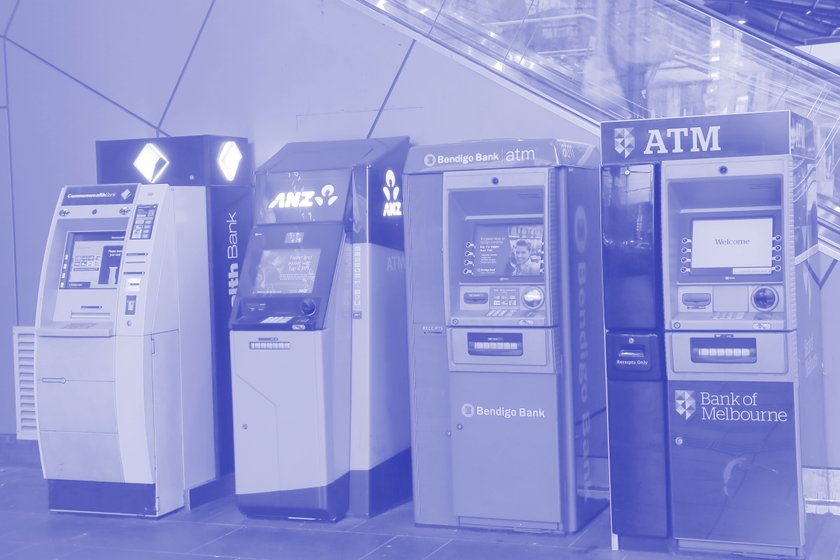
The banks are facing off with fintechs in the debate over the failure and future of open banking in Australia. Either way, the regime faces obvious challenges.

Depending on who you listen to, Australia's open banking regime is a game changer that just needs time to grow, or a failed scheme that no one uses.

Progress is slower than many hoped, but critical stages of the rollout of Australia's Consumer Data Regime are being passed. But major banks have ramped up complaints.

There are concerns that private credit is a late cycle play drawing in unsophisticated money. Others argue the withdrawal of banks is bringing in non-bank players who understand the market. And private wealth funders.

The big banks have a mixed record with their VC funds, but National Australia Bank remains committed to NAB Ventures and it's on the lookout.

Mortgage competition has eased, which is good news for banks. But competition for deposits is now heating up.

The finance sector is looking beyond box ticking for a competitive edge using social enterprises in their ESG programs. Budget measures help fuel the sector's growth.

For some, size brings scale efficiencies. For others, costly complexity. Technology and regulation are the battle ground for scale in banking and it is here smaller banks are seeing opportunity.

Lenders are paying closer attention to buy now, pay later loans when assessing how much to offer prospective home buyers.

Private debt, often funded by family offices, is rapidly growing and crucial in supporting property development in a tough market. Even big banks are supportive.

Analysts have been arguing for years that Commonwealth Bank is overvalued. Now Regal's Phil King has put his money where his mouth is and sold CBA short — not that investors seem to care.

Crypto, decentralised finance and digital asset tokenisation failed to make the list of the federal government's banking priorities, and rightly so. But Australia does risk falling behind other markets.
The big four may be sitting on billions of dollars in excess capital — which might help explain the surge in their share prices over the past year.

Official data don't support a BNPL growth story meanwhile investors - and BNPL providers - are increasingly looking beyond the specific, youth-oriented, product.

Small business is increasingly polarised between those struggling with costs and slow growth and those thriving and investing. For good credits, banks have sharp pencils.

The global wealth of the richest is growing and an increasing part of that growth is coming from private markets — equity and particularly credit.

The financial complaints authority and financial counsellors are seeing growing financial distress from BNPL and support tighter regulation.

Anti-fraud measures and workplace productivity are among the most immediate use cases for AI in financial services — but human intelligence remains central.

ECP Asset Management's Jared Pohl and Sam Byrnes are long term investors. But their growth oriented philosophy supports backing buy now, pay later stocks as well as Macquarie - and maybe even Guzman y Gomez.

Nearly two-thirds of new home loans come via mortgage brokers. The economics stack up, just not for bank margins.

Despite the struggles faced by pure play BNPL providers, the payment option looks like it will survive, boosted by popularity among younger people. But it's the established players who may benefit the most.

In the latest sign of big banks being more willing to partner with fintechs, CBA has teamed up with property platform Coposit to ease access to off-the-plan properties.
Australia's big banks have all raised wholesale funding in recent weeks in issues that were heavily oversubscribed. Analysts and debt market observers say it’s being driven by the same forces lifting their share prices.

Investors drove WeMoney's new $3 million funding round and its founder says that reflects a view greater opportunities are emerging, amplified by better access to comparable data via the Consumer Data Right.

Some clarity around the chain of liabilities for Bonza's payments has emerged but consumers and payment service providers are still waiting for details on refunds.

Already under pressure from proposed regulation, the BNPL sector must now factor in a review of credit reporting requirements by another federal body.

Bull runs are by nature quixotic and the current one in bank stocks has no visible means of support. A very predictable earnings season has added little to the story.

Many are undoubtedly doing it tough in the face of cost-of-living pressures, but ANZ CEO Shayne Elliott says it's less likely to be those with mortgages than others who can't access finance from banks.

As the big four retreat from lending, GCI co-founder Gavin Solsky explains how money can be made by lending in places where banks won't go and when equity is too expensive.

Australia's banks are solid, with the economy resilient, bad debts under control and margin pressure easing. But investors are increasingly asking how these unexciting fundamentals support over-valued shares.

Macquarie isn't backing away from its expansive bet on financing the energy transition despite a big profit hit and signs that investors may be losing patience.

Your email address will be stored in accordance with our privacy policy.