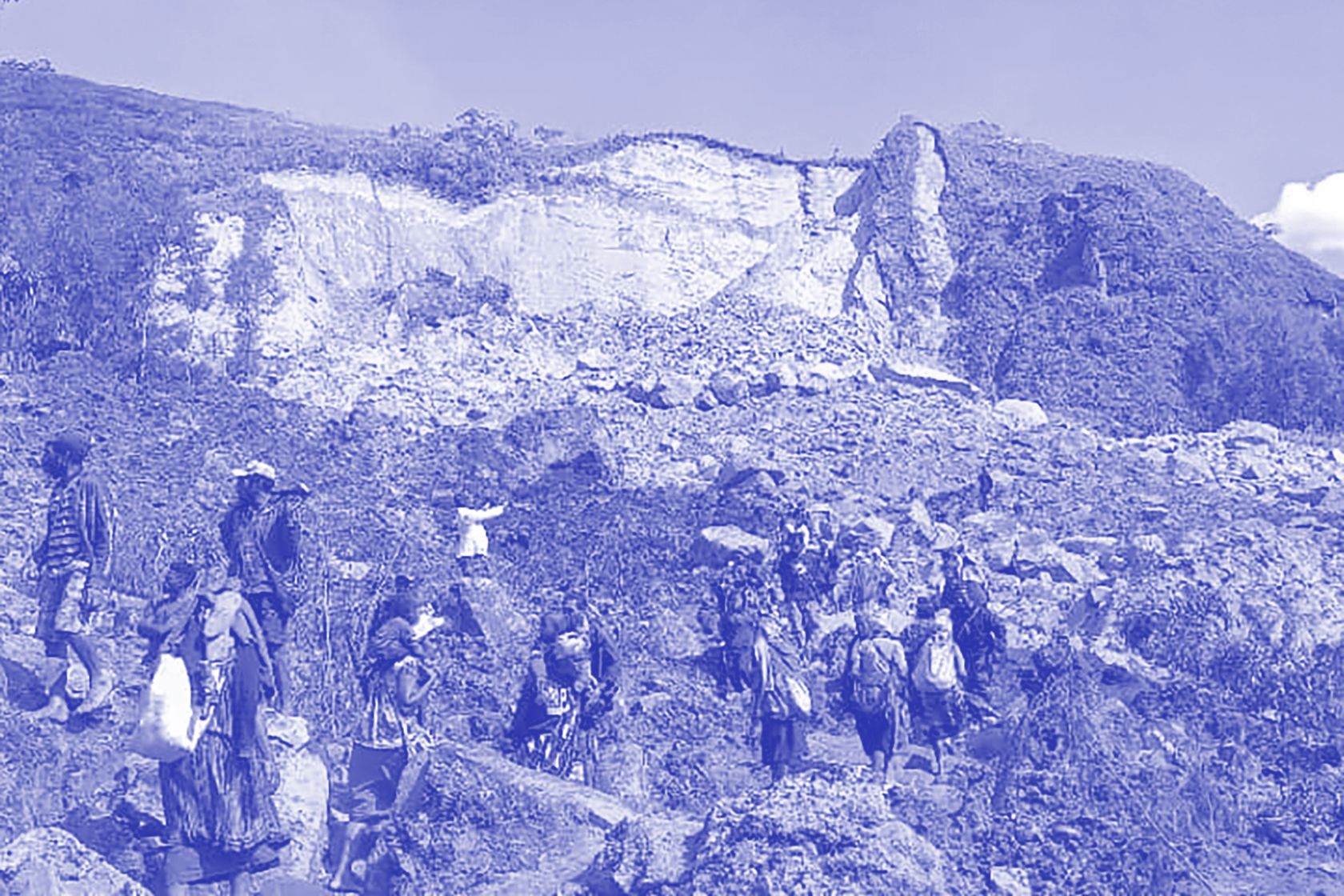
670 feared dead in Papua New Guinea landslide
Plus: Lendlease to announce $4b restructuring; UK PM proposes National Service as first campaign policy; Nine Network’s CEO returns from trip to manage worsening scandal.

Good morning. Here's what happened overnight and what you need to know today.

1.
PNG landslide: Over 670 people are feared dead after a landslide devastated a remote region of northern Papua New Guinea on Friday. Initial reports had put the figure at around 100 casualties, but a statement by the head of the International Organisation for Migration in the country, Serhan Aktoprak, said that the impact of the landslide is greater than originally thought. "There are an estimated 150-plus houses now buried," Mr Aktoprak said. He added that rescuers are at risk because the land is still sliding and rocks continues to fall. The affected areas are in the highlands of Enga, in the north of the island nation in the south-west Pacific. Humanitarian agency Care Australia has warned that the number affected is likely to be higher than 670 due to an influx of people escaping tribal conflicts in nearby areas. (BBC)(CNN)
2.
Under (re)construction: Lendlease is set to shed its overseas construction divisions and terminate all international property development as it embarks on a significant overhaul, the Australian Financial Review reports. The real estate giant will exit or sell over $4 billion worth of international works, largely based in the US and UK, over the next three years. According to unnamed sources cited by the AFR, the Lendlease board has signed off on the plans which will be presented to shareholders on Monday morning during a company ‘strategy day.’ The funds raised from the sales will be funnelled toward paying down debt and returning capital to shareholders. Lendlease has been weathering a sustained activist campaign waged by investors in recent months. Allan Gray managing director Simon Mawhinney, John Wylie from Tanarra Capital, and David de Pillia from HMC Capital, have been pressuring Lendlease to sell assets, return capital, exit its underperforming developments abroad and focus on opportunities at home. The company is also set to renew its board over the coming six months, after announcing that its chair Michael Ullmer will retire from the board at the company's annual general meeting in November, along with non-executive director Nicola Wakefield Evans. (Australian Financial Review)
3.
Campaign politics: In his first major campaign policy since calling a snap election, UK Prime Minister Rishi Sunak has proposed the reinstatement of National Service for young UK citizens. In what he said was an effort to provide security and opportunity in “an increasingly uncertain world,” 18-year-olds would be required to work with the armed forces on a 12-month placement or carry out community work. In response to the Conservative proposal, the Labour party said: “This is not a plan – it’s a review which could cost billions and is only needed because the Tories hollowed out the armed forces to their smallest size since Napoleon.” On Sunday it was reported that one of Sunak’s ministers, Andrew Murrison, rejected the proposal just two days before it was announced. National Service in the UK was abolished in 1960. (Financial Times)
4.
Escalating scandal: Channel Nine CEO Mike Sneesby returned to Sydney over the weekend, cutting short a family holiday, as the company struggles to manage fallout from allegations against the company’s former news boss, Darren Wicks. The Australian reports that over a dozen former and current TV journalists from the Nine Network have alleged verbal or physical misconduct by Wicks, as well as claims that Nine failed to provide a safe workplace for them. The paper also reports that multiple non-disclosure agreements have been signed by female staff at Nine in recent years, over interactions they had with Wicks. Details of the initial complaint were closely held by a small group of executives within the Nine c-suite. While the complaint did reach board level, tensions have now emerged with some directors concerned they were shut out of the decision making process over how it was handled. (The Australian)(Sydney Morning Herald)(Capital Brief)
5.
Proxy politics: Proxy adviser Glass Lewis has advised Tesla investors to vote against the upcoming proposal to reincorporate the company in Texas and approve CEO Elon Musk’s USD56 billion ($84.44 billion) pay award. According to reports, the Glass Lewis advice published on Saturday said that the “excessive size” of the pay deal, the dilutive effect upon exercise and the concentration of ownership were all reasons to vote against the proposals scheduled for the company’s annual general meeting on 13 June. Glass Lewis also cited Musk’s “slate of extraordinarily time-consuming projects” which have expanded with his high-profile purchase of X. The firm also said that the proposed reincorporation of Tesla in Texas from Delaware created “uncertain benefits and additional risk” to shareholders. Recommendations that come from Glass Lewis are meaningful as they tend to influence how institutional investors vote. Some of Tesla’s largest shareholders include Vanguard, Capital Group, Norges and State Street as institutional investors. Despite the proxy advice, institutional investor Baillie Gifford’s Scottish Mortgage Investment Trust told the FT last week that it was in favour of approving the upcoming proposals. (Capital Brief)(Reuters)(Bloomberg)
6.
Taking sides: Key Anglo American shareholders including BlackRock pressured the miner to extend talks with BHP over its proposed £38.6 billion takeover, which were originally set to expire on Wednesday last week. The FT reports that while BlackRock owns a 9.6% stake in Anglo with the majority held through passive funds tracking an index, the asset manager is influential in the sector as its CIO for natural resources, Evy Hambro, is an industry veteran. BlackRock also holds a 6.9% stake in BHP. While BHP said that the new increase to the share ratio offered was final and will not be increased, Anglo requested an extension to the ‘put-up-or-shut-up’ (PUSU) takeover deadline for when BHP has to make an offer or walk away, by one week, until 5pm on 29 May. According to sources cited by the Financial Times, two other large Anglo shareholders, Ninety One and Sanlam Investments, also backed the decision to extend, despite concerns about a deal structure that requires Anglo to spin off its stakes in its South African platinum and iron ore units. (Financial Times)(Reuters)(Capital Brief)
7.
Israel-Hamas war: Hamas fired rockets toward Tel Aviv on Sunday, the first time the group has directed attacks at the city in four months. The Palestinian Islamist group carried out the strikes in a show of military strength as Israel pushes ahead with its offensive in Rafah, stating via its Telegram channel that they were responding to “Zionist massacres against civilians.” The Israeli Defence Force said that eight projectiles crossed from the area of Rafah, with a number intercepted before landing. There were no reports of casualties. Negotiations between Israel and Hamas for a ceasefire and hostage swap deal are due to resume in Cairo on Tuesday, according to sources cited by CNN. (Reuters)(CNN)
8.
Fasten seatbelts: Twelve people were injured due to turbulence on board a Qatar Airways flight from Doha to Ireland on Sunday. In an update on X, Dublin Airport said that six passengers and six crewmembers on board reported injuries after the aircraft experienced turbulence while airborne over Turkey. Eight of the injured have been hospitalised. The violent turbulence hit during meal service, and lasted just 20 seconds, with passengers describing people and objects being thrown into the air as the plane plummeted. The incident comes just days after severe turbulence hit a Singapore Airlines flight, causing the death of one passenger and injuring dozens more. (Dublin Airport update)(Financial Times)
