Albanese clinches wins in fast-tracked legislation blitz
Plus: China hits back at Biden’s reported new chip curbs; Lagarde pushes cheque-book diplomacy for Trump tariffs, Bullock doubts threats; SEC approves 23-hour stock trading exchange.


Good morning. Here's what happened overnight and what you need to know today.

1.
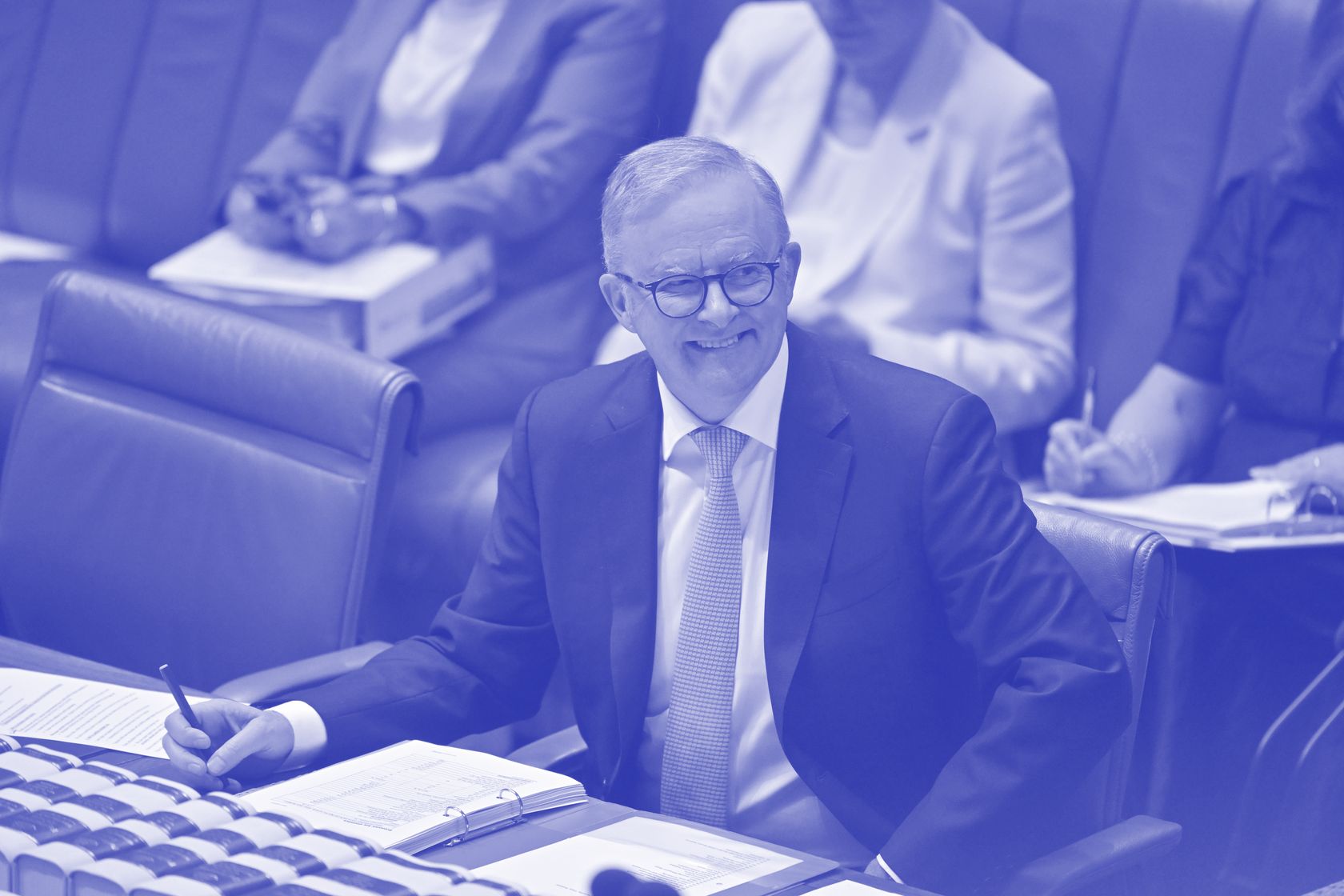
Policy avalanche: The Albanese government pushed through much of its legislative agenda in a single day with agreements secured with the Greens, independents and the Coalition to advance key priorities ahead of the federal election, due by 17 May. The legislative win offers Anthony Albanese a chance to improve his government’s poor polling. Albanese could call an early election, but on Thursday told ABC 7.30 his government “fully expects” to reconvene parliament in February. The over 30 bills that had reportedly secured Senate passage Thursday night included the world’s first social media ban for under-16s, reforms to the RBA, stricter migration laws and housing policies designed to increase construction and affordability. A deal with the Greens expedited 27 bills under a guillotine motion limiting debate, in exchange for $500 million in social housing energy upgrades and exclusions for fossil fuel subsidies under the Future Made in Australia program. Controversial reforms on electoral donations and a super tax increase were shelved. Parliament will briefly return from 7am Friday to use the guillotine and pass any remaining bills. Albanese hailed the progress, but critics like Senator Jacqui Lambie called the process rushed and lacking scrutiny. (Capital Brief) (SMH)(The Guardian)(AFR)(Reuters)
2.
Cold trade: China warned it would take "necessary actions" to protect its companies if the US escalates chip curbs, following reports that the Biden administration is considering additional export restrictions on semiconductor equipment and AI memory chips. Bloomberg cited sources saying the new measures would intensify the US crackdown on China’s tech ambitions but stop short of stricter proposals previously considered. After lobbying by US chip equipment makers, the new restrictions would target fewer Huawei suppliers, excluding ChangXin Memory Technologies, which is developing AI chip technology. The proposed rules would also reportedly impose sanctions on two chip factories owned by Semiconductor Manufacturing International, Huawei’s partner, and potentially affect over 100 Chinese companies making semiconductor manufacturing equipment. "If the US insists on escalating control measures, China will take necessary actions to resolutely protect the legitimate rights of Chinese enterprises," said commerce ministry spokesman He Yadong. (Capital Brief)(Bloomberg)(Reuters)
3.
Tariff strategy: European Central Bank president, Christine Lagarde, called on European leaders to adopt a "cheque-book strategy" and negotiate with US President-elect Donald Trump rather than retaliate against his proposed tariffs on imports. In an interview with The Financial Times, Lagarde warned that a trade war would harm global GDP and recommended Europe increases purchases of US goods such as LNG and defence equipment instead of retaliating. The paper cited sources saying the European Commission is considering increasing US imports, including agricultural products, LNG and weapons, and may allow US companies to participate in joint military procurement with EU funds. Meanwhile, RBA Governor Michele Bullock also discussed US tariffs at a dinner on Thursday, raising her firmest doubts yet that Trump’s threatened levies are legitimate rather than a bargaining chip. She said that if large tariffs on China are imposed, Australia could benefit as Chinese trade may seek alternative outlets. Bullock cautioned, however, that their true effect remains unclear. (Capital Brief)(FT)(Capital Brief)
4.
Sleepless trading: The US Securities and Exchange Commission approved 24X National Exchange, a startup backed by Steve Cohen's Point72 Ventures, to operate a stock exchange 23 hours daily, five days a week. The launch will occur in two stages: initially, 24X will offer trading from 4am to 7pm US eastern time, Monday to Friday. After upgrades to public data feeds broadcasting round-the-clock stock prices, 24X will add overnight hours, enabling operations from 8pm Sunday to 7pm Friday, with a one-hour pause between 7pm and 8pm. Critics, including the consumer advocacy groups have raised concerns about the risks of reduced liquidity and potential volatile pricing during overnight sessions, potentially leading to worse outcomes for retail investors. It comes as Off-exchange overnight trading, already offered by firms like Robinhood and Interactive Brokers through alternative systems like Blue Ocean, has grown in popularity since the pandemic. (24X)(Bloomberg)(WSJ)
5.
French fears: French bond yields briefly surpassed those of Greece for the first time, reflecting investor concerns over the government’s budget and political stability. The 10-year yield on French debt briefly reached 3.02% on Thursday, surpassing Greece’s 3.01%, before retreating to 2.95%. This shift underscores worries about France's ability to implement €60 billion ($97.39 billion) in tax increases and spending cuts, with Prime Minister Michel Barnier's government facing fierce opposition from the far-right National Rally. Barnier, still facing the threat of a no-confidence vote, was forced to drop plans to raise electricity taxes, which RN leader Jordan Bardella hailed as a victory, but demanded further changes. Meanwhile, reportedly lighter-than-expected US restrictions on chip sales to China buoyed European stocks, which helped by a semiconductor-linked rally, bounced back from two days of declines. The US market was closed for the Thanksgiving holiday. (FT)(Bloomberg)(Reuters)
6.
Direct rejection: Direct Line Insurance Group’s shares surged 41% in London after rejecting a £3.3 billion ($6.44 billion) takeover bid from Aviva. The offer, made on 19 November, valued the British motor and home insurer at 250p per share, a 58% premium over its previous closing price. Direct Line’s board rejected the bid, saying it “substantially undervalued” the company. Under UK takeover rules, Aviva has until 25 December to make a firm offer or withdraw. The company’s recent restructuring efforts, including 550 job cuts, have followed underperformance in its motor insurance segment. This is Direct Line’s second takeover rejection this year. It also dismissed a previous offer from Belgian rival Ageas that valued the company at around £3.2 billion. (Bloomberg) (Reuters)
7.
Missile storm: Russian President Vladimir Putin has escalated threats against Ukraine and its allies, saying Russia’s new Oreshnik missile could target Kyiv’s "decision-making centres" and turn them "to dust." This came amid a Russian attack on Ukraine’s energy infrastructure, involving nearly 200 missiles and drones on Thursday. The strike targeted multiple cities including Kyiv, Kharkiv and Lviv, and left over one million households without power. Ukrainian President Zelensky condemned Russia’s use of cluster munitions in the attack, which complicates repair efforts. Ukraine's air defence systems intercepted the majority of incoming missiles, but many areas remain without power, as the country braces for winter. Meanwhile, the Israeli military launched its first airstrike on southern Lebanon since a ceasefire took effect, accusing Hezbollah of breaching the truce by activating a rocket storage facility. Lebanon’s state-run media said two people were wounded. (Associated Press)(Reuters)(FT)
8.
Dinner diplomacy: Donald Trump and Mark Zuckerberg held a dinner at Trump’s Mar-a-Lago estate in Florida on Wednesday, media reported. The meeting followed years of tension, especially after Facebook banned Trump in January 2021 due to the Capitol attack, and the president-elect called for Zuckerberg to be jailed for “plotting against” him over the 2020 election. The Meta CEO, who had attempted to repair relations with Trump in recent months, reportedly congratulated him on his victory and met with Trump’s team. Zuckerberg was noted for making phone calls to Trump over the summer, including offering support after Trump’s assassination attempt. A Meta representative described the dinner as significant for US innovation, while Trump’s adviser Stephen Miller confirmed the meeting and framed Zuckerberg’s involvement as support for Trump’s reform movement. (Bloomberg)(NYT)
