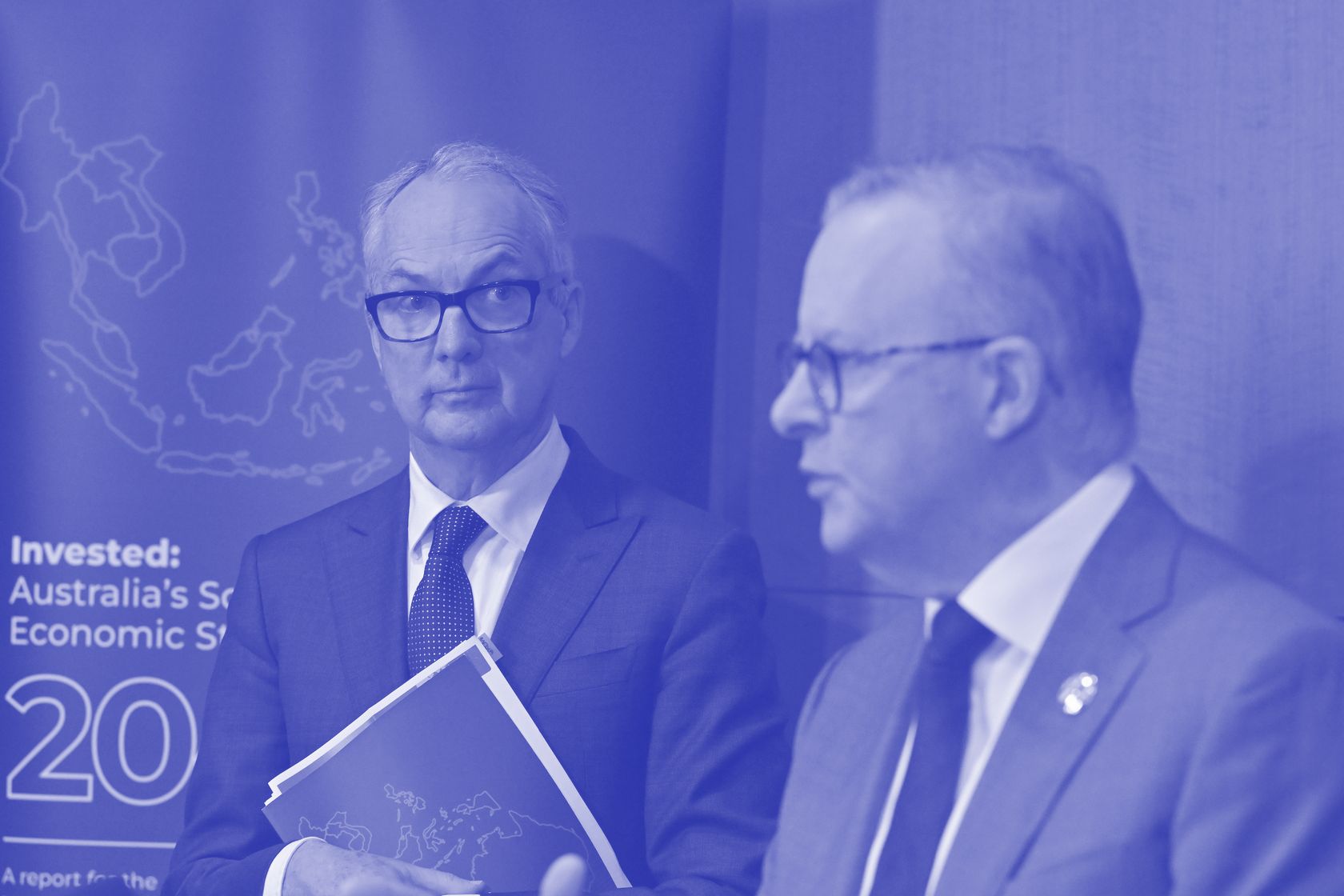
It has become a truism to say our trade relationships with Indonesia — and Southeast Asia more broadly — have struggled to reach their full potential. But then there probably hasn’t been the same level of political impetus to improve them as there is now.
In Jakarta today, Anthony Albanese noted that the ASEAN bloc’s combined economy was expected to become the fourth-largest in the world by 2040. Australian trade and investment ties with the region, he conceded, hadn’t been keeping pace and are in need of some “overdue strengthening”.
“This is where Australia’s economic destiny lies,” the prime minister said.
While the nominal value of Australia’s two-way trade with Southeast Asia has grown steadily, the region's share of Australia’s overall trade hasn’t changed in over 15 years. Australia invests more into New Zealand than it does in all ASEAN nations; meanwhile China has doubled its investment into Southeast Asia between 2016 and 2020. Indonesia is only Australia’s 14th largest trading partner.
The reasons for this anomaly are manifold. One is that it has taken time for countries in the region to grow richer and fill out their middle-income ranks. Another, of course, is that it had simply been easier for Australia to sell its wares to an insatiable China.