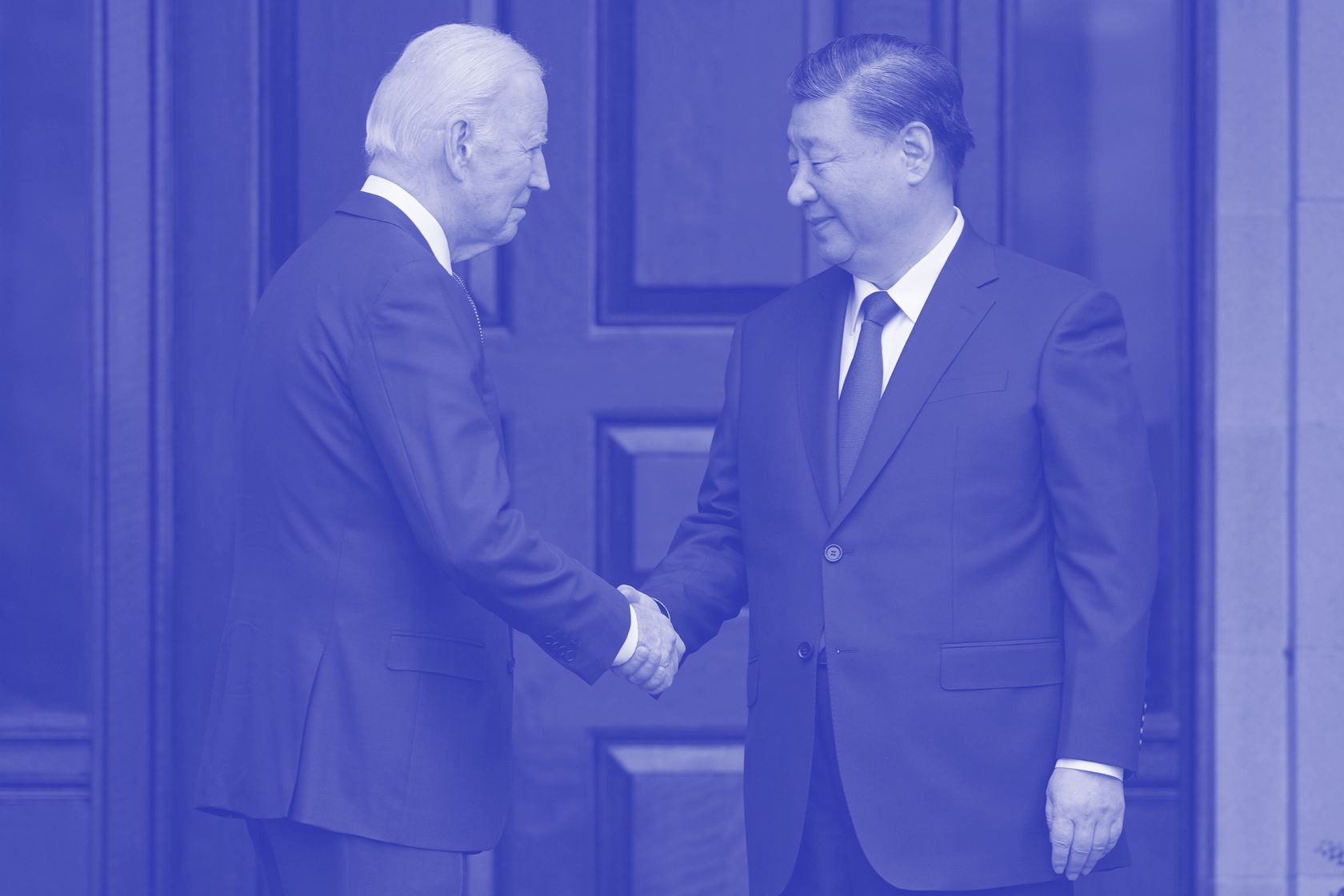
United States President Joe Biden and Chinese leader Xi Jinping have agreed to restore lines of military communication during a high-stakes summit in California between the two world powers.
It’s far from an earth-shattering breakthrough — those direct military contacts had long been in place and were only halted after former House Speaker Nancy Pelosi’s contentious visit to Taiwan last year.
Similarly, a renewed commitment from China to stem the trafficking of fentanyl — a potent synthetic opioid that has killed hundreds of thousands of Americans — as well as the resumption of climate change talks, merely resume cooperation that Beijing had previously agreed to. A further commitment to maintain open lines on managing the risks of artificial intelligence also strikes hollow given the centrality advanced tech plays in the two countries’ competition for economic and strategic primacy.
But a face-to-face meeting between the two world leaders is a major victory in itself. And it arguably achieved the best-possible result in the circumstances: moderating the often fractious tone in the relationship without necessarily resolving deep-set differences.