Donald Trump elected 47th US president in historic comeback
Plus: Harris to call Trump to concede before speech; Trump Trade propels stock market rally; Oil markets face Trump paradox.


Good morning. Here's what happened overnight and what you need to know today.

1.
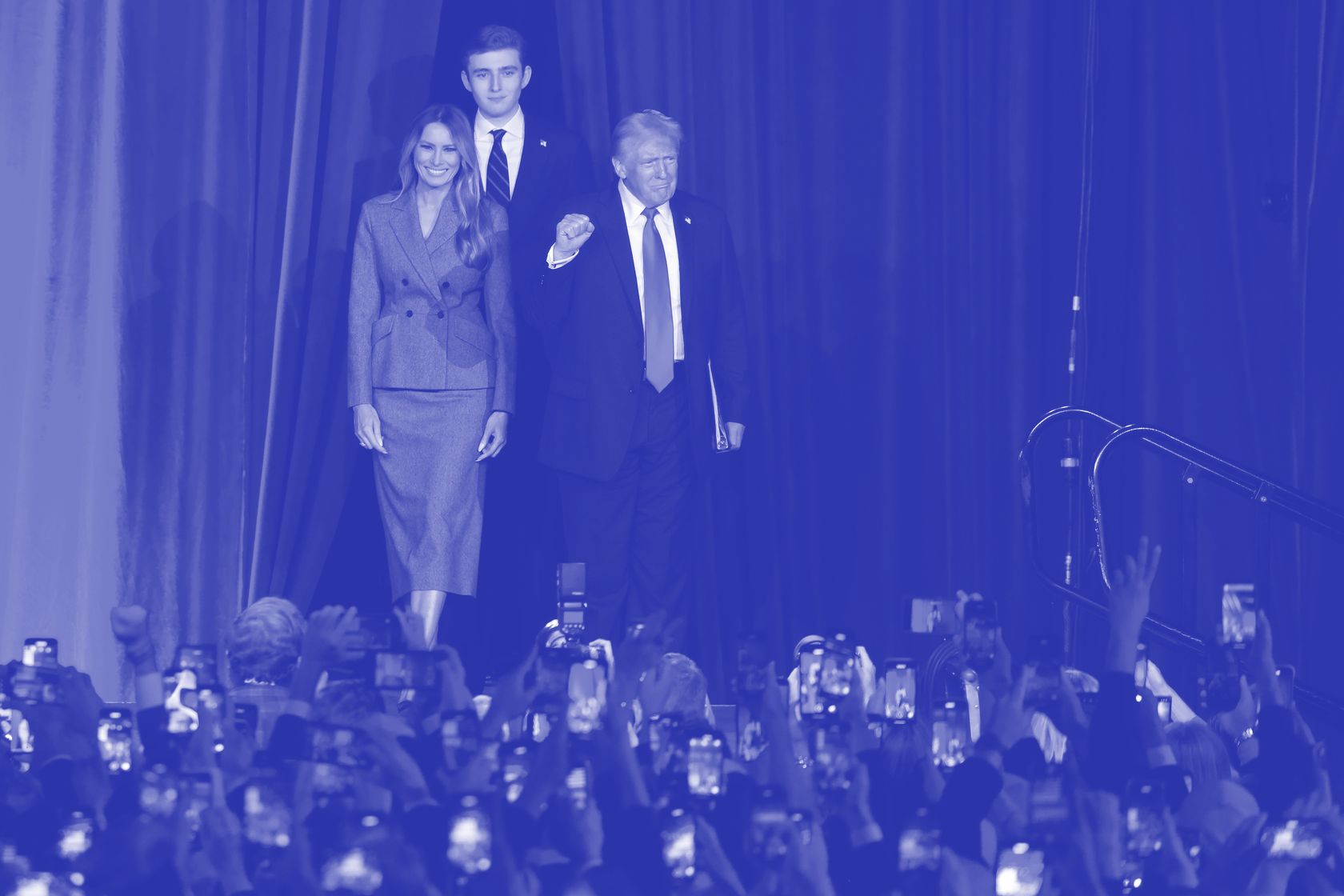
Trump’s comeback: Donald Trump was elected the 47th president of the US in a historic return of the former – twice impeached – president who refused to concede defeat in 2020, incited an assault on the Capitol in 2021, was convicted of felony charges and survived assassination attempts. Trump clinched a decisive victory just after 5:30am on Wednesday ET (Tuesday 9:00pm AEDT) when The Associated Press declared he had won Wisconsin, powering him above the threshold of 270 electoral votes. He will return to office with the support of a Senate that remains under Republican control after flipping three seats. Trump appears to also have won the national popular vote, something no Republican had achieved since George W Bush in 2004. Democrats best hope for power in Washington hinges on a handful of races in the House of Representatives, but with several of them still too close to call, particularly in notoriously slow counting California, it could be days before it is clear which party has the majority. (Capital Brief)(AP)(Fox News)(CNN)(NYT)
2.
Harris concedes: Vice President Kamala Harris is set to concede she lost the election to Donald Trump in a speech at 4:00pm ET (8:00am AEDT). The New York Times reported Harris was scheduled to call Trump to concede the presidential race, before returning to her alma mater, Howard University in Washington, to make a speech. At last count, with Arizona, Nevada and Alaska yet to be called by the AP, Harris fell short with 224 electoral votes and 66.94 million popular votes. Trump, who during the campaign delivered fierce attacks on Harris and her links to the Biden administration, had already secured 292 electoral votes and 71.86 million popular votes. (NYT)
3.
Trump trade: Donald Trump’s presidential election victory sparked record gains in US stock markets, with the Dow surging 3.5%, the S&P 500 climbing 2.3% and the Nasdaq up 2.6% in late afternoon trading. The small-cap Russell 2000 was 4.7% higher as investors bet on a pro-growth, deregulation-focused agenda. US bonds, meanwhile, tumbled on expectations of faster inflation and concerns over soaring deficits. That drove the 30-year Treasury yield 20 basis points higher to 4.63%, while the 10-year Treasury yield spiked 15 basis points to 4.44%, its highest level since July. The dollar rose 1.6% against a basket of currencies, while the Mexican peso fell 2.4% on fears Trump would make good on triple-digit percent tariffs on cars made in the country. Bitcoin hit a record, rising 8%, while commodities including copper and oil saw price drops. Shares in Elon Musk’s Tesla surged 15% while those of other vehicle manufacturers fell to multi-year lows. Banking stocks led gains while, renewables and European stocks faced declines, impacted by tariff fears. (Reuters)(FT)(Bloomberg)(WSJ)
4.
Oil paradox: Crude oil prices dropped after Donald Trump was declared winner of the US presidential election, even as major oil and gas exploration and production companies rose. Trump's pro-oil industry stance contrasts with potential bearish effects on commodity prices. His policies are expected to push US oil production by possibly cutting emissions regulations and barriers to drilling, and if Republicans control Congress, further policy changes could benefit drillers. However, his previously proposed tariffs—10% on all imports and 60% on Chinese imports—could slow global economic growth and reduce oil demand, impacting major oil consumers like China. Wood Mackenzie projects such tariffs could lower global growth by 0.5% in 2025 and 0.8% in 2026, reducing oil demand by 0.5 million barrels daily in 2025 and 1.1 million barrels in 2026. (WSJ)(Bloomberg)
5.
Military scandal: A former US defence contractor, Leonard "Fat Leonard" Francis, was sentenced to 15 years in prison for orchestrating a decade-long bribery scheme involving dozens of US Navy officers, media reported. US District Judge Janis L Sammartino also ordered him to pay USD20 million ($30 million) in restitution, a USD150,000 fine, and to forfeit USD35 million in gains. Francis, who initially pled guilty in 2015, cooperated with authorities, aiding in the conviction of Navy officials. He fled house arrest in 2022, was arrested in Venezuela and returned to the US in 2023. The scandal saw Francis woo officers with Kobe beef, expensive cigars and wild parties at luxury hotels in exchange for their concealment of a scheme in which Francis would overcharge for supplying ships or charge for fake services at ports he controlled in Southeast Asia. (CNN)(BBC)
6.
Meta’s appeal: The US Supreme Court on Wednesday US time (Thursday morning AEDT) heard Meta's bid to dismiss a 2018 securities fraud lawsuit led by Amalgamated Bank. The suit accuses Facebook of misleading investors by not disclosing a 2015 data breach involving Cambridge Analytica, which affected over 30 million users. The case questions whether Facebook's risk disclosures, which portrayed potential data misuse as purely hypothetical, violated securities laws. Meta argued it was not required to reveal that its warned-of risk had already materialised. Conservative justices debated whether investors could infer past occurrences from risk statements. President Biden’s administration supported the shareholders' position. Facebook previously settled related actions with a USD100 million SEC payment and a USD5 billion fine to the FTC. A ruling is expected by June. (Reuters)
7.
Visa probe: EU antitrust regulators are investigating whether fees charged by Visa and Mastercard negatively impact retailers, Reuters reported citing an EU document. The European Commission issued questionnaires in September to retailers and payment service providers, focusing on scheme fees from both companies for the 2016-2023 period. Visa confirmed receiving an information request in August, while Mastercard characterised it as a routine inquiry. The EU questionnaire asks retailers whether the fees, including the introduction of new ones, affect their businesses and whether merchants can negotiate them. Retail lobby group EuroCommerce said scheme fee increases have cost the EU economy about €1.5 billion ($2.45 billion) per year. (Reuters)
8.
Import panic: US businesses were activating plans to protect their businesses from President-elect Donald Trump’s promise to impose major tariffs on imported goods. Trump has promised to slap a 10% tariff on all imports, a 60% tariff on goods from China, a 25% tariff on imports from Mexico and over 200% on its cars despite a free trade agreement with the neighbouring country. Economists warn the measures could return US import duty rates to 1930s levels, stoking inflation, disrupting US-China trade and prompt retaliatory measures. Companies such as M.A.D. Furniture Design and Joe & Bella told Reuters they are ramping up orders to mitigate the risks, while others like Periodally and Oaktree Memorials choose not to front-load due to high costs and uncertainty. (Reuters)
