Dutton, Albanese pitch plans to win home votes
Plus: Tariff break to end for smartphones and phones, says Lutnick; Wall Street banks gain while credit defaults rise; Russia bombs church crowd in Ukraine.

Good morning. Here's what happened overnight and what you need to know today.

1.
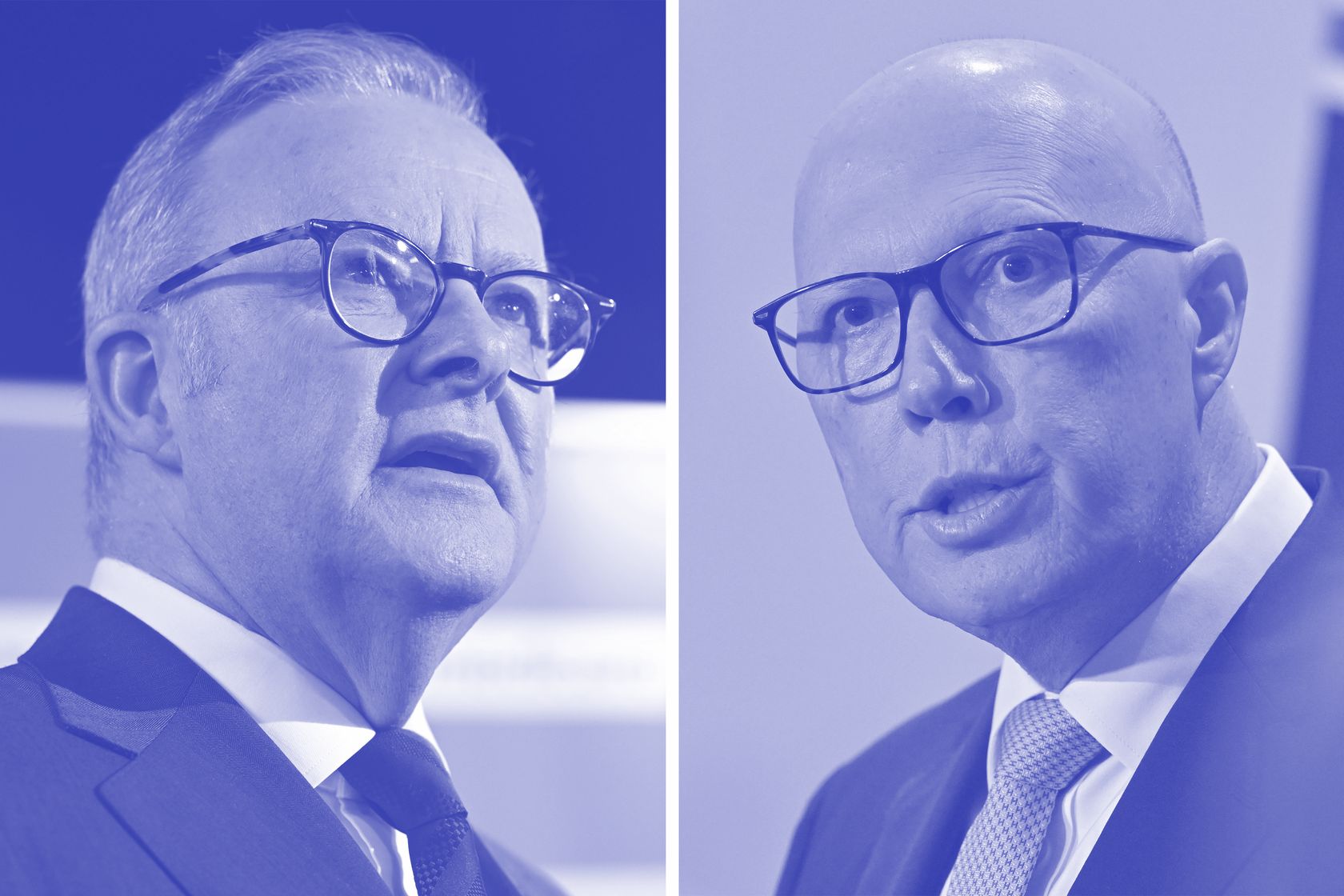
Betting the house: Opposition Leader Peter Dutton launched the Coalition's campaign in Sydney on Sunday, just hours before PM Anthony Albanese launched Labor’s election campaign from Perth. Dutton unveiled the Coalition’s ‘big ticket item’ of allowing first-home buyers purchasing new builds to negatively gear the first $650,000 of their mortgage. Dutton also announced a $1,200 “cost of living tax offset” for Australians earning up to $144,000 which is set to benefit around 85% of taxpayers. Albanese also revealed a $10 billion bid to appeal to first-home buyers, committing the funding to build up to 100,000 new properties for first-home buyers and guarantee up to 5% of deposits. Labor says states and territories will be incentivised to fast-track land release, upzoning and planning approvals. The latest Newspoll shows a majority of voters now expect a hung parliament and a Labor minority government, and a decline in primary vote support for the Coalition has fallen another point to 35%. (Capital Brief)(Capital Brief)
2.
Tariff reprieve: US Commerce Secretary Howard Lutnick said smartphones, computers and other electronics exempted Friday (Saturday AEST) from tariffs on Chinese imports will soon face new levies tied to semiconductors. Speaking on ABC’s This Week, Lutnick said the products will face “a special focus-type of tariff” in a month or two and are not part of a “permanent sort of exemption.” The exclusions cover about USD390 billion in imports, including more than USD101 billion from China, according to 2024 trade data cited by Bloomberg. Lutnick said the tariffs aim to “reshore” production of national security-related items, with a federal registry notice expected this week. The exclusions, granted by the Trump administration from 125% reciprocal tariffs, were seen as a reprieve for firms like Apple and Dell. China called the move a “small step” and urged the US to “take a big stride” to revoke the levies entirely. (FT)(Capital Brief)
3.
Tariff credit: Wall Street banks on Friday (Saturday AEST) reported strong first-quarter earnings as market turmoil from President Trump’s tariff policy added volatility, but executives warned of economic turbulence. JPMorgan’s net income rose 9% to USD14.6 billion ($23.4 billion), driven by a 48% surge in equities trading revenue to a record USD3.8 billion. Morgan Stanley posted record equities revenue of USD4.13 billion, up 45%, and earned USD692 million in “other” investment banking revenue, largely tied to the sale of loans related to Elon Musk’s social-media platform X. JPMorgan’s bad credit card loans rose to a 13-year high, with industry-wide defaults now above pre-pandemic levels. Jamie Dimon put the odds of recession at 50/50 and said the economy faced “considerable turbulence.” Wells Fargo missed net interest income estimates due to soft loan demand. BNY Mellon’s profit rose 21% but warned of a more uncertain outlook. Earlier in the week, data showed rising delinquencies and plunging consumer sentiment. (Bloomberg)(Reuters)(FT)
4.
War in Ukraine: A Russian strike on the city of Sumy in Ukraine killed at least 34 people on Sunday, with a further 84 people injured. Two ballistic missiles (reportedly containing cluster munitions) hit the heart of the city at around 10am local time, as local people gathered to attend Palm Sunday mass. The city is located just over 25km from the Russian border, and became a garrison city when Kyiv's forces launched an incursion into Russia last August that has since been largely repelled. Ukrainian President Volodymyr Zelensky has demanded a tough international response against Moscow for the attack, the deadliest strike on the country this year, and said "Only scoundrels can act like this. Taking the lives of ordinary people.” The strike came two days after US special envoy Steve Witkoff met with Russian President Vladimir Putin in St. Petersburg, as part of President Trump’s push for a cease-fire. (Reuters)(X)
5.
Treading carefully: Former Productivity Commission chair Michael Brennan cautioned the federal government against “tit-for-tat” transactional negotiations with the Trump administration to avoid tariffs. Brennan told Capital Brief the government should stick to pleading the case for exemptions on the basis of the strength of Australian-US relations and the trade surplus. Warning against “getting into a tit-for-tat” situation, he said “Being retaliatory, transactional, ‘we’ll give you this if you give us that’…it’s not clear where that ends.” Referring to the challenge of juggling the crucial relationships with both China and the US, Brennan said that Albanese struck the right “cautious tone” when turning down an offer from China to “join hands” in response to the US tariffs late last week. Brennan also lamented that Australia’s budget is not in a stronger position to deal with shocks. Investors are hoping that tariff exemptions on smartphones and other electronics unveiled by Trump over the weekend will see share markets rally this week. (Capital Brief)(AFR)
6.
US rethink: Some of the world’s biggest pension funds are halting or reassessing their private market investments into the US, telling the Financial Times they will not resume until the country stabilises after Donald Trump’s erratic policy blitz. Canada Pension Plan Investment Board, which has C$699 billion ($797.8 billion) in assets, is considering its approach due to fears it will lose tax breaks on US investments. A person familiar with the fund said it would be “incredibly difficult” to commit fresh capital. One of Denmark’s biggest retirement funds told the paper it paused new US private equity investment due to concerns over stability and Trump’s threats to take over Greenland, described by an executive as “very hostile”. AkademikerPension, another Danish fund with 150 billion Danish krone in assets, is discussing “pretty fundamental changes” that could reduce US exposure. Canada’s CDPQ, with C$473 billion in assets, expects its US exposure to remain unchanged but said “tariff noise” complicates evaluations. (FT)
7.
Steel squeeze: The UK government seized control of British Steel’s Scunthorpe plant on Saturday after emergency legislation passed in a rare weekend sitting of Parliament. Prime Minister Keir Starmer said the government had acted “to save British Steel.” The law gives Business Secretary Jonathan Reynolds powers to direct the company’s board, pay workers and order raw materials to keep the plant running. Reynolds accused Chinese owner Jingye of trying to “irrevocably and unilaterally” shut down primary steelmaking by halting purchases and selling off supplies. Jingye says it is losing £700,000 ($1.46 million) a day. Reynolds warned nationalisation may now be the likely option, with officials on-site to keep at least one blast furnace operating. He said closure would cost the economy over £1 billion. Elsewhere, UK Liberal Democrat MP Wera Hobhouse was denied entry to Hong Kong without explanation, prompting backlash and fresh concerns over China’s treatment of foreign critics and democratic norms. (BBC)(NYT)(The Guardian)
8.
Backing two horses: Alphabet and Nvidia are joining forces with venture capitalists to back a startup founded by OpenAI’s former chief scientist, Ilya Sutskever. The company, Safe Superintelligence (SSI) has become one of the most valuable artificial intelligence startups in the world, and sources cited by Reuters claim the company was recently valued at USD32 billion ($51.3 billion) in a round led by Greenoaks. The FT reports that the round was as big as USD2 billion. SSI has a huge demand for chips, and while AI developers have historically preferred Nvidia’s graphics processing units, SSI is primarily using tensor processing units rather than GPUs. Last week Alphabet’s cloud arm announced a deal to sell SSI access to its TPU chips which it had originally reserved for Google’s in-house use. The decision to sell SSI the chips in significant quantities to support its frontier AI research shows Google’s plans to expand sales to external customers. (Reuters)(FT)
