Gold notches record high on Trump’s Greenland turmoil
Plus: Intel plummets on grim earnings; Trump says US Navy ships heading toward Iran; Canva bucks tech employment slowdown with hiring spree.

Good morning. Here's what happened overnight and what you need to know this weekend.

1.
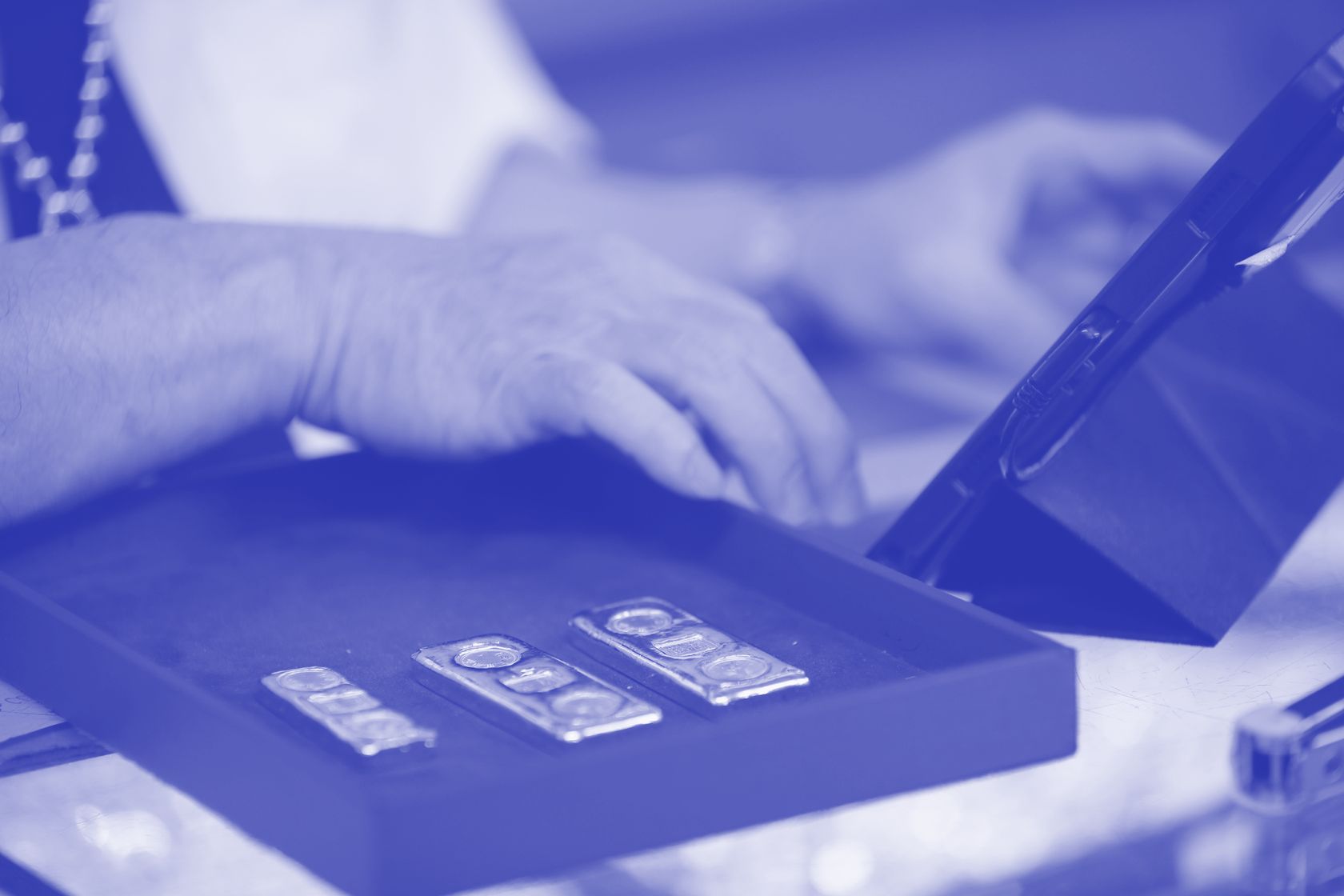
Precious metal sparkle: Most actively traded gold futures traded as high as USD4,990 ($7234.73) a troy ounce on Friday, an intraday record, before pulling back to about USD4,983. The precious metal added its largest gain ever this week, around USD387.80 or 8.5%, as the Greenland crisis sent investors looking for safe alternatives to the US dollar. Silver futures have rallied even more aggressively and are heading toward USD100 a troy ounce. The Nasdaq closed up 0.28%, while the S&P 500 ended the session up just 0.03% — posting its second straight losing week. The Dow Jones shed 285 points, or 0.58%, weighed by a nearly 4% slide in Goldman Sachs. While tech stocks Nvidia and AMD helped lift the two indexes, climbing 1.5% and 2.3% respectively, shares in Intel closed down over 17% after announcing a disappointing Q1 outlook. Meanwhile, BlackRock executive Rick Rieder has emerged as a leading contender in the race for chair of the US Federal Reserve, with his odds on Polymarket surging from 6% earlier this week to 34% as of Friday morning. (WSJ)(Bloomberg)(CNBC)(FT)
2.
Intel meltdown: Intel shares plummeted more than 17.5% on Friday after the chipmaker reported a 4% year-on-year decline in Q4 revenue and issued weaker-than-expected Q1 2026 guidance. Intel reported fourth-quarter revenue of USD13.7 billion ($20 billion), down 4% year-on-year. Full-year revenue came in at USD59.9 billion, flat compared with the prior corresponding period. The company reported a net loss of USD333 million during the last three months of the year, worse than the USD294 million loss expected by analysts, according to FactSet. During a Q4 earnings call with analysts, Intel executives said customer announcements wouldn’t be coming until later in the year. “I’m disappointed that we are not able to fully meet the demand in our markets,” Intel chief executive Lip-Bu Tan said on an earnings call. CFO David Zinsner also warned that supply levels will be at their lowest in the first quarter of 2026, before improving in the second quarter and beyond. (WSJ)(CNBC)(Bloomberg)(NASDAQ)
3.
US armada: US President Donald Trump said that an armada of US Navy ships is on its way to the Middle East, renewing threats of military force against Iran. “We have a big flotilla going in that direction and we’ll see what happens,” Trump told reporters as he departed Davos, Switzerland, for Washington aboard Air Force One. “I’d rather not see anything happen, but we’re watching them very closely.” Two US officials told Bloomberg that the USS Abraham Lincoln aircraft carrier and its associated strike group transited the Strait of Malacca two days ago and are now in the Indian Ocean. Trump had walked back a previous pledge to hold off on an attack on Iran after receiving assurances that its government wouldn’t carry out planned executions of anti-regime protesters. Meanwhile, UK Prime Minister Keir Starmer slammed Trump’s assertion that troops from non-US NATO countries avoided the front line during the Afghanistan war, suggesting that the President should apologise. Prince Harry – who completed two tours in Afghanistan – also criticised the remarks. (NYT)(Reuters)(Bloomberg)(AP)(BBC)
4.
On the prowl: While much of the global SaaS sector is pulling back on headcount, Australia’s design juggernaut Canva is pressing ahead with an ambitious global expansion, advertising more than 300 open roles and snapping up senior talent from rivals including Figma and Adobe. Those 300-plus roles span product, artificial intelligence, enterprise and international teams, with a heavy emphasis on overseas growth across the US, Europe, Latin America and Asia-Pacific. Lorraine Dooley, Canva’s global head of talent acquisition, told Capital Brief: "We’re very fortunate to receive more than 300,000 applications to join Canva each year, and we hire very intentionally." Canva now employs more than 5,500 staff globally. Headcount grew 6% last year, even as the broader technology sector shed more than 245,000 jobs worldwide in 2025. Beyond the raw numbers, Canva has been recruiting senior talent from competitors, signalling a deliberate push into enterprise markets and AI. (Capital Brief)
5.
Air pressure: This week’s revelation of an AUSTRAC investigation into Airwallex is a major blow for the Australian unicorn, which has been trying to build on the momentum of its December capital raise and finally move past the controversies that have long dogged it. Airwallex welcomed the audit and remains confident it is complying with the anti-money laundering and counter-terrorism financing (AML/CTF) regime. According to an AFR report, the company’s biggest local investor, Square Peg Capital, was aware of the investigation well before the December raise. The financial crimes regulator has become increasingly concerned about fintech and global remitters like Airwallex, which have expanded rapidly and now collectively process more than USD1 trillion ($1.5 trillion) in payments each year. As Capital Brief reported just two weeks ago, AML/CTF fines for the ragtag group of payments companies have soared over the last decade, hitting an estimated USD2.5 billion in 2024. (Capital Brief)(AFR)
6.
Rare earths: High-level US government delegations and private investors are being sent to inspect Australian-owned rare earth projects from Malawi to Brazil, as the scramble to build a supply chain outside China gathers steam. The new US–Australia critical minerals framework, struck in October, has elevated ASX-listed miners as preferred partners in the Trump administration’s push to secure alternative sources of rare earths, lithium and other strategic materials used in defence, the energy transition and advanced manufacturing. That trade policy — including direct loan and equity investments — now appears to be translating into private sector dealmaking. This week, small-cap Australian Strategic Materials signed a $447 million deal to be acquired by US uranium producer Energy Fuels, Victory Metals said that its chief executive held a series of meetings with US government delegations, and Ionic Rare Earths announced its admission to the US OTCQB venture market to expand its US investor base. (Capital Brief)
7.
Chip stock: Shares in chipmaker Nvidia rose on Friday after Bloomberg reported Chinese officials told the country’s biggest tech firms to prepare orders for Nvidia’s H200 AI chips, citing sources familiar with the matter. Sources told the masthead that regulators recently granted in-principle approval for Alibaba, Tencent and ByteDance to move to the next stage of preparations for purchases, with the companies now cleared to discuss specifics including the amount of chips they would require. Beijing will reportedly encourage tech companies to spend a certain amount on domestic chips as a condition for approving the Nvidia chip orders. The Trump administration lifted export restrictions for the older-generation H200 chips to China and last week announced the US would impose a 25% tariff on sales of the processors citing “national security”. Alibaba and ByteDance previously told Nvidia they are interested in ordering more than 200,000 units respectively, according to Bloomberg. (Bloomberg)(Capital Brief)
8.
Spying-as-a-Service: The US Justice Department opened a criminal investigation into allegations that human resource company, Deel, recruited a spy to gather information from rival firm Rippling, according to documents seen by the WSJ. The documents show that grand-jury subpoenas were sent out in recent weeks by the US attorney for the Northern District of California seeking information about an alleged spying operation run by Deel in early 2025. Per an April 2025 affidavit, Ireland-based Rippling employee Keith O’Brien alleged that Deel CEO Alex Bouaziz recruited him to take information from Rippling and accused other executives of being involved in the plot. Rippling previously alleged that when O’Brien was confronted with a court order to hand over his phone, he fled to the bathroom, locked the door and deleted materials from his device. A spokeswoman for Deel said the company isn’t aware of a criminal investigation but is willing to cooperate with authorities. (WSJ)
