Iran and US reportedly signal readiness to end war
Plus: Peace signals drive Wall St rally, oil retreat; Qantas FF faces up to $270m revenue hit from RBA fee cap; Ronaldo, LeBron and Macquarie back Whoop’s USD575m raise ahead of IPO.

Good morning. Here’s what happened overnight and what you need to know today.

1.
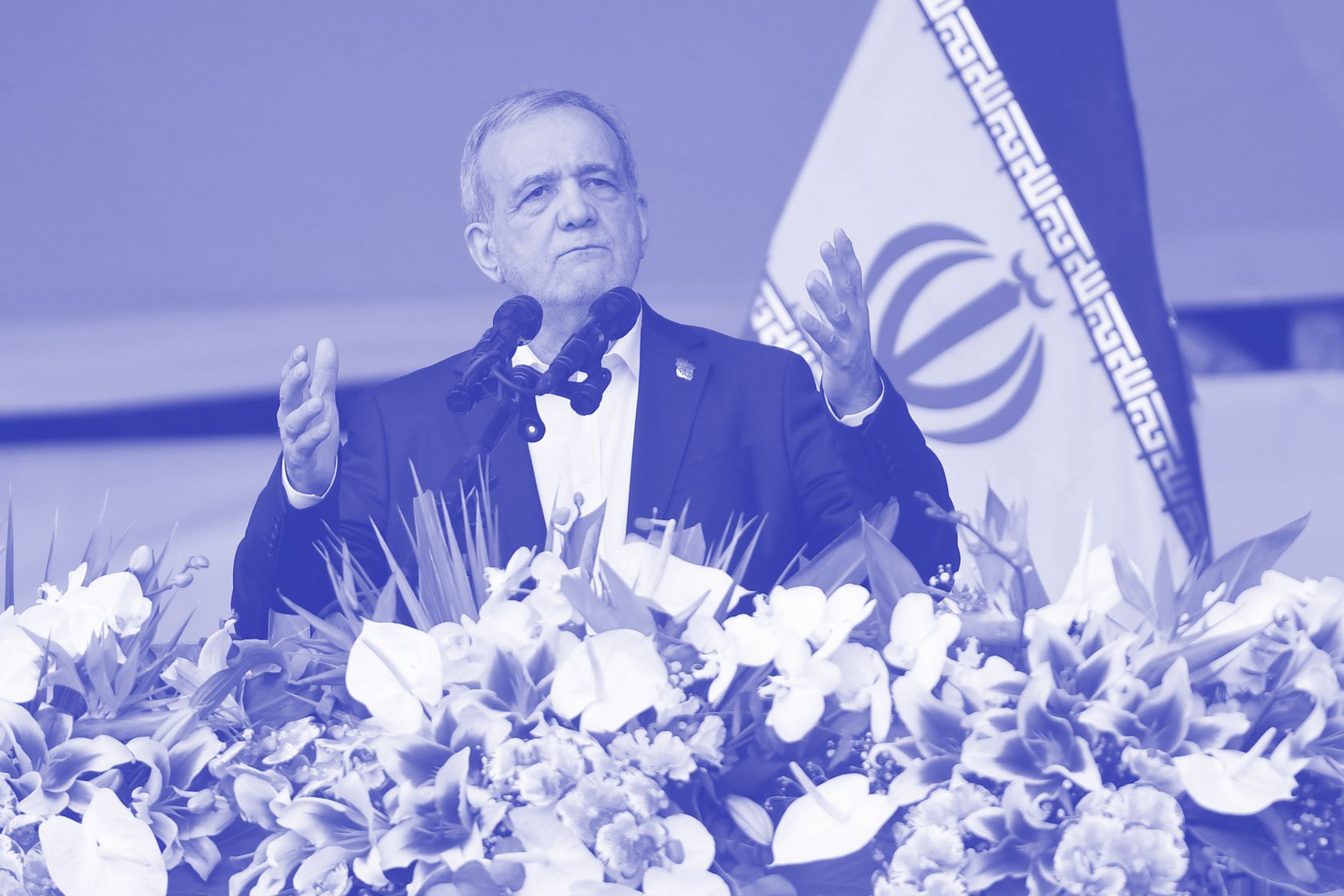
Off ramp? Reports that both Iran and the US were open to ending the war raised hopes of a ceasefire, even as a potential deal would leave the Strait of Hormuz in Iranian hands threatening to extend the biggest energy supply disruption in history. According to Iran’s state news agency IRNA, president Masoud Pezeshkian told European Council president António Costa in a phone call that Tehran had the will to end the war but required guarantees against future US-Israeli aggression. That came just hours after The Wall Street Journal reported that Trump had told aides a mission to force Hormuz open would push the conflict beyond his preferred four-to-six-week timeline. Trump later told The New York Post the waterway would open ‘automatically’ once the US left. In a separate Truth Social post, Trump told countries hit by the closure to “build up some delayed courage, go to the Strait, and just take it,” warning the US “won’t be there to help you anymore.” Meanwhile, secretary of state Marco Rubio told Al Jazeera the current campaign could be finished within weeks and then it would be up to Iran or a coalition of nations to ensure free passage. Iran’s foreign minister Abbas Araghchi confirmed to Al Jazeera that messages had been exchanged with the US, including directly from US envoy Steve Witkoff, but said that did not amount to negotiations and that Tehran would only accept a full cessation of hostilities across all fronts, not a temporary pause. Elsewhere China and Pakistan issued a joint five-point peace initiative calling for an immediate ceasefire, restoration of Hormuz navigation and protection of civilian infrastructure. (Capital Brief)(Al Jazeera) (Bloomberg)(WSJ)(FT)(NYT)
2.
Dramatic reversal: Hopes the Iran war could be near its end sent oil prices lower and stocks higher, with Wall Street on course for its biggest single-day gain since last May. The S&P 500 was trading 2.4% higher in New York afternoon trading at time of writing, with the Nasdaq surging 3.3% and the Dow rising 2.1%. US crude fell to around USD102 a barrel. Brent crude’s expiring May contract remained near USD118 and on course for its biggest monthly gain on record, while the forward June contract fell to around USD101, reflecting market expectations of a nearer-term resolution. Gold was 3.2% higher at USD4,654 an ounce and the US dollar weakened. Treasury yields declined, with the 10-year falling to 4.31%. Speaking on Fox News, JPMorgan chief executive Jamie Dimon backed Trump’s war aims over market concerns, saying it was “much more important that this be successfully completed than what the market does.” He warned, however, that markets would “be concerned until it’s over.” In corporate news, shares in AI cloud computing firm CoreWeave jumped after securing a USD8.5 billion loan to expand its infrastructure. Eli Lilly agreed to buy sleep drug maker Centessa Pharmaceuticals in a USD7.8 billion deal, Biogen agreed to acquire Apellis Pharmaceuticals for USD5.6 billion, and Unilever agreed to combine its food business with spice maker McCormick in a USD44.8 billion deal. (WSJ)(Reuters)(Bloomberg)
3.
Reform runway: Australia’s national carrier Qantas is emerging as an unlikely and significant victim of the RBA payment reforms with its iconic frequent flyer program at risk of losing up to $270 million as a result of changes to fees and surcharges. The RBA confirmed its decision to cap interchange fees charged by banks on Tuesday, slashing funding for loyalty programs like Qantas. The RBA’s decision to disrupt the $900 million interchange market was the “worst case” scenario for the airline, Bank of America head of Australia financials research Matt Dunger wrote earlier this month, estimating it would put between $144 million and $270 million “at risk” — or up to 9.4% of Qantas’ loyalty annual revenue. When approached by Capital Brief, Qantas indicated that the company could find other levers to mitigate any eventual impact. The airline appeared to already be reviewing its options, making pre-emptive changes to the program last month allowing customers to earn status credits via retail spending for the first time. (Capital Brief)
4.
Pulse check: Fitness wearable maker Whoop raised USD575 million ($834.4 million) in a Series G round, valuing the company at USD10.1 billion as it moves toward a potential IPO within two years. The Boston-based company, founded by Will Ahmed in 2012, was valued at USD3.6 billion in 2021. It was cashflow positive last year and now has more than 2.5 million members, seeing bookings grow 103% to finish the year at a USD1.1 billion run rate, it said. The round was led by Collaborative Fund and included Macquarie Capital, Qatar Investment Authority, Mubadala Investment Company, Abbott Laboratories, Mayo Clinic and GP Bullhound, among others. High-profile individual investors included Cristiano Ronaldo, LeBron James and golfer Rory McIlroy, among others. Whoop is hiring for more than 600 new roles globally and said it plans to use the proceeds to strengthen its balance sheet, increase marketing, expand internationally across Europe, the GCC, Latin America and Asia, and invest in research and development. The raise follows Whoop seeming to resolve a dispute with the US FDA over its blood pressure monitoring feature, with the agency releasing updated guidance in January that cleared the way for the product.(Capital Brief)(Whoop)(NYT)
5.
Backdoor access: The corporate regulator is scrutinising managed discretionary account (MDA) and separately managed account (SMA) providers as part of its latest wave of surveillance of the private credit sector. Multiple industry sources told Capital Brief that ASIC in recent weeks has sent out information queries to several managed account providers, focusing on potential conflicted remuneration, whether groups were earning fees at multiple points during a transaction and whether true service costs were being disclosed. One source Capital Brief spoke to said getting private credit funds onto managed accounts was often a box-ticking exercise that did not necessarily mean substandard funds were screened out. “You can basically manufacture a product that writes mediocre loans but you can tick those boxes and get onto a managed account. I suspect that’s what a lot of the managed account providers have done. ASIC is probably concerned about this as a lot of managed accounts cater to retail investors,” they said. (Capital Brief)
6.
Nvidia invested USD2 billion ($2.9 billion) in chipmaker Marvell Technology, opening up its platform to allow Marvell to integrate custom AI chips and networking equipment alongside Nvidia’s own processors. The companies also agreed to collaborate on silicon photonics, which uses light rather than copper wiring to transmit data faster and more efficiently, the companies said in a joint statement. The deal includes working on ways to better leverage telecommunications networks for AI computing. Marvell shares surged as much as 13% on the news, while Nvidia gained around 5%. The deal builds on an effort Nvidia announced last year to open its ecosystem to partners and comes as major technology firms including Alphabet and Meta are expected to spend at least USD630 billion building AI infrastructure this year. (Nvidia)(Bloomberg)
7.
Cyst reader: If you have an ovarian cyst, there is currently only one way to confirm with certainty whether it is cancerous: open surgery. In up to 80% of cases, that surgery proves unnecessary. For the one in five women who develop an ovarian cyst, Proseek Bio aims to reduce these unnecessary surgeries with its OC-Triage blood test. The Brisbane-based startup raised $1.5 million in an oversubscribed pre-seed round to commercialise its blood test technology and speed diagnosis of one of the deadliest cancers affecting women. The cap table includes Edale Capital, Scale Investors, Angel Loop and AusHealth. Proseek Bio founder and associate professor in medicine, Michelle Hill, acknowledged growing investor interest in the space, but said there is still a long way to go: “When it comes to the crunch, they [investors] don’t fund it, or they fund what they feel like are niche areas [of women’s health], which at the moment is AI and software.” (Capital Brief)
8.
Dwelling on it: Home values in Australia’s two largest cities, Sydney and Melbourne, declined in March, despite an overall increase in house prices across the nation. Cotality’s national home value index increased by 0.7% in March, pushing dwelling values 2.1% higher over the first quarter of the year. While the pace of gains is easing, reducing from a 2.8% increase in Q4 2025, housing outcomes are varying from city to city. Sydney’s home values fell 0.1% while Melbourne’s dropped 0.2%, with the trend toward softening coinciding with falling auction clearance rates and a pickup in advertised supply, Cotality said in a report. Perth’s housing increased by the largest margin, notching 2.5% growth in March to be 7.3% higher over the quarter. A further rise in cost-of-living pressures and interest rates, alongside a drop in confidence tied to the Middle East conflict, suggest purchasing demand will continue to reduce. (Capital Brief)
