Iran rejects US ceasefire proposal as White House threatens to ‘unleash hell’
Plus: Oil slips and stocks climb on peace hopes; Australia blocks 7,000 Iranian visa holders from entering; Anthropic CEO Dario Amodei in Australia next week: reports.

Good morning. Here’s what happened overnight and what you need to know today.

1.
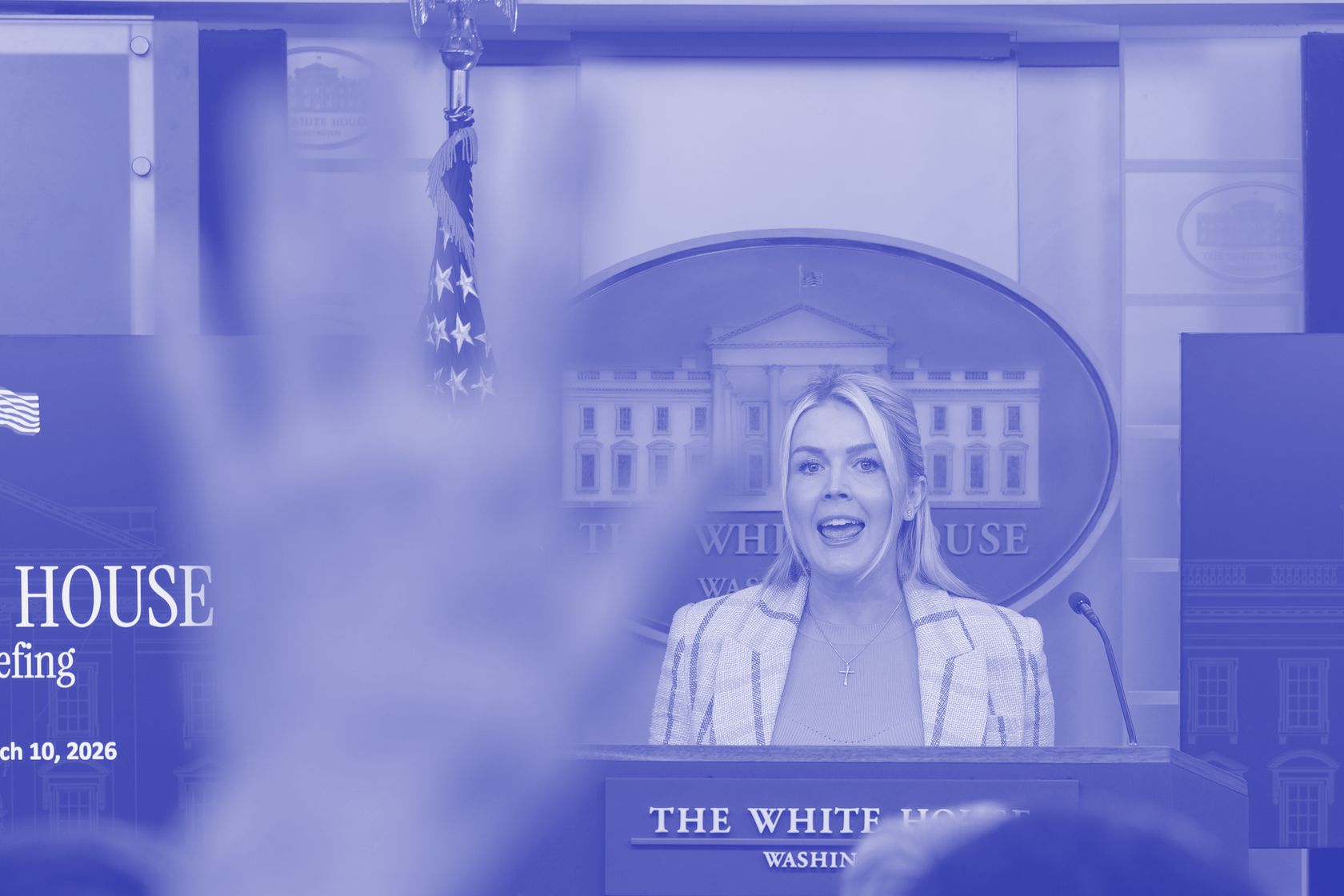
Strait talking: Iran publicly rejected Washington’s ceasefire proposal as “excessive”, as White House press secretary Karoline Leavitt insisted at a press briefing that US-Iran talks were “productive” and that Trump would “unleash hell” if Tehran refused to accept defeat. State broadcaster Press TV quoted an anonymous official who dismissed the US 15-point plan setting five counter-conditions including war reparations and recognition of Iranian sovereignty over the Strait of Hormuz. Yet a senior Iranian official told Reuters the proposal remained under review despite a “not positive” initial response. CNN reported the White House was working to arrange a Vice President JD Vance trip to Pakistan this weekend to discuss an off-ramp, with timing described as fluid. Meanwhile, The New York Times reported citing unnamed Israeli officials that Benjamin Netanyahu yesterday ordered a 48-hour push to destroy as much of Iran’s arms industry as possible, before Trump could announce talks ahead of Israel achieving its goals. (Capital Brief)(NYT)(AP)(CNN)(BBC)
2.
Bull run: Wall Street surged and oil slipped below USD100 a barrel as investors focused on the prospect of a diplomatic end to the Iran war rather than Tehran’s public rejection of Washington’s ceasefire proposal. The S&P 500 was trading 0.46% higher in late afternoon in New York, while the Dow Jones was up 0.64% and the Nasdaq 0.57% higher. Brent crude fell to around USD97.91 a barrel, while West Texas Intermediate dropped to USD91.13. Gold climbed and US treasury yields declined. “Markets are positioning for a conflict resolution, despite lingering strategic ambiguity,” Brown Brothers Harriman & Co’s Elias Haddad told Bloomberg. “Ultimately, Iran’s response to the US de-escalation pivot will decide whether peak fear is behind us or still ahead.” Arm Holdings shares were trading 16.52% higher after unveiling a new AI chip it said would generate USD15 billion in revenue by 2031.(Bloomberg)(WSJ)(Reuters).
3.
Visa blockade: Over 7,000 Iranians holding visitor visas will be blocked from entering Australia from this morning over concerns that they may not be willing or able to return to Iran given the war in their home country. Minister for Home Affairs Tony Burke said on Wednesday evening the suspension will be in force for six months under legislation passed earlier this month. The controls will only apply to people outside of Australia who have an Australian subclass 600 visitor visa linked to an Iranian passport, but will not apply to Iranians who are already in Australia. “There are many visitor visas which were issued before the conflict in Iran which may not have been issued if they were applied for now,” Burke said. “Decisions about permanent stays in Australia should be deliberate decisions of the Government, not a random consequence of who had booked a holiday.” Greens Senator David Shoebridge said around 7,200 Iranians currently hold the temporary visas but had not yet arrived in Australia. Shoebridge lashed the move, arguing Labor “cynically used the plight of everyday Iranians to justify their support for this latest US forever war, and it has now dropped them when they are no longer of ‘use’.” (Capital Brief)(Australian Govt)
4.
AI visit: Anthropic CEO Dario Amodei is set to visit Australia as soon as next week to demonstrate the AI lab’s commitment to expansion in the country, according to sources cited by The Australian Financial Review and Crikey. The AFR reported that Amodei will meet with Treasurer Jim Chalmers and possibly Prime Minister Anthony Albanese during the visit, with sources saying Anthropic is exploring opportunities to build compute power in Australia given the country’s political stability and ties to the US. Amodei is scheduled to formally open Anthropic’s Sydney office launched earlier this month during the trip. The US company is currently embroiled in a feud with the Pentagon, after the Defense Department labelled Anthropic a supply chain risk and President Donald Trump ordered federal agencies to stop using its technology. The two sides came to blows over a USD200 million contract after Anthropic refused to allow its AI to be used for autonomous lethal weapons or mass domestic surveillance. (Capital Brief)(AFR)(Crikey)
5.
Guilty scroll: A Los Angeles jury found Meta and Google’s YouTube liable in a landmark social media addiction lawsuit that could shape thousands of similar cases across the US. The bellwether case involves a 20-year-old who said she became addicted to Instagram and YouTube at a young age because of their attention-grabbing design. Co-defendants Snap and TikTok both settled with the plaintiff, Kaley GM, before the trial began on undisclosed terms. The trial, which began last month, saw the jury deliberate for nine days before awarding USD3 million ($4.3 million) in compensatory damages for pain and suffering, with Meta liable for 70% and Google’s YouTube for 30%, according to US media. Punitive damages are yet to be determined. Meta said it was evaluating its legal options. “This is a breakthrough because it validates a new theory that platform design can be a defective product,” Kimberly Pallen, a litigation lawyer told The New York Times. The share prices of both companies were higher after the verdict. It came on the same day Donald Trump named Meta CEO Mark Zuckerberg along with 12 other industry figures to the President’s Council of advisers on Science and Technology, a body that in previous administrations has consisted mainly of academics and engineers. (Capital Brief)(NYT)(WSJ)(Reuters)(Bloomberg)
6.
The defectors: Betting markets have One Nation’s candidate in the Farrer by-election, David Farley, a close second favourite to replace former Liberal leader Sussan Ley, whose knifing prompted the 9 May by-election. And remarkably in a seat that has been held by a Liberal or a National since its creation in the 1940s, he’s not chasing the Coalition. Months of internal warring within the federal Coalition, including two breakups and the departure of both parties’ leaders, has prompted its primary vote to collapse from already historic lows. An exclusive Capital Brief/DemosAU poll published last week shows that, if an election were held today, the minor party would convert 37% of voters who opted for the Coalition in May. It’s making small inroads into Labor’s 2025 support (13%) and even convincing some Greens voters (7%). “People in the street aren’t dumb. They’re literate, they’re intelligent, they read,” Farley says. “That’s why that big swing’s happening away from [the major parties].” But George Hasanakos, DemosAU’s head of research, says there is no guarantee that One Nation will be able to simply ride grievances. (Capital Brief)
7.
AI Oracle: At Oracle’s AI World Tour event in Sydney this week, the regional managing director for Australia and New Zealand, Stephen Bovis, sidestepped questions from Capital Brief about any local data centre plans, but added that “where there is a demand, and that makes sense for us to service that demand, then we’ll do so”. In December 2025, OpenAI announced plans to partner with NextDC as an anchor tenant at its proposed S7 data centre development in Eastern Creek, Sydney. Rival AI lab Anthropic also launched its Sydney office in March 2026. Bovis told Capital Brief that a lot of the demand Oracle is seeing in Australia comes from the corporate and government space. While Bovis wouldn’t quantify the scale of the demand Oracle is servicing in Australia, he said the company is seeing “significant growth here in Australia” for its cloud services. (Capital Brief)
8.
Financially immaterial: Melbourne-based medtech company 4DMedical surged 35% on Wednesday after the use of its flagship lung imaging technology CT:VQ at Mayo Clinic in the US spurred a buying spree. “I’ve been saying the company needs to grow into its valuation. And clearly a benchmark hospital like the Mayo Clinic is incredibly important for them,” Cyan Investment Management founder and portfolio manager Dean Fergie told Capital Brief. 4DMedical’s partnership with Mayo Clinic is now the sixth American academic medical centre (AMC) to adopt CT:VQ since it received approval by the US Food and Drug Administration last year. While founder and CEO Andreas Fouras called the 90-day agreement a “landmark moment” and “uniquely significant” — the company once again said the contract was “not financially material”. But Fouras told Capital Brief his company is laying the groundwork for a massive windfall next year: “Today’s win of having the number one hospital in the world, Mayo, as a key customer is a real progression towards that. We can talk revenue in 2027.” (Capital Brief)
