Japan’s Takaichi secures strong projected win
Plus: Ley reunites Coalition but faces fresh leadership threat from Taylor’s camp; Block signals layoffs across teams with up to 10% of workforce; Anthropic set to finalise USD20b raise within days: Bloomberg.
Good morning. Here's what happened overnight and what you need to know today.
Get Standup in your inbox Signed up to Standup
1.
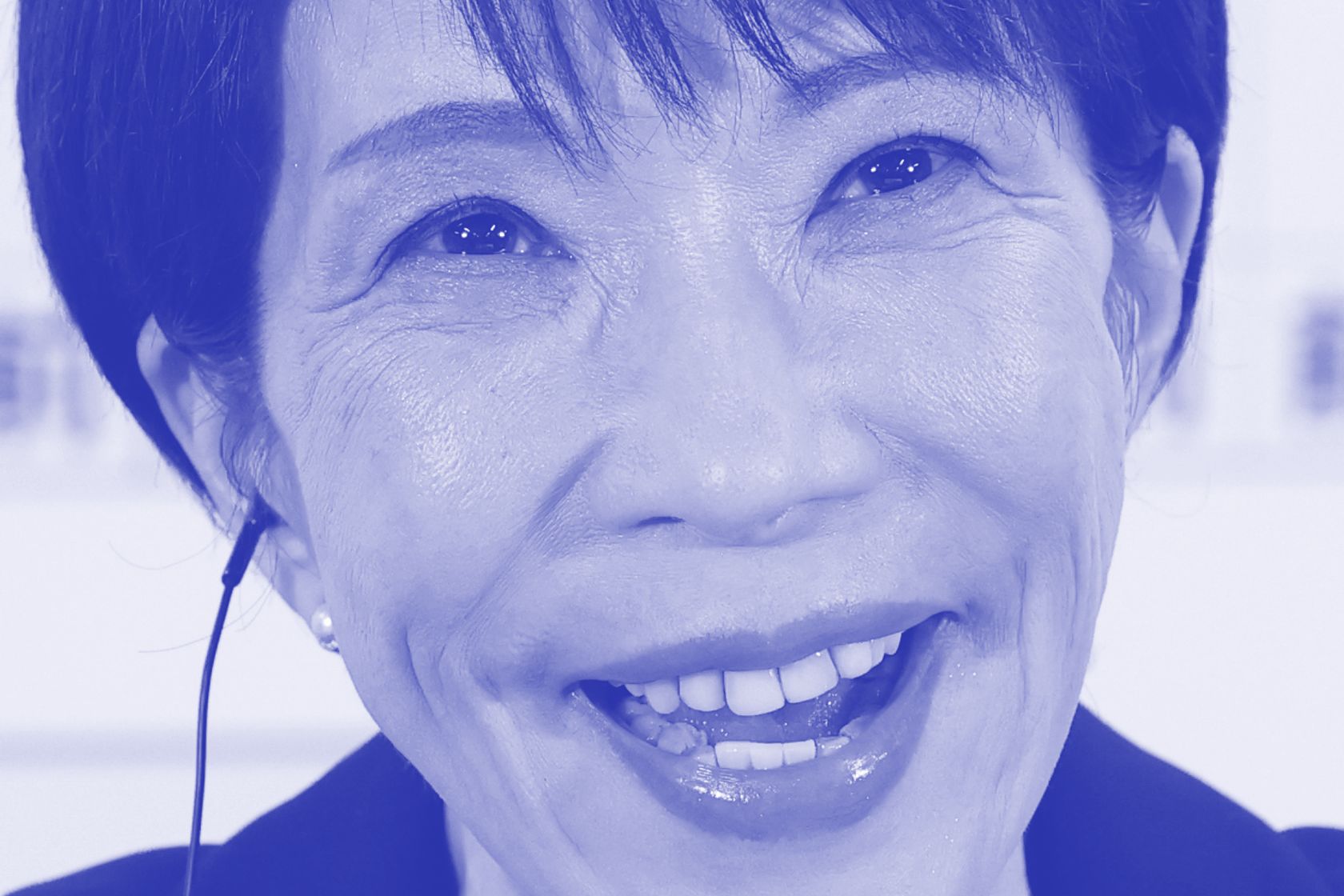
Snap victory: Prime Minister Sanae Takaichi’s gamble to call a snap election three months into her term has delivered a sweeping victory, with her Liberal Democratic Party seen winning a single-party majority in Japan’s lower house, according to projections by NHK and Nikkei. The LDP secured 291 seats in the 465-member lower house, according to results collated by NHK, surpassing the 261-seat threshold for an absolute stable majority. Together with its coalition partner, the Japan Innovation Party, the ruling bloc was projected to exceed the 310 seats needed for a two-thirds supermajority. In a television interview with NHK, Takaichi said the LDP had fought the election on major policy shifts and would tackle them “with all our strength”. She said she would be flexible and seek support from the opposition. The Centrist Reform Alliance, formed by the Constitutional Democratic Party and the Buddhist-backed Komeito (the LDP’s former coalition partner) was projected to lose about half of its pre-election total of 167 seats. Takaichi, Japan’s first female prime minister, now holds a strong mandate with no election due until 2028, and is expected to outline next steps at a press conference on Monday. (Nikkei)(FT)(AP)(Capital Brief)
2.
Repair job: Sussan Ley brokered a deal to reunite the Coalition after a 17-day split, but faces a possible leadership spill by Angus Taylor’s supporters this week amid collapsing support for the Liberals and rising internal unrest. Ley and Nationals leader David Littleproud announced the agreement on Sunday, confirming that all Nationals shadow ministers will return to their portfolios on 1 March after a suspension, and that both leaders will attend shadow cabinet and leadership meetings in the interim. The deal includes new written rules on shadow cabinet solidarity and confirms the joint party room’s authority over either party. Taylor, who endorsed the Coalition’s reunification on Sunday, is reportedly considering a leadership bid, with outlets like the AFR and The Guardian citing sources saying Ley’s backdown on suspension terms may have tipped more MPs into Taylor’s camp. Polls have shown a sharp decline in support for weeks, with the latest Newspoll recording the Coalition’s primary vote at 18% and support for One Nation surging to 27%. Ley’s net satisfaction dropped to -39 (the worst for a major party leader since 2003). An unnamed senior Liberal frontbencher told the AFR the chances of a challenge this week were “50:50”. But on Sunday, Ley insisted: “I am very confident of the overwhelming support of my party room.” (AFR)(SMH)(The Guardian)(The Australian)

3.
Chopping Block: Jack Dorsey’s Block has been informing employees during annual performance reviews that their roles may be cut, with as much as 10% of the company’s workforce at risk, Bloomberg reported citing people familiar with the matter. The reviews and job cuts are occurring across multiple teams and are expected to continue through late February. Block had fewer than 11,000 employees as of late November, according to an executive at the time. The company has been adjusting its structure and operations since 2024, when it reorganised reporting lines and set out plans to run more efficiently. It is working to combine its Cash App product with its Square business, while expanding newer areas such as the Bitcoin mining venture Proto and artificial intelligence tool Goose. The company’s earnings performance has been uneven in recent years and its share price has declined almost 35% over the past year. It is due to report fourth-quarter results on 26 February, with analysts anticipating adjusted earnings of USD403 million on USD6.25 billion in revenue, according to Bloomberg. (Bloomberg)
4.
Done deal?: Anthropic is finalising a funding round likely to raise more than USD20 billion ($28.5 billion) at a USD350 billion valuation, Bloomberg reported citing people familiar with the matter. The artificial intelligence startup was initially seeking USD10 billion, but is now expected to raise over double that amount due to excess investor interest. The deal could close as soon as next week but remains subject to change, the publication said. Anthropic has reportedly secured commitments of more than USD1 billion each from Coatue Management, Singapore’s GIC and Iconiq Capital, with up to USD15 billion from strategic backers Nvidia and Microsoft. Altimeter Capital Management and Sequoia Capital, both investors in OpenAI, are expected to join the round, alongside Lightspeed Venture Partners and Menlo Ventures, Bloomberg said. The round would nearly double Anthropic’s valuation and follows the USD13 billion it raised five months ago. It comes as Anthropic’s revenue run rate has passed USD9 billion, and the company recently released a new enterprise-focused AI model that sparked a multibillion-dollar selloff across the software and financial services sectors. Anthropic has not commented on the report. (Bloomberg)
5.
Wallet wars: Block has backed Commonwealth Bank in calling for stronger competition in the digital wallet market, as major banks and fintechs unite in opposition to Apple Pay’s dominance. In a yet-to-be published submission to the House of Representatives Standing Committee on Economics, viewed by Capital Brief, Block said mobile wallets are now a “critical part of the payments ecosystem”, with Square data showing tap-to-pay transactions in Australia have surged 122% year-on-year. Block argued that once a mobile wallet is chosen, card issuers must pay non-negotiable wallet fees, “with these costs ultimately flowing through to merchants and reducing competition,” it said. Block argued this part of the payments system is marked by concentrated market power and weak competitive forces. The company supported RBA’s proposals aimed at improving transparency of card scheme fees, requiring justification for increases and threatening intervention if needed. Block said regulation is essential in systems where switching isn’t realistic and market forces don’t operate. (Capital Brief)
6.
Epstein fallout: Morgan McSweeney, a key architect of Labour’s 2024 landslide and one of Keir Starmer’s closest advisers, resigned as Downing Street chief of staff on Sunday, after admitting he advised the prime minister to appoint Peter Mandelson as ambassador to the US despite knowing of his ties to Jeffrey Epstein. In a statement, McSweeney said the appointment “was wrong” and that Mandelson had “damaged our party, our country and trust in politics itself”. His exit followed the release of US Justice Department emails showing Mandelson shared confidential government information with Epstein while serving as business secretary, triggering a criminal investigation by the Metropolitan Police. Mandelson was sacked in September over his links to Epstein. Labour MPs had blamed McSweeney for Mandelson’s appointment and for a controversial reshuffle. Starmer, who last week said he had been deceived about Mandelson’s relationship with Epstein, now faces mounting pressure from Labour factions and opposition parties. Left-leaning group Compass said “a new captain will be needed”. Meanwhile, Starmer appointed Vidhya Alakeson and Jill Cuthbertson as acting chiefs of staff, and called McSweeney’s contribution “central” to Labour’s return to power. (FT)(Bloomberg)(Reuters)(WSJ)
7.
Surprise win: Thailand’s Prime Minister Anutin Charnvirakul’s Bhumjaithai party is on course for a commanding lead in the country’s snap general election, leading the preliminary count in a result that has exceeded expectations and revived the conservative, royalist-military establishment. With around 90% of votes tallied, the Election Commission’s unofficial figures showed Bhumjaithai ahead with 194-195 of 500 seats in the House of Representatives. That is still short of the 251 needed to form government, meaning it will likely require coalition partners. The progressive People’s Party, which had been expected to win, was second with 114-115 seats. Its leader Natthaphong Ruengpanyawut acknowledged the party was unlikely to form government and said it would not join or rival a Bhumjaithai-led coalition. Anutin, who became prime minister in September after Paetongtarn Shinawatra was ousted, said his party had received more support than expected and would wait for official results before forming a coalition. Despite leading nationwide, Bhumjaithai failed to win any of Bangkok’s 33 seats, all of which were led by the People’s Party, showing the capital’s continued support for the progressive bloc. (FT)(AP)(Reuters)(Bloomberg)
8.
Brokered truce: “If AI becomes like social media, we’re all in trouble,” Sydney technologist Manik Surtani told Capital Brief. “That’s the worst possible outcome in my mind — controlled by a few companies, a monopoly, something that can be easily abused.” As head of open source at Block, Surtani has spent the past year quietly pushing back against that possibility by helping form the Agentic AI Foundation. Backed by OpenAI, Anthropic, Google, Microsoft, Amazon and over 120 others, the new Linux Foundation initiative aims to stop agentic AI from becoming fragmented or monopolised. The idea began as a skunkworks experiment inside Block. As adoption grew, Surtani partnered with Anthropic to co-develop the Model Context Protocol. But concerns over single-company control led him to propose a vendor-neutral foundation. Anthropic agreed, and the idea quickly spread through Silicon Valley. Surtani compared the risk to the browser wars of the 1990s and said the foundation takes a proactive step to make sure people are not locked into closed ecosystems. (Capital Brief)