Labor gains ground as election campaign begins
Plus: Trump shrugs off car price hikes, talks third term; US upgrades military presence in Japan; Aussie commodity exports to fall 6.7% this financial year.

Good morning. Here's what happened overnight and what you need to know today.

1.
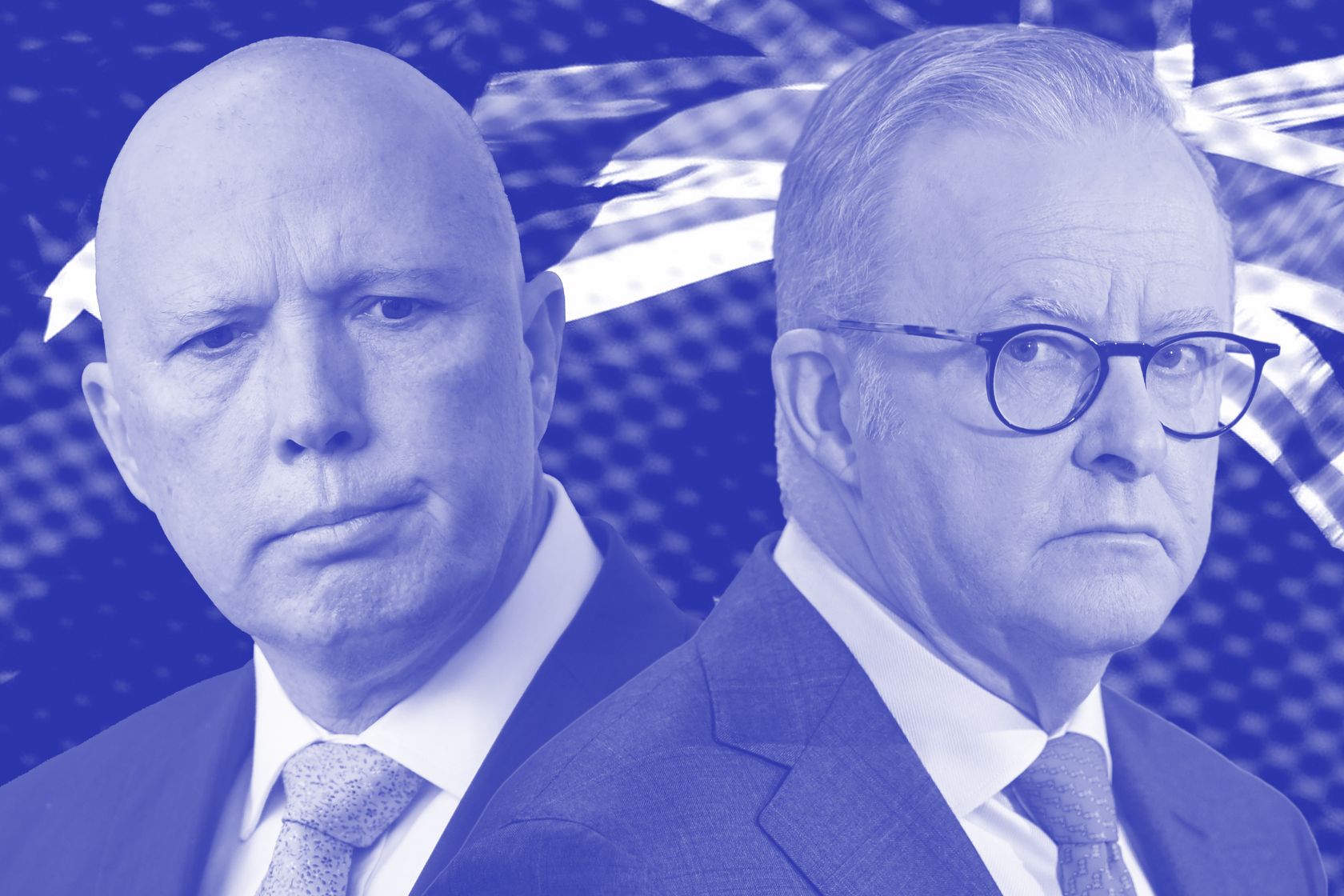
Poll pulse: Support for the Albanese government has surged as the election campaign begins, with Newspoll and Resolve recording increases in Labor’s primary vote, and YouGov showing a swing towards Labor in seat projections. Labor is also closing the gap on the Coalition as the party most trusted on cost of living and is slightly ahead in the race to form government. A YouGov MRP model shows Labor leading in 10 seats it was behind in six weeks ago, putting it on 75 seats to the Coalition’s 60. An AFR/Freshwater poll has the Coalition’s cost-of-living lead down to 5 points, and its two-party-preferred edge at 50.6–49.4. Newspoll shows Labor leading 51–49, with a primary vote of 33% to the Coalition’s 37%. Most polling was conducted around or just before the budget, which featured decade-long deficits and a $17 billion “top-up tax cut” the Coalition has vowed to repeal. (Capital Brief)(ABC)(AFR)(Sky News)
2.
Trump’s words: Donald Trump said he won’t fire anyone involved in the Signal leak and that he “couldn’t care less” if carmakers raise prices due to the 25% tariffs on imported vehicles and parts he’s imposed from this week. The US president told NBC News, “I hope they raise their prices, because if they do, people are going to buy American-made cars,” denying reports he had warned automakers not to raise prices. Trade adviser Peter Navarro said the US’ total tariff plans would raise USD700 billion ($1.11 trillion) and called them “the biggest tax cut in American history for the middle class.” Trump also told NBC he was “not joking” about seeking a third term, adding “there are methods” for doing so. He said he’s not taking “military force off the table” in acquiring Greenland and believes “there’s a good possibility” it could happen without it. He said he would impose “secondary tariffs” on all Russian oil if a peace deal on Ukraine fails and he believes it is Russia’s fault, citing anger at Putin’s remarks questioning Zelenskyy’s legitimacy. On Iran, he said “if they don’t make a (nuclear) deal, there will be bombing.” (NBC)(NYT)
3.
Asia outpost: The US will guarantee "robust, ready and credible deterrence" across the Taiwan Strait, US Defence Secretary Pete Hegseth said in Tokyo on Sunday. Hegseth said the US would upgrade its military presence in Japan and requested access to Japan’s strategic southwest islands in the contested East China Sea near Taiwan. Hegseth described Japan as a “cornerstone of peace and security in the Indo-Pacific,” and an “indispensable partner in deterring communist Chinese military aggression.” The countries also agreed to place a combined operational commander in the country, where the US already has 50,000 military personnel as well as its only permanently stationed aircraft carrier strike group. While President Donald Trump’s America First policy has raised concerns that the country could reduce Asia-Pacific defence spending, Hegseth’s comments indicate that Trump is pushing back on increasing Chinese aggression. (Reuters)(CNBC)(Capital Brief)
4.
Export slump: Australia’s commodity exports are expected to fall 6.74% this financial year to $387 billion, according to the Department of Industry, Science and Resources. The decline reflects lower US dollar prices for resource and energy exports, with earnings forecast to fall further to $343 billion by 2030. Iron ore prices are forecast to average USD86 per tonne in 2024–25, down from USD103, with export earnings to fall from $117 billion to $81 billion by 2029–30. In efforts to stimulate the mining sector, Treasurer Jim Chalmers’ budget included $700 million to support green metals, a $2 billion green aluminium production credit and a $1 billion Green Iron Investment Fund. But it did not extend an exploration incentive program that delivered $182 million in benefits over seven years, drawing criticism from industry groups. Uranium and iron ore exploration rose in the March quarter, while spending fell across other minerals including gold, nickel and copper. (Bloomberg)(AFR)
5.
Campaign kick-off: Prime Minister Anthony Albanese kicked off the first weekend of the election campaign with Medicare and grocery policy pitches. Taking his fight to the battleground state of WA, Albanese unveiled a $200 million upgrade to a local hospital which would come on top of a $105 million injection from the state government to upgrade the hospital’s emergency department. The healthcare investment forms part of Albanese’s $8.5 billion Medicare package, the centrepiece of Labor’s campaign. Earlier on the weekend the PM announced that a re-elected Labor government would outlaw price gouging by supermarkets, after a Senate inquiry into supermarket prices in May recommended the practice be made illegal. “Australian families deserve a fair price at the checkout and Australian farmers deserve a fair price for their goods,” Albanese said. Election politics will collide with economics on Tuesday when the Reserve Bank delivers its mid-campaign decision. (Capital Brief)(Capital Brief)
6.
Deadly quake: The death toll from Friday’s 7.7 magnitude earthquake in Myanmar reached 1,700 people on Sunday, with an additional 3,400 injured and reported 300 missing. Aftershocks continued through the weekend, as the nation besieged by civil war tried to assess the severity of the quake’s impact. The US Geological Service’s predictive modelling estimated Myanmar's death toll could top 10,000 and losses could exceed the country's annual economic output. The shadow National Unity Government, which leads the resistance against the military regime, declared a partial ceasefire to support earthquake relief operations, despite UN reports that the ruling junta carried out airstrikes in the hours following the quake. Foreign Affairs Minister Penny Wong said Australia has pledged $2 million in aid through the Red Cross, adding no direct funding is provided to the military regime. China, Russia, India, Thailand and Singapore have sent rescue and medical teams. Meanwhile, A 7.1 magnitude earthquake struck near Tonga early Monday, triggering tsunami sirens. (UN)(Reuters)(Penny Wong)(Capital Brief)
7.
Capital buffers: Four of China’s largest state-owned banks will raise a combined 520 billion yuan ($114 billion) through A-share private placements to shore up the lenders' capital buffers. The Chinese finance ministry (a major shareholder in all of the banks) is involved in the four deals, and follows moves by Beijing to boost capital across the country’s biggest lenders. The Bank of China, China Construction Bank, Bank of Communications and the Postal Savings Bank of China are each seeking to raise between 105 and 130 billion yuan. Earlier in March, Beijing vowed to issue 500 billion yuan in special sovereign bonds to replenish capital at the biggest state-owned banks, as the lenders face slowing profits, rising debt and record-low margins. Bloomberg reports that the sector’s net interest margin slipped to 1.52% at the end of 2024, its lowest ever, prompting Beijing to pledge further stimulus measures.(Reuters)(Bloomberg)(Capital Brief)
8.
Super scrutiny: The Australian Securities and Investments Commission (ASIC) has hit superannuation trustees including Australian Retirement Trust, Hostplus and UniSuper with a raft of 34 recommendations linked to their poor handling of death benefit claims. The watchdog found excessive delays, poor customer service, and ineffective claims handling procedures at 10 major funds. According to ASIC's research, the fastest superannuation trustee closed around 48% of death benefit claims in 90 days. The slowest trustee closed around 8% of claims in the same period. The regulator recently sued AustralianSuper and Cbus for alleged claim failures and had previously cited concerns over the industry’s systemic failures. ASIC Chair Joe Longo said, “at the heart of this issue is leadership that doesn’t have a grip on the fund’s data, systems and processes — and ultimately it is the customers who suffer for it." (Capital Brief)
