Nvidia slump deepens as bond rout hits markets
Plus: Klarna in second Wall Street IPO attempt, CBA set for windfall; Nuno Matos rebuilding ANZ’s regulatory credibility with risk restructure; AustralianSuper to pledge $40b local investment.

Good morning. Here's what happened overnight and what you need to know today.

1.
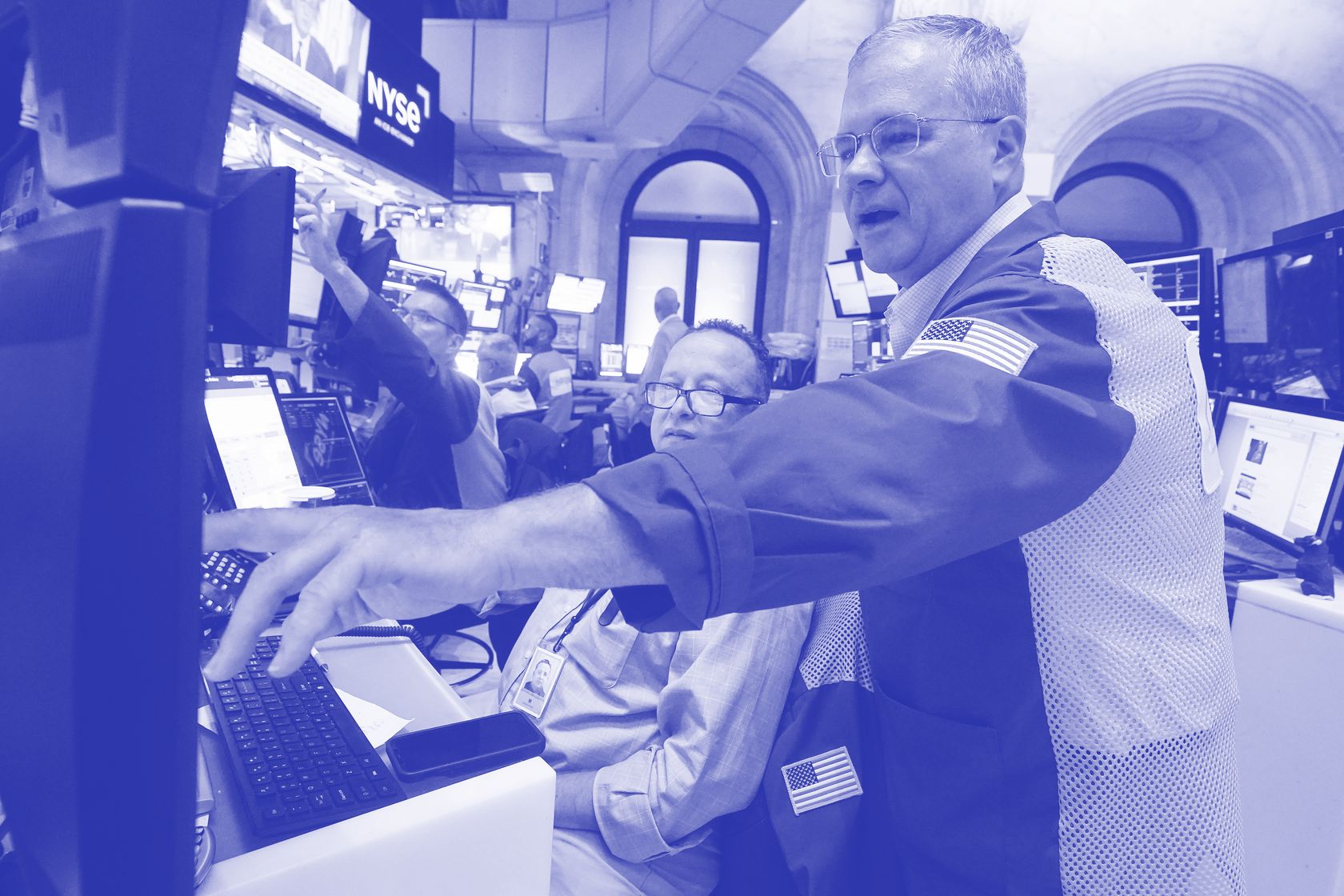
September kick-off: US stocks began September on a sharply lower note Tuesday as a global bond selloff spilled into equities. The S&P 500 fell 0.69% and the Nasdaq dropped 0.82% while major European indices also declined. The 10-year US Treasury yield rose over 5 basis points to top 4.28% and long-dated German yields climbed to their highest since 2011. Gold touched an all-time high, with front-month futures advancing above USD3,500 a troy ounce after a record close on Friday. Investors were rattled by a divided appeals court ruling that most of Trump’s tariffs are illegal, though they will remain in place until 14 October while the administration considers an appeal to the Supreme Court. Nvidia shares dropped below their 50-day moving average, erasing more than USD340 billion ($521.5 billion) in market value over four sessions. Separately, a federal judge ruled Trump’s deployment of National Guard troops in California violated the Posse Comitatus Act and issued an order, effective 12 September, preventing their use in domestic law enforcement. (WSJ)(Reuters)(FT)(Bloomberg)
2.
Float-now-pay-later: Buy now, pay later firm Klarna announced plans for its second IPO attempt on the New York Stock Exchange, after the Swedish fintech pushed back initial listing plans in April due to President Trump’s trade war. The company is aiming to raise up to USD1.27 billion ($1.95 billion), with shares priced at between USD35 and USD37. According to a source cited by the FT, the range implies a valuation of between USD12.5 billion and USD14 billion. The AFR reports that the Commonwealth Bank could rake in a windfall if it sells down its almost $1 billion stake in Klarna, with sources telling the masthead that CBA was likely to sell down at least part of its Klarna holding, although a final decision is yet to be made. CBA’s 2025 annual report valued its stake in Klarna at $956 million at 30 June, up from $574 million a year earlier. (Klarna)(FT)(Bloomberg)(Capital Brief)
3.
Nuno Scissorhands: ANZ is quietly parting ways with one of its chief risk officers as new chief executive Nuno Matos restructures the banking giant's retail division and works to rebuild its reputation with regulators. Capital Brief can reveal Michelle Pinheiro, the chief risk officer in charge of data and technology, will depart ANZ on 17 September as the bank splits teams and centralises compliance responsibilities in a bid to prioritise its ongoing work with the corporate regulator ASIC. The structural changes, outlined in an internal memo sighted by Capital Brief, will also see the chief risk officer Australia role split into dedicated retail and commercial divisional roles, with the latter yet to be filled. Alongside the existing institutional role, all three will report directly to group chief risk officer Kevin Corbally. Les Vance, the executive supporting ANZ’s enforceable undertaking, has started work in his new role. (Capital Brief)
4.
Spend local: CEO of AustralianSuper, Paul Schroder, is set to unveil plans for $40 billion in local investment over the next five years, when he addresses the National Press Club this morning. Bloomberg reports that the $385 billion super fund has flagged housing, health, the energy transition and artificial intelligence as major challenges for Australia that pension funds can help address. Schroder will tout “build-to-sell” partnerships, where the government develops assets with the plan to sell or lease them to longer-term investors like his fund. He will also make clear that pension funds should not be directed on their investments by officials, but instead should be partnered with them early “in open dialogue about how to better balance risk.” Schroder will note that it would be a “disaster” for members if governments told funds what to invest in. (Bloomberg)(AFR)(The Australian)(Capital Brief)
5.
Capital rush: Anthropic raised USD13 billion ($19.9 billion) from investors in a new funding round that nearly triples its valuation to USD183 billion, making it one of the most valuable startups in the world. The financing was led by Iconiq Capital alongside co-leads Fidelity Management and Research Co and Lightspeed Venture Partners. Other participants included the Qatar Investment Authority, Blackstone, GIC and Coatue. Anthropic had initially held talks to raise USD5 billion, before lifting that target to USD10 billion and ultimately landing at USD13 billion due to strong investor demand. The company said its run-rate revenue has increased from around USD1 billion at the beginning of 2025 to more than USD5 billion in August. Anthropic said it now has 300,000 business customers and that Claude Code generates more than USD500 million in yearly run-rate revenue, with usage growing more than ten times in three months. Meanwhile, OpenAI agreed to acquire product testing startup Statsig for $1.7 billion. (Anthropic)(Capital Brief)
6.
In the pipeline: Russia’s Gazprom says the company signed a binding agreement to build the ‘Power of Siberia 2’ gas pipeline to China and could send as much as 50 billion cubic metres per year via the pipeline for 30 years. Gazprom CEO Alexey Miller told TASS that the price for the fuel would be lower than what the company currently charges customers in Europe. Russia has been working to get the deal off the ground with China for years, as President Vladimir Putin increasingly turns to China to replace Europe as its biggest gas buyer. China’s state-owned Xinhua News Agency reported that the two countries signed more than 20 cooperation agreements as Putin and Xi met on Tuesday, with Putin noting that Russia’s relationship with Beijing has reached an “unprecedentedly high level”, ahead of a Chinese military parade on Wednesday to be attended by Putin and North Korean leader Kim Jong Un. (TASS)(Xinhua News)(Bloomberg)(CNN)(Capital Brief)
7.
Supermarket shelves: Packaged food giant Kraft Heinz plans to split into two listed companies, with one unit focused on sauces, spreads and seasonings while the other will sell groceries across North America. The deal unwinds a mega merger that brought two of the sector’s largest packaged foods players together in 2015, going against the industry’s recent efforts to pursue mergers to increase scale. “Scale by itself is not the answer, but having scale along with focus creates opportunities,” Kraft Heinz CEO Carlos Abrams-Rivera told the WSJ. On the soda aisle, activist investor Elliott Investment Management has built an approximately USD4 billion ($6.14 billion) stake in PepsiCo and plans to push for changes to address its flagging share price, according to the WSJ. The stake makes Elliott one of PepsiCo’s top five active investors excluding index funds. PepsiCo’s market value has shrunk to around USD200 billion, from its USD270 billion peak in 2023. (Kraft Heinz)(Capital Brief)(WSJ)
8.
Chip choke: The US has revoked Taiwan Semiconductor Manufacturing Co’s (TSMC) authorisation to freely ship essential gear to its main Chinese chipmaking base, removing its Validated End User (VEU) status effective 31 December 2025. The change means future shipments of US-origin chipmaking tools to TSMC’s Nanjing facility will require individual export licences. The move mirrors steps taken against Samsung, SK Hynix and Intel and may impact the predictability of the Nanjing plant’s operations. TSMC said it is evaluating the situation and remains fully committed to ensuring uninterrupted operations. The facility accounts for about 3% of TSMC’s production capacity. Taiwan’s Ministry of Economic Affairs said the revocation may affect the plant’s operational predictability but not Taiwan’s chip industry competitiveness. (Capital Brief)(Bloomberg)(Reuters)(SCMP)
