OpenAI recapitalises, Microsoft takes 27% stake
Plus: Nvidia and Nokia in AI-powered mobile network partnership; Nvidia also unveils sweeping AI and quantum push at GTC summit; Wall Street rises on megacap tech momentum and earnings strength.

Good morning. Here's what happened overnight and what you need to know today.
1.
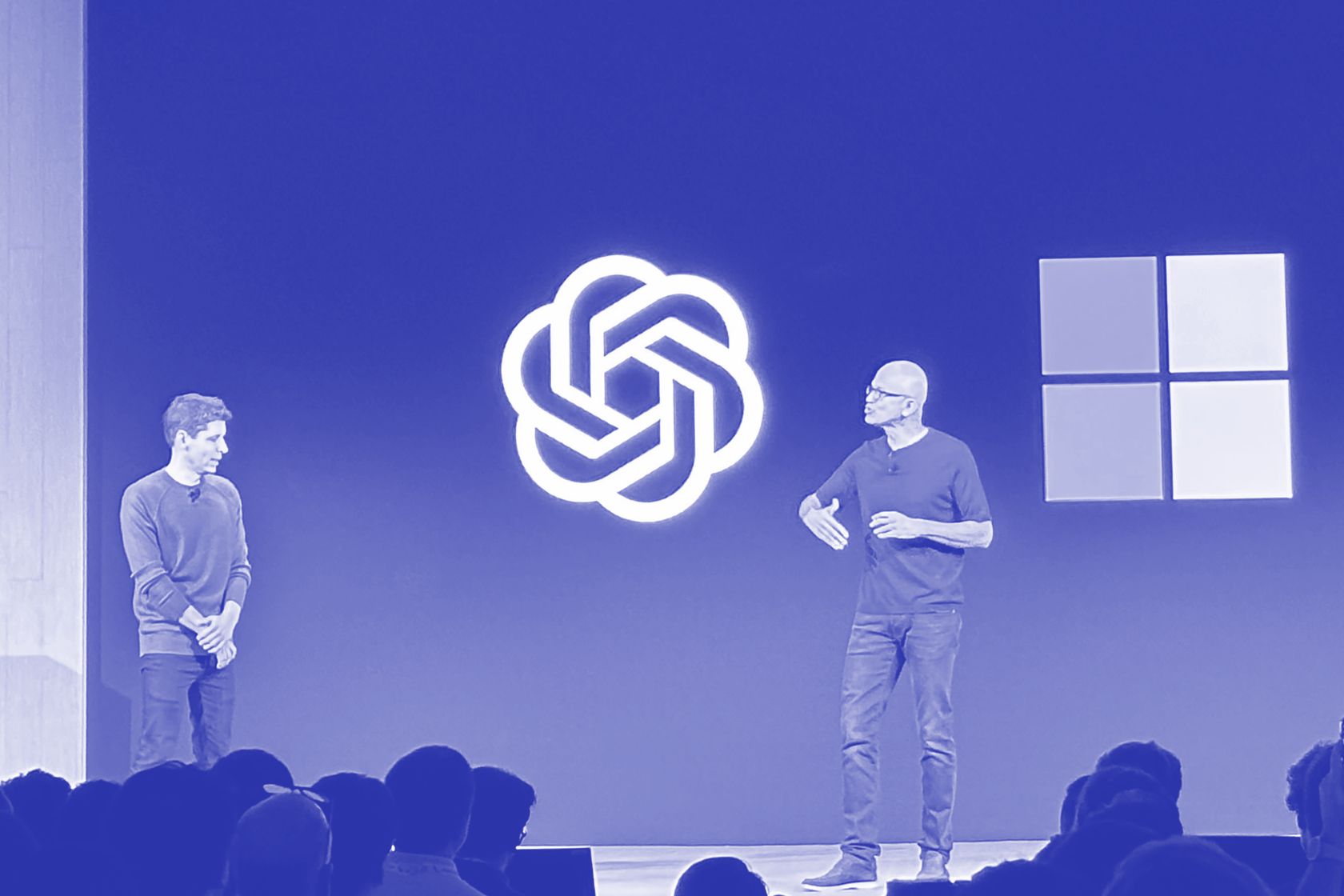
Nonprofit mission: OpenAI completed its recapitalisation, bolstering its structure as a nonprofit with a controlling stake in its for-profit business and pushing its largest external shareholder, Microsoft, to a USD4 trillion ($6.1 trillion) market capitalisation. The AI giant said that following the recapitalisation, Microsoft will receive a 27% ownership stake in OpenAI, valued at approximately USD135 billion. Microsoft will also have access to the AI startup’s technology until 2032, including models that achieved the benchmark of artificial general intelligence. OpenAI said the equity held by the nonprofit arm, the OpenAI Foundation, was currently valued at approximately USD130 billion. OpenAI’s chair Bret Taylor said in a blog post on Tuesday that the nonprofit’s stake makes it “one of the best resourced philanthropic organizations ever.” Meanwhile, OpenAI agreed to embed PayPal’s digital wallet into ChatGPT from 2026 so that users can pay for items found through the AI platform. Paypal shares were trading over 7% higher in NY. (Capital Brief)(PayPal)(CNBC)(OpenAI)(Capital Brief)
2.
AI radio: Nvidia will invest USD1 billion ($1.5 billion) in Nokia for a 2.9% stake through a directed share issuance of about 166.4 million shares at USD6.01 each. The deal forms part of a strategic partnership to develop AI-enabled networking technologies, including software for future mobile networks and AI-powered radio access networks, or AI-RAN. Nokia said the proceeds will fund its strategic priorities around “trusted connectivity for the AI supercycle” and general corporate purposes. Nokia will adapt its 5G and 6G software to run on Nvidia’s architecture and explore integrating its data centre technologies into Nvidia’s infrastructure. The investment follows Nokia’s USD2.3 billion acquisition of Infinera Corp and comes amid Nvidia’s broader AI investment push, including up to USD100 billion for OpenAI and major investments in European firms such as Wayve, Oxa, Revolut, PolyAI and a EUR500 million data centre with Deutsche Telekom. Nokia shares closed 21.32% higher in Paris. Nvidia shares were trading 4.25% higher late afternoon in New York. (Capital Brief)(Nokia)(Bloomberg)
3.
Nvidia’s GTC: Nvidia also unveiled new technology and partnerships across quantum computing, government-backed AI infrastructure and autonomous vehicles. At its GTC summit in Washington, CEO Jensen Huang introduced NVQLink, a system designed to connect quantum processors with Nvidia’s AI chips to support scaled error correction and hybrid computing. Huang said the company has enlisted 17 quantum companies and collaborated with US national labs including Sandia, Oak Ridge and Fermi. Nvidia also announced it will build seven AI supercomputers for the US Department of Energy, including one with Oracle that will use 100,000 Blackwell chips, to support nuclear weapons work and energy research. Separately, Uber said it plans to deploy 100,000 Nvidia-powered robotaxis beginning in 2027, starting with at least 5,000 vehicles from Stellantis. The two companies will also build a data platform to collect over three million hours of robotaxi driving data. Nvidia also announced a partnership with Palantir Technologies focused on its commercial business, aiming to accelerate logistics solutions for companies such as Lowe’s. (Nvidia)(Bloomberg)(Reuters)(WSJ)
4.
Tech surge: Wall Street’s major indexes hovered near record highs on Tuesday, supported by gains in megacap tech shares and earnings from US heavyweights. Microsoft climbed 2.2% after finalising a deal giving it a 27% stake in OpenAI. Apple briefly crossed USD4 trillion in market value for the first time, before easing to trade flat. Nvidia rose after announcing a USD1 billion investment in Nokia and unveiling new technology connecting quantum computers with its AI chips. UPS shares also jumped 8% after it raised its fourth-quarter revenue forecast and said it had cut 34,000 jobs. UnitedHealth beat expectations and raised its annual outlook. Gold, however, fell to USD3964.35, its lowest since 6 October, as hopes for a US-China trade deal reduced demand for safe-haven assets. The Wall Street Journal reported that, under a trade framework set to be discussed by Trump and Xi this week, the US would roll back some tariffs on China if Beijing cracks down on exports of fentanyl-related chemicals. The Dow and Nasdaq were each about 0.7% higher, while the S&P 500 was 0.4% higher led by tech. (Reuters)(WSJ)(Bloomberg)
5.
AI aspirations: Hyperscale data centre provider AirTrunk will touch down in Saudi Arabia after inking a partnership with a Kingdom's sovereign wealth fund-controlled AI solutions provider. Public Investment Fund PIF-owned HUMAIN and AirTrunk flagged an AI-enabled USD3 billion ($4.58 billion) data centre which will help investors and the Kingdom realise their ambition as a digital ecosystem hub for the Middle East region. Blackstone and Canada Pension Plan Investment Board own AirTrunk, which they acquired in 2024 from Macquarie Asset Management, alongside the company's founder, Robin Khuda, who retains a minority shareholding. AirTrunk views itself as APAC’s leading data centre provider, with a lower build and operating cost than competitors, a full suite of AI, hyperscale and cloud offerings and prioritises sustainability through renewable energy, water efficiency and liquid cooling which conserves electricity. Finer details of the JV were not disclosed, including the total planned investment, whether the companies set up a SPAC and which company had majority control. (Capital Brief)
6.
Crypto clarity: Bitcoin is unlikely to be considered a financial product by ASIC, according to updated guidance on digital assets, which offers clarity around Bitcoin among the most sought after by industry players. ASIC said Bitcoin was “unlikely to be” a facility for making a financial investment, as there was “no promise or representation that the contributions will be used to generate returns for investors”. It also said the cryptocurrency was unlikely to be a non-cash payment facility, though Bitcoin could be used within a separate non-cash payment facility arrangement. “That describes Bitcoin as we know it today. If there are any changes in the way that Bitcoin operates, we consider those in the future,” ASIC commissioner Alan Kirkland told Capital Brief. There are no Australian cases where the legal definition of Bitcoin is being tested. However, if a senior court took a different view, ASIC would update its guidance. (Capital Brief)
7.
Surprise raid: The savage selloff in shares of WiseTech Global following the news of a police raid on the company has underscored ongoing market jitters about the company's deep reliance on its founder and executive chair, Richard White. WiseTech led losses on the ASX 200 on Tuesday following news that its offices were searched by the corporate regulator and the federal police, but whether this will have deeper implications for the business likely rests on the fate of its founder, analysts say. Shares in WiseTech closed 15.9% lower on Tuesday - wiping $4.5 billion in value - potentially reflecting “the fear that Richard has to leave the company” if the ASIC investigation doesn’t go his way, Jefferies analyst Roger Chen told Capital Brief. With details scarce on why ASIC searched WiseTech’s offices, Jarden analyst Tom Beadle said “we’re all speculating, there’s too many scenarios, the market probably sold first and will ask questions later”. (Capital Brief)
8.
Gaza strikes: Israeli Prime Minister Benjamin Netanyahu has directed the military to immediately carry out powerful strikes in Gaza, putting the fragile US-backed ceasefire at risk. His office said the order was issued after security consultations but gave no reason for the planned strikes. Netanyahu earlier accused Hamas of violating the agreement by returning the wrong remains during the handover of hostage bodies. An unnamed Israeli military official also told media Hamas opened fire on troops in southern Gaza. On Tuesday, Israeli forces also reportedly killed three Palestinian militants in the West Bank. In response, Hamas said it would postpone the handover of another hostage’s body found in a tunnel, citing Israeli violations of the truce, Reuters reported. An unnamed Arab official involved in ceasefire talks told AP that both sides had committed violations, though “there was no significant breach.” Since the 10 October truce began, 15 dead and 20 living hostages have been exchanged for nearly 2,000 prisoners and 195 bodies. (Capital Brief)(Reuters)(AP)(NYT)
