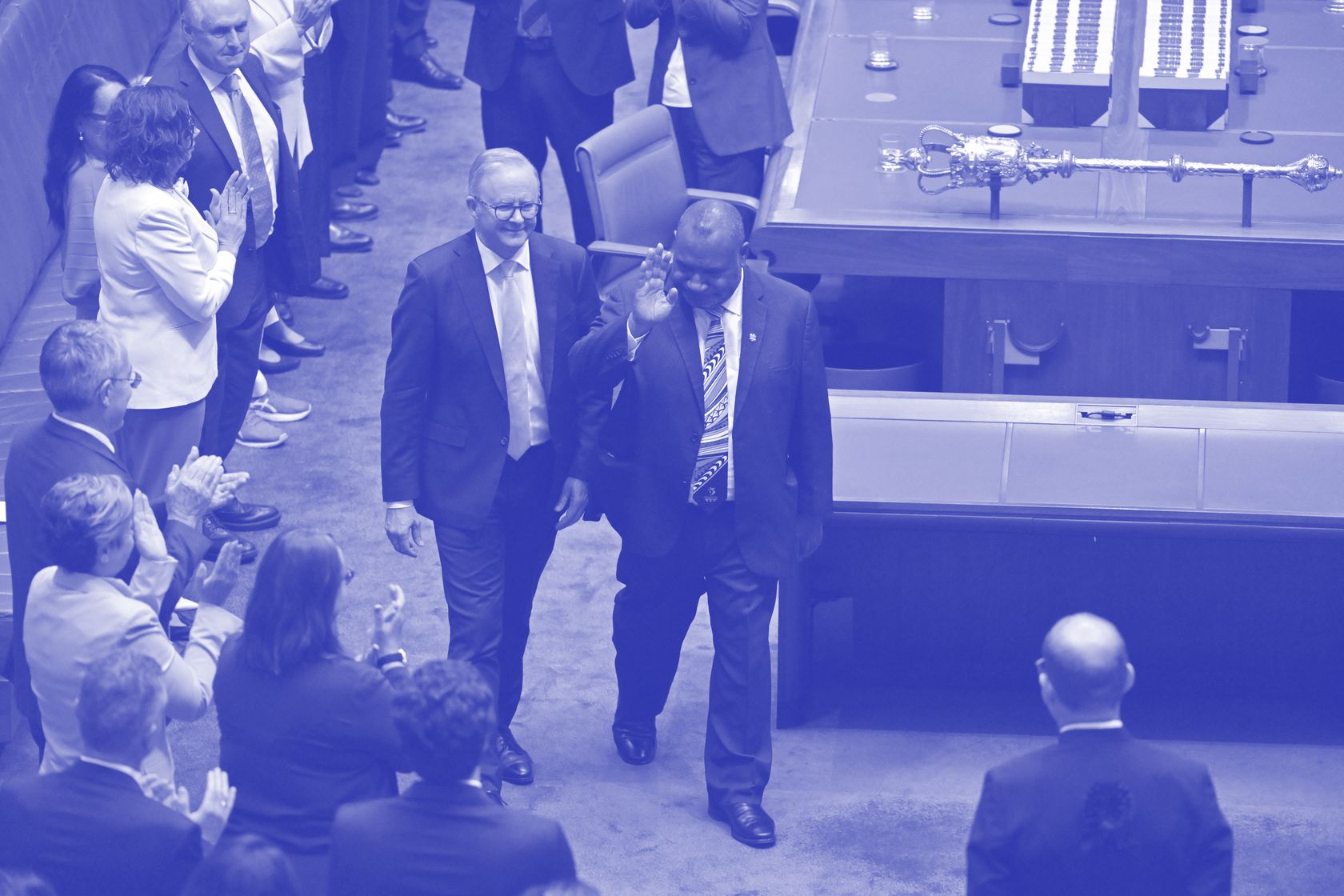
That Papua New Guinea Prime Minister James Marape today became the first ever Pacific Islands leader to address the Australian parliament is both highly symbolic, and a signpost of the strategic landscape.
As the United States and China vie for influence in the region, Australia, as a key Washington ally, is alive to the importance of not repeating the missteps of successive governments in Canberra by allowing relations with some of our closest neighbours to drift.
A key plank of Marape’s visit has been to reassure Canberra that the PNG sees Australia as its key security partner. In a joint statement with Anthony Albanese, the pair “reaffirmed their commitment to the region’s existing security architecture as a key driver of security cooperation.”
Marape had only just visited Australia back in December, coming away with a $200 million security and policing agreement from the Albanese government. But domestic anger over poor economic prospects sparked deadly riots in Port Moresby during a police strike last month, plunging Marape’s government in crisis. Widespread looting and arson during the riots – including some Chinese-owned businesses and storefronts – prompted suggestions from Foreign Minister Justin Tkatchenko that PNG was considering a separate security and policing deal with China – comments he would subsequently walk back.