Putin and Xi ramp up ‘no limits’ cooperation against US
Plus: Dutton pushes immigration and housing in budget response; Dow Jones breaks past 40,000 milestone, Labor says Albanese didn’t know about ‘secret’ Senate document.

Good morning. Here's what happened overnight and what you need to know today.

1.
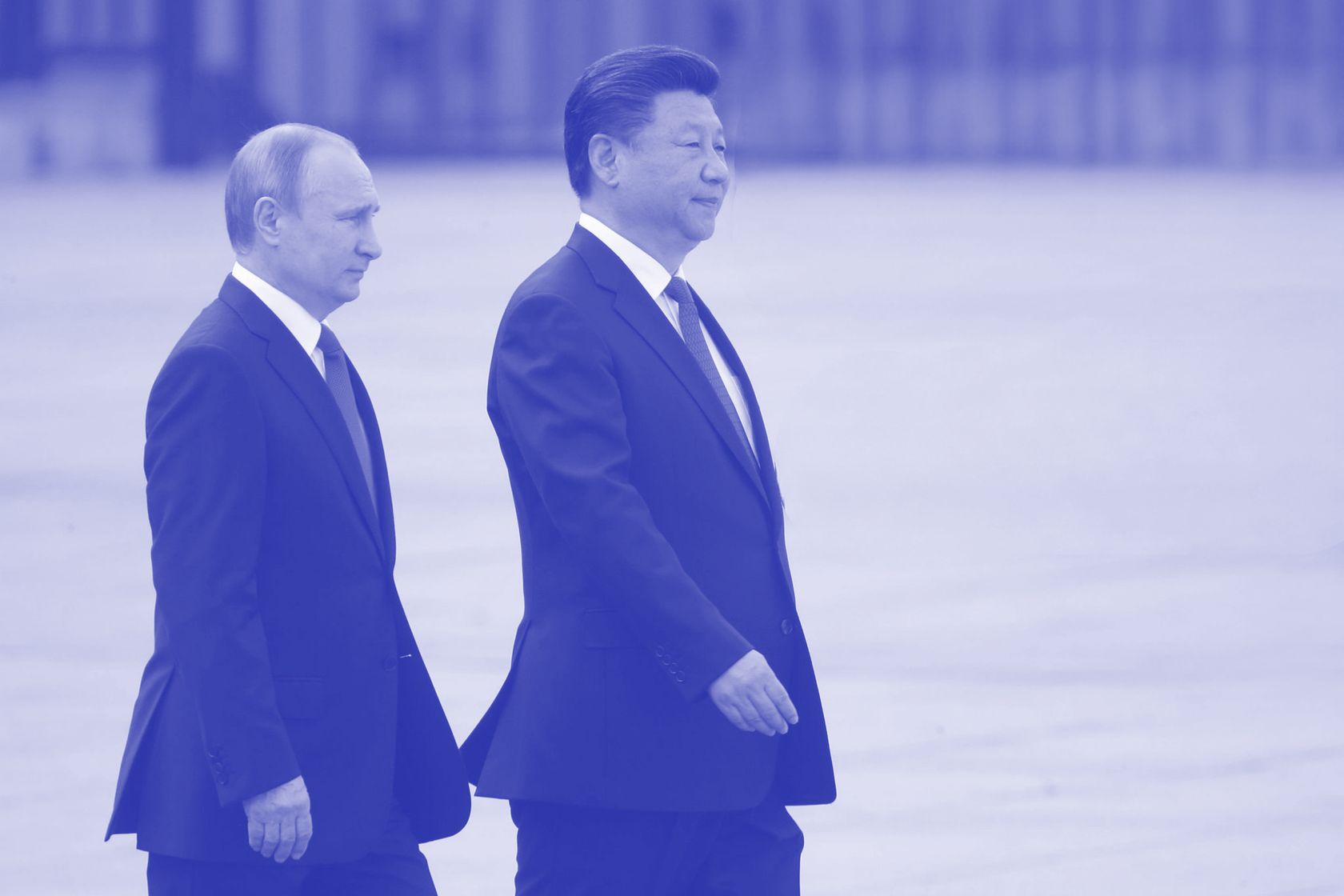
Powerful friendships: Russian President Vladimir Putin and Chinese President Xi Jinping have condemned what they view as aggressive US behaviour and vowed to deepen their partnership. Putin’s two-day state visit to Beijing marks his first overseas trip since he commenced his fifth term in office, signalling Russia’s intention to prioritise its relationship with China going forward. The two leaders signed a joint statement following their initial meeting on Thursday, and Xi said that both countries will continue to uphold a position of non-alliance and non-confrontation. The two countries have been closely united since February 2022, when just days before invading Ukraine, Putin visited Beijing and declared that the nations share a “no limits” partnership. The joint statement raises concerns about the US’ efforts to violate the strategic nuclear balance, the US’ use of missile defences around the globe and the US’ plan for high precision non-nuclear weapons. (Reuters)(Kremlin press release on Russia-China talks)
2.
Magic pudding budget: In his budget reply speech on Thursday evening, Opposition Leader Peter Dutton lashed the Albanese government's plans to spend billions of dollars to drive investment into green hydrogen and critical minerals. He argued that the approach and the 2024 budget were “irresponsible” and would usher in spending that threatens to worsen inflation. Dutton blamed the Labor government for the inflationary pressures that have driven the cost-of-living crisis, stating that “magic pudding spending” won’t help the economy or make lives easier. Dutton has instead proposed a plan to cut immigration by 25%, which he tied directly to plans to get housing affordability under control. Foreigners and temporary residents would face various restrictions on buying homes, while the number of foreign students studying at city universities would be capped. Dutton also doubled down as an ally of SME’s with extending the instant write-off scheme, as well as supporting mining and energy sectors. (Capital Brief)
3.
Take a b(D)ow: The Dow Jones Industrial Average reached an all-time high on Thursday, as US blue-chip stocks continued to advance on positive inflation data. The index achieved the milestone in its fastest 10,000 point climb to date, surpassing its previous record high of 39,935.04 hit on Wednesday and has recovered almost 40% since its October 2022 lows. One of Wall Street’s three main indexes, the Dow Jones was first launched in 1986 and is considered a narrower equities gauge than the S&P 500 or Nasdaq 100. The US inflation report published Wednesday saw overall CPI climb 0.3% from the month prior and 3.4% from a year ago, with housing and fuel accounting for 70% of the increase. The cooling inflation data suggests the Federal Reserve’s efforts to keep interest rates higher are working to help inflation resume a downward trend, which would increase the likelihood of the Fed cutting rates later in the year. (Bloomberg)
4.
Secret dossier: Finance Minister Katy Gallagher has denied Anthony Albanese was aware of a Senate ‘cheat sheet’ and stood by its content after the after the Coalition and crossbench senators moved a motion forcing her to explain what the PM knew about the document. Following Capital Brief’s report last month that Albanese's office had distributed a manual of template answers to questions on notice to multiple departments suggesting how to answer or avoid answering senate estimates questions, Gallagher insisted that Albanese had not seen the document. Gallagher also argued Labor released it without technically being required to. "It is bizarre that [Coalition] Senator [Simon] Birmingham and [Greens] Senator [Larissa] Waters rail against what they continue to erroneously describe as a secret document," she said. Birmingham responded: "There is no defence to the blatant attempt to subvert legitimate processes of this Senate, and no defence for the contempt shown by the government in this document." Current and former senators, lawyers and a former top judge have said the drafting of the document could result in contempt of the Senate. (Capital Brief)
5.
Mega Meta probe: The EU is opening an investigation into whether Meta’s Facebook and Instagram platforms do enough to protect minors. The Commission is concerned that the social media platforms and the algorithms they use could stimulate behavioural addictions in children, as well as create so-called 'rabbit-hole effects'. The probe has been opened under the bloc’s new Digital Services Act, which requires the globe’s largest digital players to address illegal content and manage risks associated with the platforms’ use. If Meta is found to be in breach of the rules it could be exposed to fines of up to 6% of the company’s global annual revenue. Margrethe Vestager, executive vice-president for a Europe Fit for the Digital Age said: “We have concerns that Facebook and Instagram may stimulate behavioural addiction and that the methods of age verification that Meta has put in place on their services is not adequate.” (Wall Street Journal)(European Commission press release)
6.
Executive privilege: President Joe Biden has blocked the release of audio recordings from interviews he undertook with the special counsel investigating the classified documents probe. The bombshell report by special counsel Robert Hur published three months ago cast the President as a “well-meaning, elderly man with a poor memory” and cited Biden’s memory lapses when he was being interviewed. Hur was appointed to lead the investigation in 2023 after classified documents were discovered in Biden’s home and other locations. In a letter to Republican lawmakers who had subpoenaed the tapes, the White House said that the President would assert executive privilege over the recordings, and that there was no “legitimate need” for the tapes to be released. (Financial Times)
7.
Hiring freeze: According to sources cited by Reuters, Anglo American has suspended hiring globally, as it begins to undertake a large-scale restructuring announced on Tuesday. The restructuring was unveiled by Anglo as it rejected consecutive takeover bids from Australia’s BHP Group over the past week. Anglo’s proposal will see it spin-off its less profitable coal, nickel, diamond and platinum businesses, while refocusing on copper, iron ore and crop nutrients. The hiring freeze was announced to the company via an internal memo, which read: "Following yesterday's announcement of our plans to unlock significant value through a simplification of our portfolio […] it is appropriate that we put in place a freeze on the recruitment of all non-site-based permanent employees and contractors across all Businesses and Group Functions," people and organisation director Monique Carter wrote. The memo said that Anglo will honour commitments to candidates who have been made a formal written offer, but no new offers will be made. (Reuters)
8.
Bye-bye basin: Chevron plans to sell the remainder of its UK North Sea oil and gas assets, marking the energy giant’s departure from the basin after operating there for over 55 years. Chevron’s assets in the region include a 19.4% stake in BP-operated Clair oilfield, which produces 120,000 barrels per day, making it the largest in the British North Sea. Chevron also plans to sell its marginal interests in the Sullom Voe oil terminal, as well as its stakes in the Ninian and SIRGE pipeline systems which are both linked to the hub. According to sources cited by Reuters, the sale could raise up to USD1 billion ($1.5 billion) excluding tax benefits. However, the oil major has stressed that its decision to leave the North Sea was not related to the UK tax regime, where energy companies pay 75% of tax on profits, nor to the opposition Labour party’s plans to increase the fuel levy. The decision to sell comes as Chevron prepares its USD53 billion acquisition of Hess, which it had previously disclosed would include selling off USD10-$15 billion of its global assets. (Reuters)
