Renewed hopes for Iran talks as White House sends team to Pakistan
Plus: DOJ drops probe into Powell, paving way for Warsh confirmation; S&P 500 and Nasdaq close at record levels on US-Iran talks hope; Google commits another USD40b to Anthropic.

Good morning. Here’s what happened overnight and what you need to know this weekend.
1.
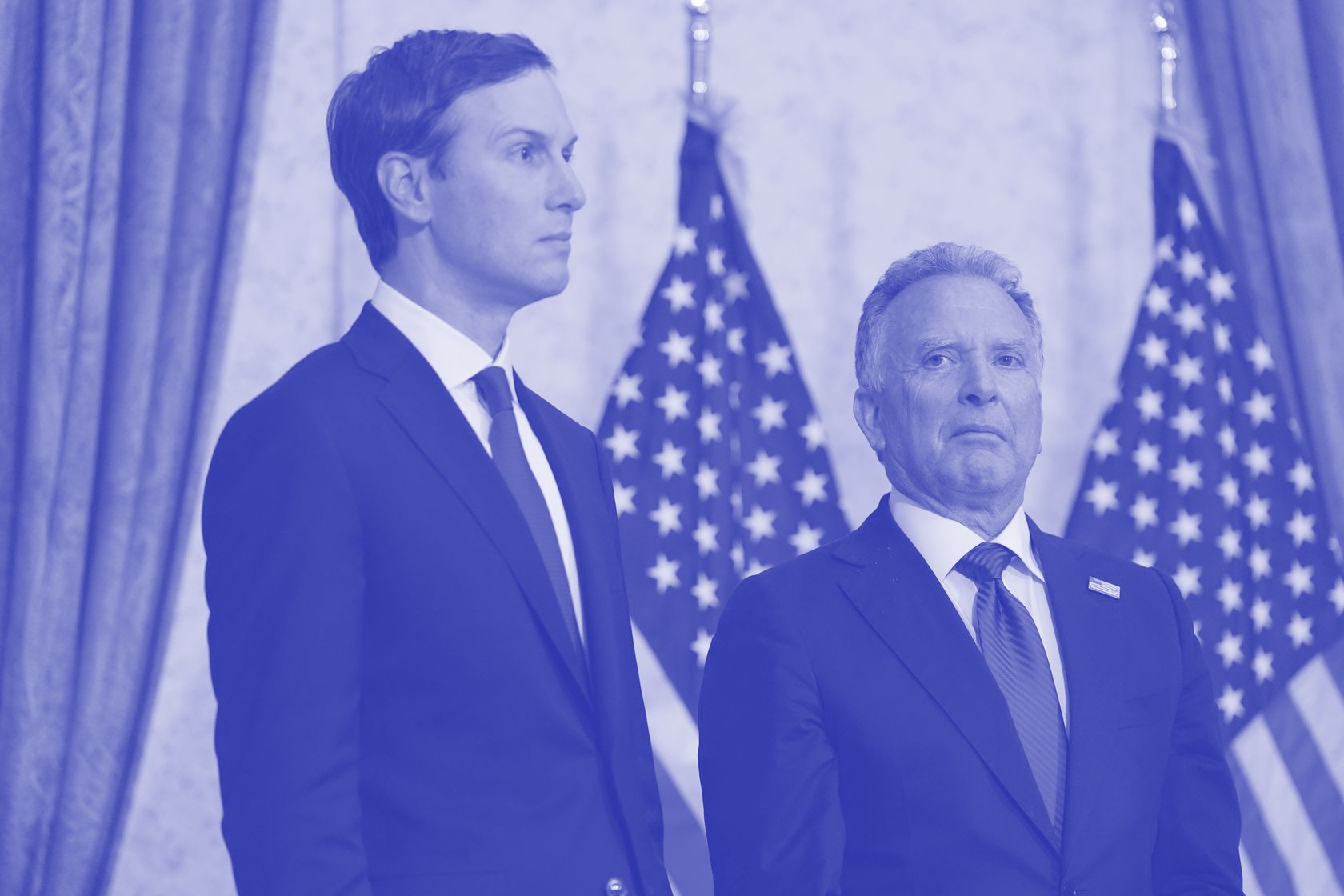
War talks: Special envoy Steve Witkoff and US President Donald Trump’s son-in-law Jared Kushner will travel to Islamabad for talks with Iranian officials on Saturday, raising hopes that the two sides will return to the negotiating table. Along with Vice President JD Vance, Trump and Secretary of State Marco Rubio “will be on standby to fly to Pakistan if necessary,” White House Press Secretary Karoline Leavitt told Fox News. Trump told Reuters that Iran plans to make an offer aimed at satisfying US demands. Iran’s Foreign Minister Abbas Araghghi confirmed he will also visit Islamabad this weekend without agreeing publicly to sit down with US officials, saying the purpose of his visit is to “coordinate with our partners on bilateral matters...Our neighbours are our priority.” Earlier on Friday, US Defense Secretary Pete Hegseth said “Iran has a historic chance to make a serious deal and the ball is in their court.” Hegseth again criticised Europe for “freeriding” on US defence and security capabilities and urging allies to join its efforts in the Gulf. Nato on Friday said there is no provision for member states to be expelled from the alliance after a Reuters report said the US may be looking to suspend Spain over its stance on the war in Iran. (Reuters)(Bloomberg)(WSJ)(FT)
2.
Probe dropped: The US Department of Justice dropped its criminal investigation into chair of the Federal Reserve, Jerome Powell, paving the way for the confirmation of Trump’s pick for next Fed chair Kevin Warsh. US attorney Jeanine Pirro said that the Federal Inspector General has been asked to examine the costings, with a report on the findings expected soon. “I have directed my office to close our investigation as the IG undertakes this inquiry,” Pirro wrote. The probe was examining whether Powell gave false testimony to Congress last year about the cost of the central bank’s building-renovation project. In March, US district judge James Boasberg threw out two subpoenas issued by Pirro, ruling they were improper and that the government had produced “essentially zero evidence” that Powell had committed a crime. The move could clear remaining obstacles facing Warsh’s confirmation, as some Republican senators including Thom Tillis had vowed to block Warsh’s nomination until the criminal probe into Powell was dropped. Powell’s term as Fed chair is due to end on 15 May. (Jeanine Pirro X)(Bloomberg)(WSJ)(FT)(Capital Brief)
3.
Injection rejection: Pharmaceutical giant Eli Lilly declined a recommendation to place its weight-loss drug Mounjaro on the Pharmaceutical Benefits Scheme (PBS) over a price dispute, meaning an estimated 450,000 Australians with type 2 diabetes could miss out on the medication. The PBS Advisory Committee, which oversees the subsidisation program for medicines on Friday recommended that Mounjaro be listed for public funding after years of rejections. But Manny Simons, Eli Lilly’s general manager in Australia and New Zealand, said the price offered in Australia was lower than other prices agreed globally, and included “unrealistic and unviable” conditions. The government agrees a single price with pharmaceutical companies to buy their medication under the PBS, providing it for a fixed co-payment of $25 for most patients. Rival Novo Nordisk’s GLP-1 drug Ozempic has been covered by the PBS for the treatment of type 2 diabetes since 2020, while Mounjaro retails between $279 and $689, depending on dosage. (AFR)(SMH)(The Australian)
4.
Intel ascends: While anxiety about the war in the Middle East contributed to the weakest US consumer sentiment on record in April, the S&P 500 and Nasdaq Composite closed at record levels, after investors were given hope that talks between Tehran and Washington would resume over the weekend. The S&P 500 closed up 0.8% and the tech-heavy Nasdaq Composite climbed 1.6%. The Dow Jones fell 0.2% or 80 points. The Nasdaq was boosted by a surge in Intel’s share price, soaring as high as 26% to eclipse its dotcom-era ceiling during trading after the chipmaker’s results blew past expectations. Intel reportedly held fixed-income investor calls on Friday, asking Citigroup, JPMorgan, Barclays, Bank of America and Deutsche Bank to arrange the calls, which are typically a prelude to a bond sale. Market maker Jane Street stepped in to steal a Wall Street crown, reporting a record USD39.6 billion in trading revenue last year, Bloomberg reported. Elsewhere, the Ford and Chinese automaker Geely recently held talks about a potential US tie-up. (CNBC)(WSJ)(Bloomberg)
5.
Cash for compute: Alphabet’s Google inked a deal to invest up to USD40 billion ($55.94 billion) in Anthropic, including USD10 billion upfront, as the AI lab races to secure computing capacity to power its growth. While Google produces its own Gemini AI models, it committed to spend the USD10 billion at a USD350 billion valuation, with the remaining USD30 billion contingent on performance milestones. Google Cloud also announced it would provide 5 gigawatts worth of computing capacity to Anthropic over the next five years, with more gigawatts to follow, Bloomberg reported. The commitment is an expansion of an agreement announced earlier in April between Anthropic, Google and Broadcom. Insatiable demand for Anthropic’s Claude family of AI models has driven the company to secure more computing capacity, leading to a flurry of recent funding announcements. Earlier this week, Anthropic secured another USD5 billion from Amazon with an option to add another USD20 billion over time. (Bloomberg)(FT)
6.
CIO scarcity: Australia’s super funds (and the Future Fund) have grown so big and become so complex that running their investment functions is less about managing money, and more about managing people. The $335 billion Future Fund may have finally appointed a chief investment officer this week after a seven-month search, but the even bigger AustralianSuper is still looking for one. So is legalsuper. Super funds over the past decade have moved significant amounts of investing in-house. They also face new and complex challenges, including strategising for increasing drawdowns as more baby boomer members begin entering retirement. That means that despite the lucrative competitive compensation packages on offer, finding the right person can take time. One of the reasons cited by headhunters for the number of CIO roles up for grabs is the rising competition for talent, another raises APRA’s Your Future, Your Super reforms as a possible turn-off for potential, “entrepreneurial” candidates. (Capital Brief)
7.
On the call: This week On The Call, Capital Brief’s John McDuling, James Hennessy and Harshdeep Kaur unpacked the Canva scoop from Bronwen Clune, our startups and VC correspondent, which saw Cliff Obrecht announce Canva AI 2.0 and confirm that the company’s IPO is being pushed to 2027. The trio dove into why AI’s cost structure is ending traditional software pricing and why we should expect to see more companies adopt a token-based pricing model. A movement away from seat-based pricing toward credit and token-based pricing models is becoming more and more prevalent as AI shakes up the status quo. Hennessy explained that seat-based pricing doesn’t quite stack up anymore, as an imbalance between the amount of compute power able to be used by a single customer can end up costing the AI company significantly more than their subscription is worth. Such little attention has been paid to the cost side of this, McDuling noted, because the “big dogs” like Anthropic and OpenAI seem to have “limitless ability to raise money and fund these losses.” Listen to the full convo on Apple or Spotify.
8.
C-suite clear-out: CGI Glass Lewis switched its recommendation a week before Humm Group’s extraordinary general meeting is set to convene, now advising that shareholders oust all three of the board directors put on the chopping block by activist investors Jeremy Raper and Collins Street Asset Management. The proxy adviser’s revised report landed on Friday after the Takeovers Panel flagged “serious and concerning” conduct from the fintech’s board and as prospective suitor Credit Corp continues its due diligence. Humm’s behaviour following the debt collector’s $385 million non-binding offer in November has been closely scrutinised by the Takeovers Panel, which has made a series of orders and accepted some remedial action. CGI previously advised shareholders to vote in favour of removing founder, former chair and largest shareholder Andrew Abercrombie and current chair Robert Hines and recommended against the removal of a third director, Andrew Darbyshire. But the new report, seen by Capital Brief, asserts all three should be removed. (Capital Brief)
