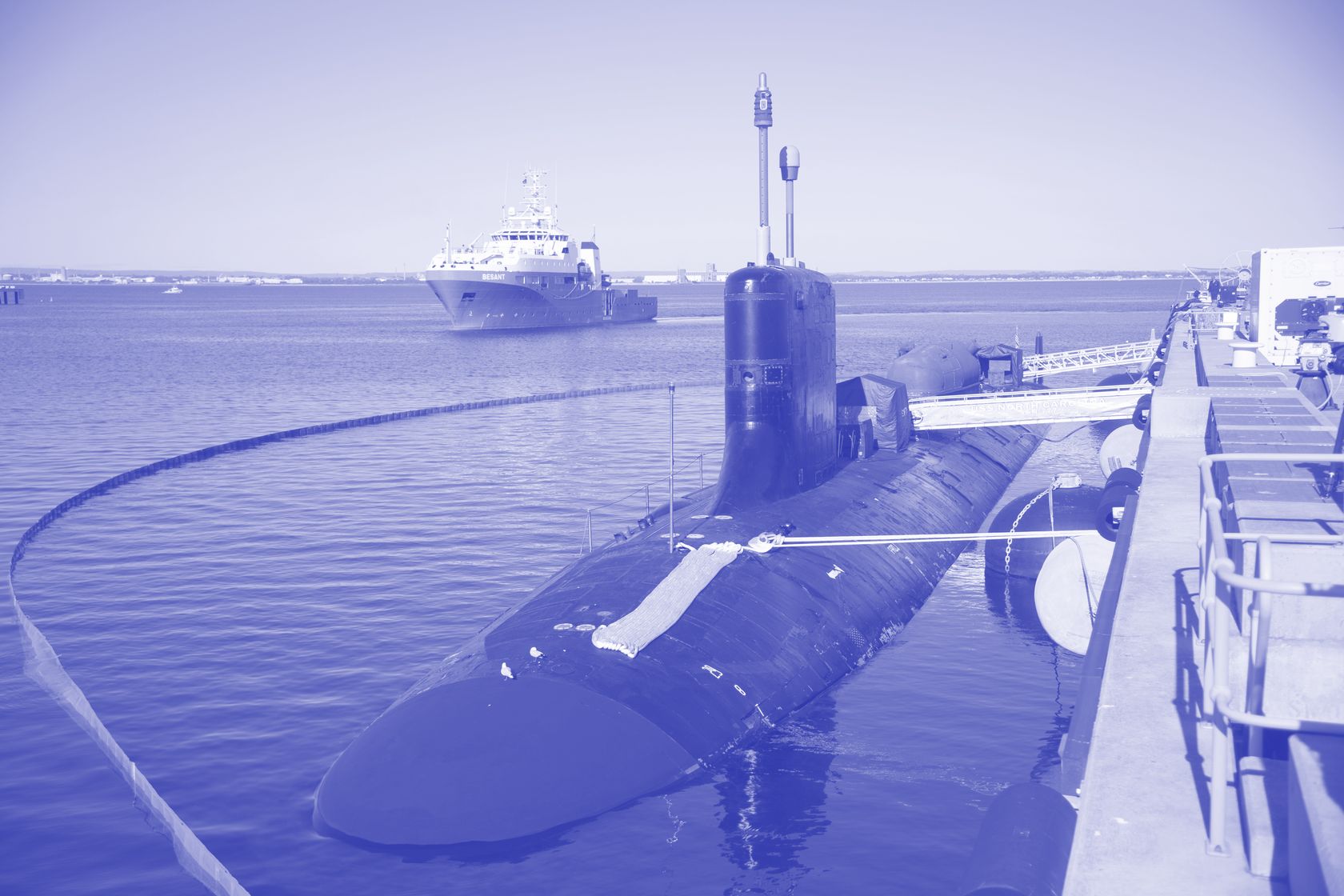
Aside from the long-range goal of nuclear-powered submarines, a key and arguably more contemporaneous pillar of the trilateral AUKUS alliance is an extensive technology-sharing arrangement.
Defence Minister Richard Marles and his American and British counterparts on Friday teased some details of how the three militaries were testing the use of artificial intelligence to augment its capability to track Chinese submarines with greater speed and accuracy, as it leaves no stone unturned to counter Beijing’s rapid military modernisation and increasing assertiveness. Marles referenced the recent injuries sustained by Australian navy personnel from Chinese warship sonar pulses to underline the urgency of technological advances to maintain strategic and military primacy.
It’s the potential for AI to be weaponised for military purposes that has seen the US seek to justify blocking exports of advanced semiconductors — which facilitate the computing power needed to train cutting-edge AI systems — to China on national security grounds.
It’s also in this broader climate of open strategic competition between the two world powers that the Biden administration is pumping hundreds of billions of dollars into green innovation subsidies via the Inflation Reduction Act and the Infrastructure and Jobs Act.