Trump demands Iran’s surrender, threatens Ali Khamenei
Plus: Wall Street falls on war risk, weak retail data; Opposition demands answers on NRF claims; Canva snaps up MagicBrief hours after pitch.

Good morning. Here's what happened overnight and what you need to know today.

1.
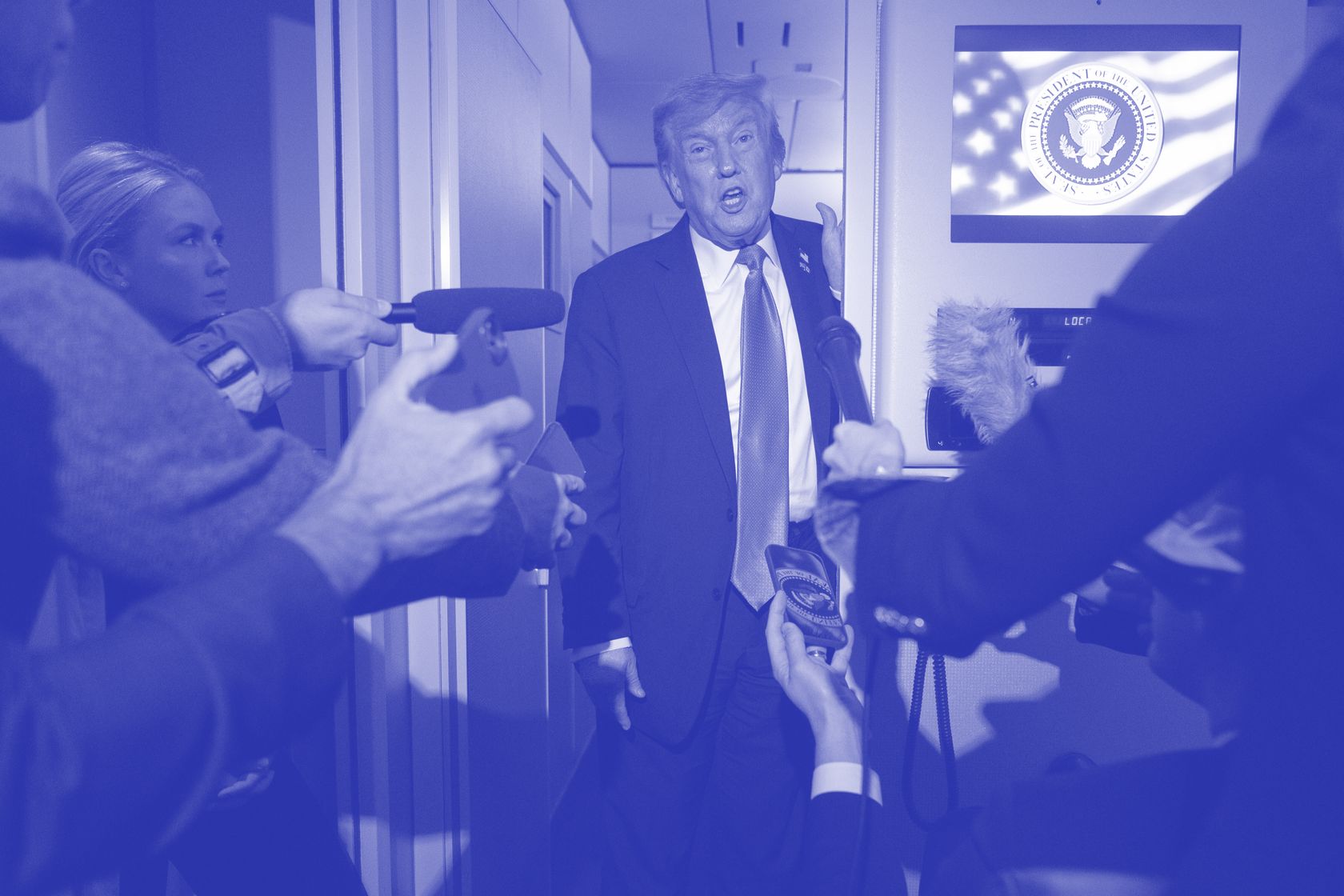
Mid-east conflict: US President Donald Trump called for Iran’s “unconditional surrender” and threatened Supreme Leader Ayatollah Ali Khamenei in a social media post, saying the US has “complete and total control of the skies over Iran.” Trump posted: “We know exactly where the so-called ‘Supreme Leader’ is hiding... We are not going to take him out (kill!), at least not for now,” adding “Our patience is wearing thin.” In a separate post, he then said in all caps: “UNCONDITIONAL SURRENDER!” The comments come as the conflict entered its fifth day amid growing signs the US could imminently join Israel’s bombing campaign, and as reports emerge of Israeli pressure on Washington to strike Iran’s underground Fordo site. Trump, who had previously expressed hopes for a deal with Iran, told reporters on Air Force One, “I’m not too much in the mood to negotiate.” Meanwhile, the IAEA said Israeli strikes caused “direct impacts” at the Natanz nuclear site. (Capital Brief)(NYT)(Bloomberg)(Reuters)
2.
Market tremors: US stocks dropped and oil rallied as the escalating conflict between Israel and Iran and a string of weak US economic data rattled markets. The S&P 500 fell 0.84%, the Dow 0.70% and Nasdaq 0.91%, while West Texas Intermediate crude rose 4.3% to USD74.85 a barrel. President Trump met with the US National Security Council to discuss the Israel-Iran conflict amid increasing speculation the US could join Israel’s efforts. Meanwhile, Iran’s military urged Israelis to evacuate Haifa and Tel Aviv. In economic news, US retail sales fell 0.9% in May, the largest monthly drop since January, while industrial production declined 0.2% and confidence among homebuilders hit the lowest since December 2022. The Federal Reserve began a two-day meeting and is expected to hold rates steady, but traders have now fully priced in one cut by October. Treasury yields declined and bond markets advanced. (Capital Brief)(Bloomberg)(Reuters)
3.
Deeply concerning: The federal opposition seized on revelations of an investigation into potential misconduct at the National Reconstruction Fund and called for new Industry Minister Tim Ayres to explain what steps he has taken to address governance issues at the $15 billion organisation. Shadow Minister for Industry and Innovation Alex Hawke told Capital Brief the news that the NRF was facing an investigation following whistleblower allegations added to a "long list of governance issues" with the embattled fund and demanded immediate action to improve oversight. "Reports that Labor's $15 billion industry fund is under formal investigation are deeply concerning," Hawke said. "Allegations of misconduct by the NRF continue to undermine confidence in the operation of the Fund at a time when Australia is facing significant productivity challenges, steep manufacturing insolvencies and ongoing skills shortages." The investigation deadline has been extended until 19 July following a request for more time from the NRF Corporation. (Capital Brief)
4.
Magic Merger: MagicBrief founder George Howes was at Sydney Airport en route to the UK when an unexpected WhatsApp appeared, within hours he'd agreed to sell his startup to Canva. After an Uber ride from the airport to Canva's Surry Hills headquarters in Sydney, Capital Brief reports, Canva co-founder Obrecht pitched Howes on a buyout. Howes said it took just "hours" for him and co-founder Dan Nolan to agree. Four weeks later, Canva publicly announced its acquisition of the Sydney-based advertising tech startup as part of its campaign to attract more enterprise customers. The deal marks Canva's second acquisition of a Sydney-based startup in less than a year following its purchase of Leonardo.Ai. Neither Canva nor Howes would disclose the terms of the deal, with Howes saying only that it was "definitely an uplift" on the valuation of its last funding round, yet to be disclosed. MagicBrief had raised $5 million across two rounds. (Capital Brief)
5.
Cranky Yanks: Major US lobby group, National Foreign Trade Council (NFTC), which represents multinationals including Amazon, Qualcomm, Meta and Google hit out at successive Australian governments for creating an increasingly difficult investment environment for global companies, Capital Brief reports. The NFTC has pointed to “multiple examples” of policies from government, Treasury and regulators that have “resulted in a significant amount of uncertainty in the corporate tax system” and made it harder for international businesses to invest in Australia. The NFTC advocates for the interests of many large US-based multinationals across a range of industries — not only digital giants, but also companies such as Pfizer, MasterCard, ExxonMobil, BP and Shell. The NFTC’s latest criticisms, directed to the Productivity Commission’s inquiry into business dynamism, focus specifically on corporate tax arrangements. They come at a critical moment for the federal government, which is trying to unwind Trump's tariffs and secure its relationship with the US. (Capital Brief)
6.
AI raising: Elon Musk’s artificial intelligence startup xAI is in talks to raise USD4.3 billion ($6.9 billion) through an equity investment, Bloomberg reported, citing information shared with investors. That is on top of the USD5 billion the company is trying to borrow from debt investors. xAI, maker of the Grok chatbot, has already spent most of the USD14 billion raised since its 2023 founding, with just USD4 billion left on its balance sheet as of 31 March, according to the report. Bloomberg said investors were told the company’s valuation rose to USD80 billion at the end of the first quarter, from USD51 billion at the end of 2024. xAI may also receive a USD650 million manufacturer rebate to help cut costs. The equity raise is reportedly helping attract debt investors. Separately, Musk’s X Corp sued New York, challenging a law requiring disclosure of content monitoring practices. (Bloomberg)(Capital Brief)
7.
Offensive defence: Spotify founder Daniel Ek’s investment company is leading a €600 million ($921.4 million) investment round in German drone maker Helsing, the FT reports, valuing the group at €12 billion. The move comes as Helsing moves beyond its AI origins to produce its own drones, aircraft and submarines. A funding surge in defence stocks is being seen globally as geopolitical tensions continue to ratchet up, prompting governments to boost spending on defence. The investment fund founded by Ek, Prima Materia, became Helsing’s first significant investor in 2021 just months before Russia invaded Ukraine. Ek told the FT that Prima Materia is now doubling down on the stock with the new round, bringing the startup’s total capital raised to €1.37 billion. On drones down under, Boeing Australia’s MQ-28A Ghost Bat drone is set to execute armed trials later this year, with the program running four months ahead of schedule. (FT)(CNBC)(TechCrunch)(Reuters)(The Australian)
8.
Pharma drama: The Trump administration is discussing policies to make it harder and more expensive for pharma companies to advertise to patients, Bloomberg sources say. As banning the US $10 billion ($15.4 billion) pharma industry’s ads outright could expose the administration to lawsuits, sources say that the government plans to increase legal and financial hurdles to disincentivise the practice. The Food and Drug Administration (FDA) also has a new leader in Dr. Marty Makary, who will helm the agency under Health Secretary RFK Jr., with Makary planning an agency overhaul focused on AI, ultra-processed foods and fast-tracking priority drugs. US generic drug companies are pushing for more clarity from the Trump administration on pharmaceutical tariffs, and argue that further domestic investment is too risky in such a low-margin and unpredictable business, unless the government helps to steady the sector. Meanwhile, Eli Lilly will buy gene-editing biotech Verve Therapeutics for USD1.3 billion. (Bloomberg)(WSJ)(Bloomberg)
