Trump eyes 200% EU wine tax as tariff spiral worsens
Plus: Putin hedges ‘correct’ Ukraine ceasefire idea with reservations; No records, no proof of Trump’s Morrison-era tariff claim; Crypto cash floods Labor and Liberal coffers.

Good morning. Here's what happened overnight and what you need to know today.

1.
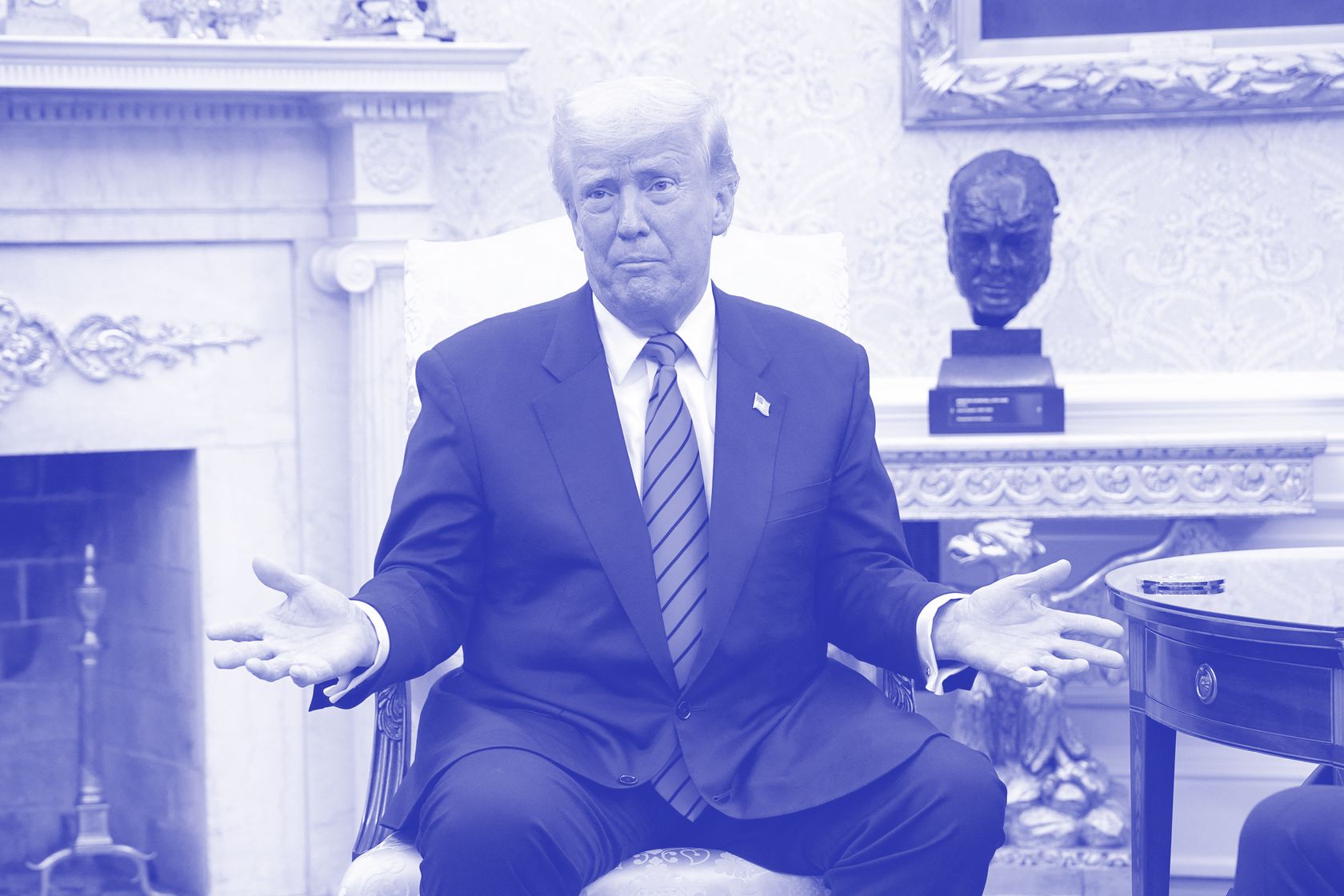
Tariff spiral: Donald Trump threatened a 200% tariff on EU wine, champagne and spirits unless Brussels drops its planned 50% tariff on American whiskey. The EU’s whiskey tariff—originally imposed in response to Trump’s first-term metal tariffs—was suspended under a Biden-era truce set to expire on 1 April. If no new deal is reached, the 50% tariff will automatically take effect as part of a broader €26 billion package of countermeasures, including new duties on US industrial and agricultural goods. Trump announced his threat on social media, calling the EU "one of the most hostile and abusive taxing and tariffing authorities in the world." EU wine exports to the US were worth €4.9 billion last year. European spirits stocks fell, including Rémy Cointreau (-4.67%), Pernod Ricard (-3.97%), and LVMH (-1.11%). French Trade Minister Laurent Saint-Martin said Europe "will not give in to threats." (Capital Brief)(Donald Trump post)(Reuters)
2.
Putin’s word: Russian President Vladimir Putin said he has "reservations" about a US-backed 30-day ceasefire in Ukraine, welcoming the idea but questioning its enforcement and long-term impact. He raised concerns about how the ceasefire would be verified, the fate of Kursk, where he claimed Ukrainian forces committed crimes, and how Ukraine might use the pause. While supporting a ceasefire in principle, he insisted it must address the war’s “root causes.” Putin also floated a potential US-Russia energy deal, suggesting it could restore Russian gas flows to Europe. At the White House, Trump called Putin’s response “promising but incomplete” and said he would “love to meet” him. European gas prices fell 4.5% after Putin’s comments. Meanwhile, the Russian military claimed to have recaptured Sudzha in Kursk. Earlier, Kremlin aide Yuri Ushakov dismissed the ceasefire as a “temporary timeout” for Ukraine. (Capital Brief)
3.
Coming up empty: The Department of Foreign Affairs and Trade (DFAT) was unable to find any documents confirming a mooted deal that a Trump official claims was broken, which the US has used to justify tariffs on Australian exports, according to a freedom of information (FOI) request by Capital Brief. Donald Trump’s top trade adviser Peter Navarro publicly accused Australia of violating a Morrison-era “verbal commitment” to curb aluminium exports last month, as the Albanese government scrambled to secure an exemption from Washington’s global 25% tariffs on aluminium and steel imports. However, there is no paper-trail documenting meetings between Australian officials and Navarro at DFAT. DFAT said a “thorough search”, conducted after Capital Brief’s FOI request, has thrown up nothing relevant – despite checking its US, UK, and Canada branches, its goods and market branch, and the Australian embassy in Washington. (Capital Brief)
4.
Crypto contributions: Australian cryptocurrency exchanges are ramping up donations to both Anthony Albanese and Peter Dutton's campaigns in efforts to ensure crypto regulation remains front of mind for the winning party. BTC Markets CEO Caroline Bowler told Capital Brief that her exchange, like many others in the sector, has donated to both parties ahead of the election, the date of which has yet to be announced. Swyftx also confirmed that it had made donations to Labor and the Liberals, with CEO Jason Titman calling it “an imperative” that the industry “educates lawmakers and the public on the role of blockchain technology and its potential to support the financial goals of Australians." There is excitement within the industry that the sector is close to getting legislation passed, but that optimism is tempered by the fact that Australia’s neighbours are much further ahead. (Capital Brief)
5.
Fat fingers: Citigroup will slash its information technology contractors and hire thousands of IT employees as the bank reckons with the fallout of data governance and controls breaches. A report by Reuters says Citi will reduce contractors from 50% of IT staff to 20%, and plans to add 2,000 IT employees, taking the division to a total of 50,000. The bank has suffered from a number of widely publicised data governance and financial control deficiencies, and has been fined hundreds of millions of dollars for the failings in recent years. Citi cut its profitability target for 2026 due to rising regulatory expenses. An internal Citi presentation seen by Reuters referenced a USD22.9 million ($36.5 million) "recent fraud event" related to the work of external contractors, which had also included legitimate work. In September, Citi warned some employees about fraud and unethical behaviour and said it was considering tighter scrutiny of contractors. (Reuters)(Capital Brief)
6.
Petition push: Over 400 workers at Rio Tinto’s Paraburdoo iron ore mine in the Pilbara have signed a petition to support collective bargaining, which if successful will be the first at a major Pilbara mine in over 20 years. Launched by Australia’s Western Mine Workers Alliance (WMWA), the petition is necessary to make a formal application to the Fair Work Commission for collective bargaining. In a Facebook post the WMWA said it will triple check every petition before writing to Rio Tinto and submitting the formal application, and that it expects “Rio will do whatever they can to oppose and slow our application.” The bid could force Rio Tinto to the negotiating table, as workers push for an annual pay increase and relief in the current high-living-costs environment, among other demands, the Mining and Energy Union said last month. (Western Mine Workers Alliance)(Rio Tinto)(Capital Brief)
7.
Red tape challenge: In a pre-budget submission to Treasury, BlackRock encouraged the Albanese government to introduce significant changes to boost foreign investment in infrastructure and other critical developments. The firm also raised concerns about inconsistencies in the foreign investment watchdog’s approach to approvals. While acknowledging the Albanese government’s recent efforts to improve investment settings, particularly welcoming the proposed “investor front door” initiative, the manager urged the government to go much further. The firm warned that Australia is “less open” to foreign direct investment than the OECD average, and that the country faces a significant investment shortfall meaning it cannot fund national priorities solely through domestic capital. “All and any policy reform that does not pose a risk to Australia’s sovereignty or security should be on the table,” BlackRock said. (Capital Brief)
8.
Slippery surplus: The International Energy Agency (IEA) has warned that the macroeconomic conditions underpinning oil demand have worsened over the past month due to global trade tensions, and that a larger supply surplus could arise if OPEC+ raises output after April. The IEA lowered its demand-growth estimates for 4Q24 and 1Q25 to around 1.2 million barrels per day. The IEA added that markets face a surplus of 600,000 barrels per day in 2025 which could increase if OPEC+ increases output. The agency said that tariffs act as barriers to global trade, and that their “on-again-off-again nature” and potential for escalation causes uncertainty to soar. The IEA said while the actual supply boost from the gradual unwinding of OPEC+ production cuts may end up being less than a nominal increase, global oil supply (largely from the US, Canada, Brazil and Guyana) is already on the rise. (IEA Oil Market Report)(WSJ)(Capital Brief)
