Trump gets trade truce with Xi but raises nuclear stakes
Plus: Canva launches AI-powered design suite ahead of IPO; Russia denies nuclear testing, warns response if US breaks moratorium; Meta plunge leads Wall Street losses.

Good morning. Here's what happened overnight and what you need to know today.

1.
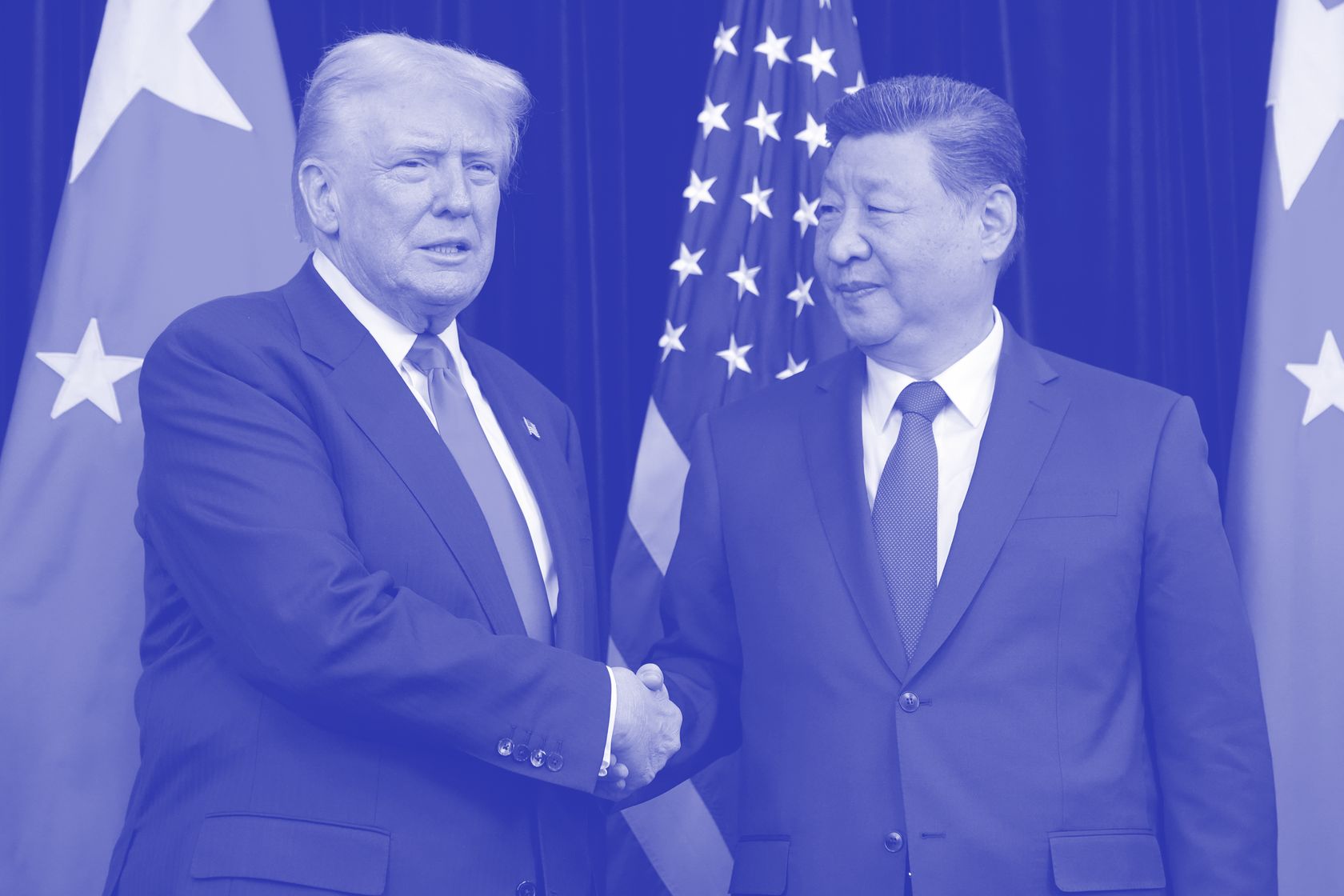
Trade truce: Trump declared “a great success” after striking a one-year economic truce with Xi Jinping in Busan that rolls back previously announced tariffs by both sides, resumes Chinese rare earth exports and boosts US farm and energy sales to China. Trump told reporters on Air Force One that China had agreed to suspend for one year its restrictions on rare earth exports, take stronger action against the flow of fentanyl precursor chemicals, and purchase “massive amounts” of US soybeans, agricultural goods and energy. In return, he said the US would reduce fentanyl-related tariffs from 20% to 10%. Treasury Secretary Scott Bessent told Fox Business that China would buy 12 million metric tons of soybeans this year and at least 25 million annually over the next three years. Trump said Taiwan was not raised, despite China typically bringing it up in diplomatic talks. The meeting also left unresolved the fate of TikTok and did not address whether the US would permit sales of Nvidia’s downgraded Blackwell chips to China. (Capital Brief)(NYT)(WSJ)(Reuters)
2.
Moat bloat: Canva launched its Creative Operating System, calling its "biggest [product] evolution" so far, as it ramps up efforts to compete with Adobe and prepares for an IPO within two years. Unveiled at a Sydney event attended by 3,000 local users, the release includes seven new products and an AI layer designed to streamline the entire creative process – from design to distribution and performance tracking – into a single platform. Affinity, the professional design suite acquired for approximately $380 million in March 2024, is now being made permanently free. As Capital Brief’s Bronwen Clune notes, the launch confirms that Canva’s spate of AI-related acquisitions (Leonardo and Magic Brief) were part of a broader plan to build a full creative workflow. But Clune warns the company risks product bloat in trying to serve everyone from professionals to hobbyists. Rather than chase general AI, Canva has built a design-aware model that codifies layout and brand principles. While this may strengthen its position, Clune suggests the push to be all things to all users could erode the simplicity that made Canva successful in the first place. (Capital Brief) (Bloomberg)
3.
Atomic steps: Russia denied carrying out nuclear weapons tests and warned it would respond in kind if the US resumed testing. That came after Donald Trump declared the US would restart its own nuclear weapons program “immediately” in response to what he called “other countries testing programs.” In a social media post just before landing in Busan to meet Xi Jinping, the US president said he had instructed his Department of War to begin testing “on an equal basis.” He later told reporters aboard Air Force One that the move was not aimed at China but declined to name any countries. “With others doing testing, I think it’s appropriate that we do also,” he said. Kremlin spokesman Dmitri Peskov said recent missile and sea drone launches “certainly cannot be viewed as nuclear testing at all,” but warned Russia would act if the US broke the moratorium. China, which is rapidly expanding its nuclear arsenal, has not commented. Experts told The New York Times the move risks giving Russia and China carte blanche to resume full-scale nuclear testing. (NYT)(Reuters)
4.
Meta drop: Wall Street slipped as a selloff in major technology stocks led by Meta Platforms and Microsoft ended the market’s recent rally. Meta shares were almost 12% lower in late afternoon trading, after the company said it would “aggressively” boost AI spending and priced a USD30 billion six-part bond sale, the largest corporate offering this year. The proceeds will go toward general corporate purposes. Yields on Meta’s bonds climbed, with the spread on its 2054 notes widening 93 basis points above US Treasurys from 81bps a day earlier. Microsoft shares also fell after reporting record quarterly capital expenditure and warning that spending would continue to rise. The Nasdaq Composite was trading 1.28% lower late afternoon in New York and the S&P 500 was 0.70% lower. Treasury yields were also lower after US Fed Chair Jerome Powell warned traders that a December rate cut was “not a foregone conclusion”. Separately, Navan shares plunged by double digits in the largest IPO during the US government shutdown. Presidents Donald Trump and Xi Jinping agreed to modest tariff cuts and eased export controls following their meeting. (BloombergL)(Reuters)(WSJ)
5.
Trillion float: OpenAI is laying the groundwork for a potential IPO that could value the company at up to USD1 trillion, Reuters reported, citing three unnamed sources familiar with the matter. The company is considering filing with regulators as soon as the second half of 2026, the report said, with preliminary discussions including a possible raise of at least USD60 billion. The timing and figures could still change, however. CFO Sarah Friar has reportedly told associates OpenAI is aiming for a 2027 listing, while some advisers suggest it could happen sooner. A spokesperson said in a statement that “an IPO is not our focus, so we could not possibly have set a date.” The preparations follow a restructuring, completed this week, that simplifies the company’s governance, reduces its dependence on Microsoft and makes a listing possible. CEO Sam Altman said during a livestream that going public “is the most likely path for us, given the capital needs that we'll have." OpenAI was most recently valued at USD500 billion. (Reuters)(Bloomberg)(The Guardian)
6.
Internal investigation: Steadfast Group’s managing director and CEO, Robert Kelly AM, will stand aside on a temporary basis to enable an external investigation to progress into a workplace complaint made against him. The AFR reports that King & Wood Mallesons has been tapped to conduct the investigation, which relates to harassment allegations, sources told the masthead. At least one of the claims relates to a verbal comment, those sources added. The board appointed Tim Matheison, CEO of Australasian Broking to the role of acting CEO, effective immediately, who will continue in the role until the conclusion of the investigation. Kelly will remain on full pay during the investigation. Earlier on Thursday, the insurance broker said it had entered a trading halt as it investigates a “workplace complaint against a senior executive”. The company will remain in the trading halt until the earlier of a further announcement or commencement of trading on 3 November. (Capital Brief)(AFR)
7.
Litigation pipeline: Lawyers who have reviewed new draft environment laws say they expect court challenges until the legislation is better understood, pointing to key definitions they believe lack detail. Speaking to Capital Brief as the Environment Protection Reform Bills were tabled in parliament, Herbert Smith Freehills Kramer partner Peter Briggs said he had expected to see more clarity on how an unacceptable impact would be defined in the new National Environment Standards. “The concept of what is an unacceptable impact is going to be applied to more decisions across the whole Act. Currently, unacceptable impacts are applied only at the [assessment] referral stage, so it's going to be built into the whole assessment process,” he said. Under the new NES, the Minister will be able to issue protection statements to clarify what an assessor must consider in relation to a critically endangered species or habitat. (Capital Brief)
8.
Green shoots: Inside Woolies’ sprawling headquarters in the western Sydney suburb of Bella Vista on Thursday, chair Scott Perkins and CEO Amanda Bardwell faced a four-hour interrogation as attendees picked apart the group’s first-quarter sales result. There were really two numbers that counted this week: 2.1% – the first-quarter growth figure for the group’s core supermarkets business – and 2.7 – the percentage-point gap with Coles’ corresponding result of 4.8%. “What’s interesting, though, is how the market has reacted to these numbers,” Allan Gray portfolio manager Suhas Nayak told Capital Brief. Woolies shares surged 5.8% in a two-day rally after the company released the numbers on Wednesday – even as Bardwell described them as “below our aspirations”. But the stock, which touched five-year-lows earlier in October, is still at historically low levels and has essentially gone nowhere since 2019. (Capital Brief)
