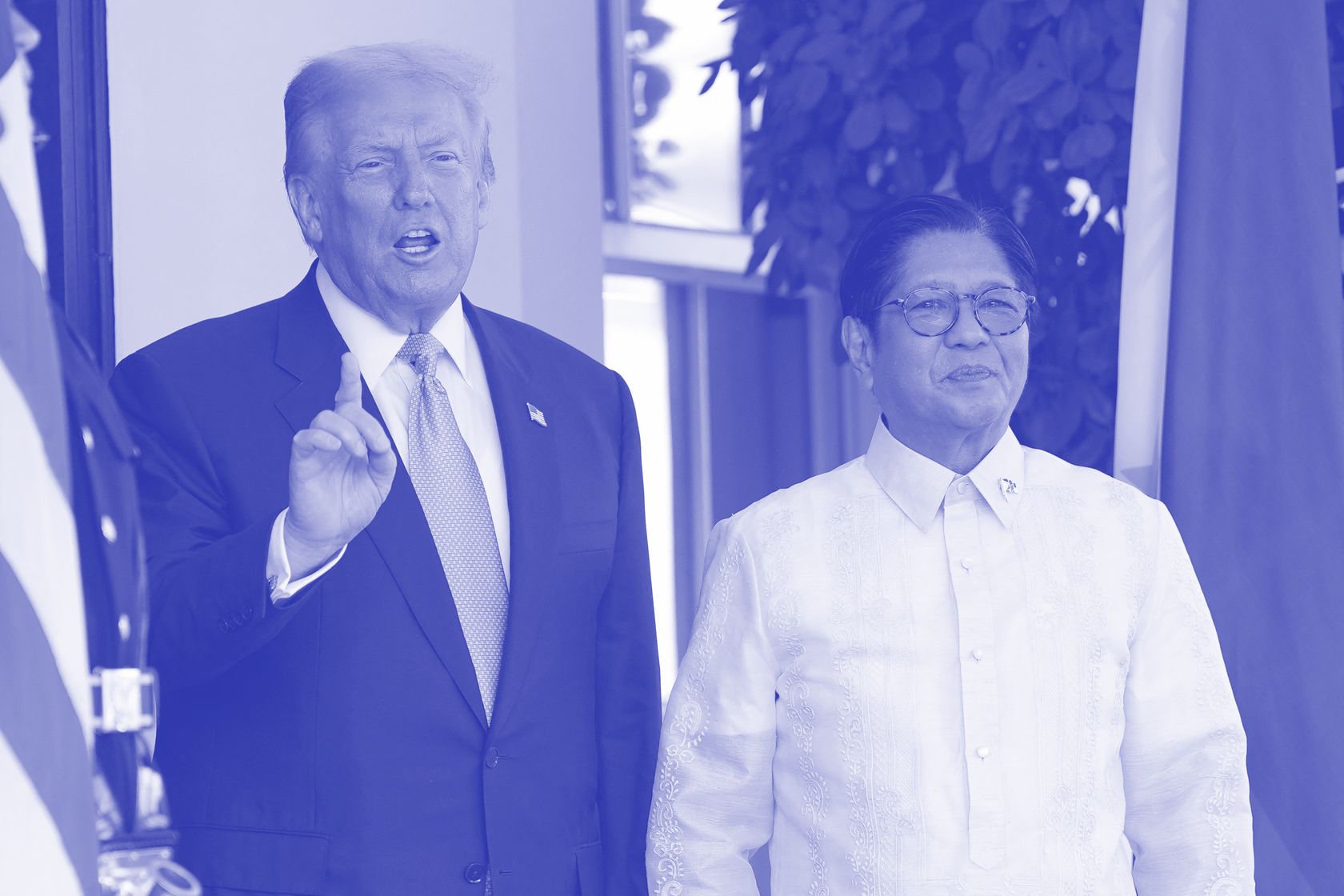
Trump inks Philippines tariff deal, flaunts Xi’s China invite
Plus: Meme mania returns ahead of big tech earnings; ASIC chief to warn banks and boards over risky AI use; Microsoft names China-backed hackers behind SharePoint attacks.


Good morning. Here's what happened overnight and what you need to know today.

1.
Trump terms: US President Trump said his administration reached a trade deal with the Philippines, reducing the tariff rate on the country’s exports from 20% to 19%, after meeting with President Ferdinand Marcos Jr in Washington. He announced the deal shortly after their Oval Office meeting, calling it part of broader cooperation, including military ties. In a post on his social media site, Trump said the Philippines will impose zero tariffs on US goods. The agreement follows Trump’s April announcement of a 17% tariff on the Philippines under his so-called Liberation Day tariffs, which he then raised to 20% earlier this month if no deal was reached by 1 August. Earlier, Trump told reporters his administration is considering removing taxes on capital gains from home sales. “If the Fed would lower the rates, we wouldn’t even have to do that. But we are thinking about no tax on capital gains on houses.” He also said he had been invited to meet Chinese leader Xi Jinping. “President Xi has invited me to China, and we’ll probably be doing that in the not-too-distant future,” he said. (Capital Brief)(President Trump)(White House)
2.
Trading mania: Meme-stock mania reignited as shares in department store Kohl's skyrocketed Tuesday and tech-powered home flipper Opendoor swung from major gains in previous days to losses. Retail traders piled into heavily shorted names while the S&P 500 hovered near record highs. The moves came ahead of big tech earnings tomorrow, with the Nasdaq slipping, weighted down by chipmakers such as Nvidia. Meanwhile, General Motors shares fell over 8% after posting a 35% fall in second quarter profit weighted by a USD1 billion tariff hit. Aerospace and defence company RTX also trimmed its outlook, hurt by Trump’s trade war, and defence contractor Lockheed Martin reported an 80% drop in profit. SpaceX warned investors Elon Musk may return to US politics. And Coca-Cola posted mixed results but nudged up its annual forecast, confirming it will roll out a cane-sugar Coke option. (GM)(Capital Brief)(Reuters)(WSJ)
3.
On notice: ASIC chair Joe Longo will use a speech at the Australian Banking Association’s annual conference to put banks and corporate boards on notice to proceed cautiously with artificial intelligence or face litigation. Longo will say ASIC is monitoring how entities are using AI and “will take enforcement action where appropriate, where we see misconduct occurring.” He will argue “we should not rush into more AI regulation,” but say new regulation “won’t be needed” yet. Longo will warn AI could challenge reputation and “test our ability to identify and assess systemic harms,” and say “cutting-edge technology can’t leave your customers bleeding.” (Capital Brief)
4.
Microsoft patch: Following the wave of SharePoint breaches over the weekend, Microsoft confirmed its initial patch failed to fix a flaw first identified in May, allowing ongoing global intrusions. The company named three China-based groups as exploiting the vulnerability: Linen Typhoon and Violet Typhoon, which it said are supported by the Chinese government, and another Chinese-based group, Storm-2603. Over 8,000 servers could have been compromised, Reuters reported citing Shodan data, with targets including major firms and government entities. The Shadowserver Foundation estimated more than 9,000 vulnerable servers, calling it a minimum figure. Reuters also reported the flaw was first demonstrated at a Berlin hacking competition. Meanwhile, Microsoft has also drawn attention for reportedly hiring over 20 AI staff from Google DeepMind, including Gemini’s former head of engineering. (Microsoft)(Bloomberg)(Reuters)(FT)
5.
Pyne’s influence: The Coalition’s thumping defeat in May has not harmed Christopher Pyne’s lobbying outfit, which is enjoying a banner year. According to the Attorney-General’s lobbyist register, Pyne & Partners has signed 20 new clients in 2025, including 11 after the election. New names include Palmer Luckey’s defence disruptor Anduril, Japan’s Ex-Fusion, $24 billion Vietnamese conglomerate VinGroup, and Andrew and Nicola Forrest’s Tattarang, which was added on 17 July. The firm now lists 50 companies as clients, has grown to 16 staff, up from 10 when Anthony Albanese became prime minister in 2022. It’s also opened an office in the UK. Pyne & Partners initially leaned heavily towards defence but now operates across areas like real estate and cyber security. (Capital Brief)
6.
Payday protest: Macquarie is facing the prospect of a large protest vote against its multimillion-dollar salaries and bonuses at Thursday’s annual meeting, after proxy advisory firms Glass Lewis and Ownership Matters recommended shareholders vote against its remuneration report. According to the Australian Financial Review, the advisers said pay reductions for CEO Shemara Wikramanayake and Macquarie Bank boss Stuart Green did not appear sufficient given a long list of compliance failures, including ASIC legal action, APRA capital requirements and conditions placed on its licence. Wikramanayake was awarded $24 million, while Green’s pay rose to $5.2 million. CalPERS, CalSTRS and SBA Florida are among investors voting against the report. Meanwhile, the paper also reported ANZ’s new CEO Nuno Matos recently admonished staff, stressing the bank’s culture must shift to one of clarity, accountability and faster delivery. (AFR)
7.
YouTube curb: Federal Labor is putting the finishing touches on a plan expected to remove YouTube’s controversial exemption from world-first social media age restrictions, following advice from the online safety regulator. Communications Minister Anika Wells is preparing to release draft rules within the next fortnight, during Parliament’s sitting period, that are expected to subject YouTube to the same restrictions as TikTok, Facebook and Instagram, people briefed on the discussions told Capital Brief. The decision would represent a reversal on earlier commitments by former communications minister Michelle Rowland to offer the Google-owned platform a carveout on educational grounds. Platforms could be eligible to apply for exemptions under the plan, said one of the people. The laws, coming into effect in December, will fine companies up to $50 million if they do not take reasonable steps to prevent children under 16 from repeatedly accessing their platforms. (Capital Brief)
8.
Uni value: Sanofi is acquiring UK biotech company Vicebio for up to USD1.6 billion ($2.4 billion) in what is reportedly the largest deal involving a company commercialising intellectual property from an Australian university. Vicebio holds exclusive rights to the molecular clamp vaccine technology invented by University of Queensland scientists and is developing candidates for RSV and human metapneumovirus. The deal includes a USD1.15 billion upfront payment and up to USD450 million in milestone payments. It is expected to close in the fourth quarter, the company said. Founded in 2018, Vicebio licensed the molecular clamp technology from UQ’s commercial arm, UniQuest. The technology was used in a COVID-19 vaccine attempt that was later abandoned due to false HIV test results. Sanofi is expanding its pipeline following recent setbacks, including through acquisitions such as its recent USD9.5 billion deal to buy Blueprint Medicines. (Sanofi)(Bloomberg)
