Trump officials tout Xi call possible this week
ASIC finds widespread compliance failures at managed funds; US government asks tech firms to justify high costs; Musk denies ketamine use claims from NYT report.

Good morning. Here's what happened overnight and what you need to know today.

1.
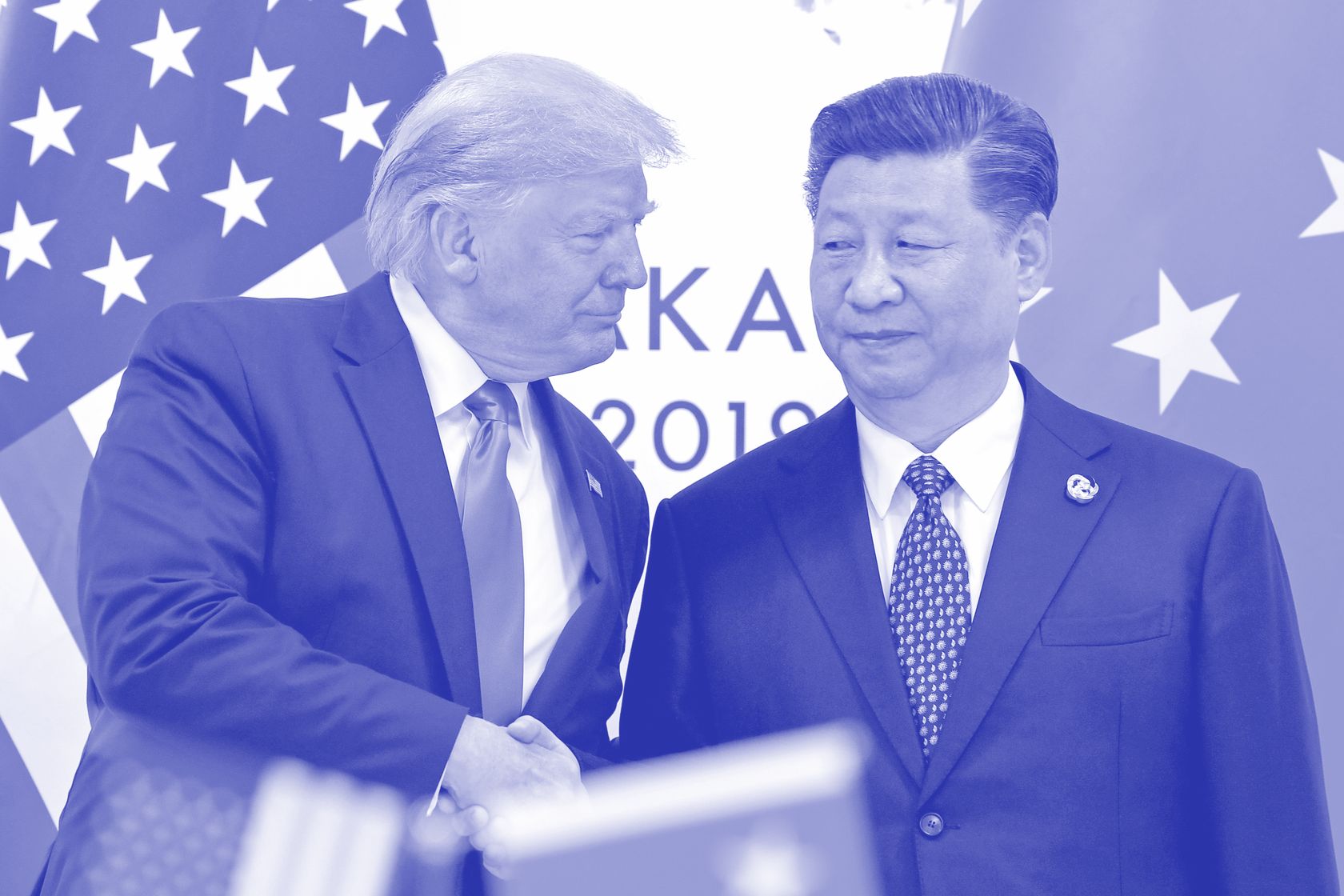
Trump-Xi call: Trump administration officials said tariffs will stay in place despite a federal trade court ruling that declared many of them illegal. Commerce Secretary Howard Lutnick said: “Rest assured, tariffs are not going away,” adding “I don’t see today that an extension is coming,” when asked about plans to extend a 90-day pause on the steepest tariffs. A federal appeals court this week granted an administrative pause on the ruling, allowing tariffs to stay in effect for now. Trump on Friday said he’d double steel and aluminium tariffs to 50% and accused China of breaking a trade deal. He warned a ruling against his tariffs could let other countries “hold our Nation hostage” and cause “Economic ruination” for the US. Treasury Secretary Scott Bessent late last week said talks with China were stalled, accusing it of withholding key rare earth exports, which he described as “maybe a glitch in the Chinese system, maybe it’s intentional.” On Sunday, Bessent said the trade issues could be resolved if Trump and Xi Jinping speak soon. National Economic Council Director Kevin Hassett said a Trump-Xi call could happen “this week” although nothing was firmly scheduled yet. (NYT)(SMCP)
2.
Compliance crackdown: The Australian Securities and Investments Commission (ASIC) says it has uncovered poorly maintained compliance plans across entities that collectively oversee nearly $1 trillion in managed investments. After reviewing the compliance plans of 50 entities, representing 45% of all registered managed funds, the corporate regulator said most did not adequately address the design and distribution obligation (DDO), internal dispute resolution (IDR) and reportable situations regimes. ASIC has written to some responsible entities about concerns with their compliance plans, which should detail how entities will meet their Corporations Act obligations and is investigating others for potential breaches of their legal obligations. The treatment of DDO responsibilities was considered the poorest, followed by IDR requirements. The regulator also noted that there were some plans that left at least one of the obligations unaddressed, suggesting they hadn't been reviewed since 2021. (Capital Brief)
3.
Cost cutting: 10 technology providers, including Dell and IT firm CDW, received letters from the US General Services Administration (GSA) asking executives to justify their work and find areas to cut, as the Trump administration works to expand its review of federal contractors beyond consulting firms. A copy of the letter seen by The Wall Street Journal said the GSA is targeting ‘value-added resellers,’ which typically piece together a mosaic of technology products and services for the government. The letter notes the US spends USD82 billion ($127.9 billion) annually on IT products and services, and that complex procurement processes have led to “excessive markups and increased costs to the taxpayer…This must change.” Trump is continuing his overhaul of government spending despite news that former head of DOGE, Elon Musk is stepping away from his duties at the unit. Since January, the government has eliminated 11,297 contracts across 60 agencies. (WSJ)(Capital Brief)
4.
Elon juggles: Elon Musk denied using ketamine after The New York Times reported he was “juggling drugs and family drama” during his support for Donald Trump’s campaign, including ketamine, Ecstasy and psychedelic mushrooms. The report followed resurfaced footage of Musk balancing spoons at Mar-a-Lago in March. “I’m not on ketamine ffs,” he replied on X. At a White House press conference on Friday to mark the end of Musk’s term at the Department of Government Efficiency (DOGE), Musk and Trump dismissed the report, with Musk saying, “Let’s move on,” when asked about the report. The Times reported Musk’s drug use affected his bladder and SpaceX warned him of upcoming drug tests. Meanwhile, Trump withdrew NASA nominee Jared Isaacman, Musk’s associate, citing “prior associations,” including donations to Democrats. (NYT)(Fox News)
5.
Spider’s web: Ukraine said that it has taken out over 40 Russian warplanes in strikes across four military airports deep within Russian territory. The attack, coined ‘Spider’s Web,’ had been in the works for over 18 months, according to Ukraine’s intelligence agency.Ukraine said that its intelligence agency moved dozens of quadcopter drones inside Russian territory, followed by wooden containers to conceal the drones ahead of the attack. When it was time to launch, the containers were put on trucks and the lids were removed remotely, allowing a swarm of drones to fly out and strike the targets. Meanwhile, Ukraine came under one of the longest attacks of the war on Sunday, with just under 500 Russian missiles and drones launched toward the country. Ukrainian and Russian officials are set to meet for talks in Istanbul on Monday, spurred on by Trump’s push for a quick deal to end the war. (Reuters)(WSJ)(Bloomberg)
6.
Disaster relief: New Treasury analysis estimates the immediate loss of economic activity from natural disasters in 2025 to date will be $2.2 billion. The analysis includes the impact of flooding in the NSW Hunter and mid-North Coast regions, as well as Cyclone Alfred and flooding in western QLD and FNQ. The estimates come from Treasury’s initial assessment at the time of disasters, meaning that rebuilding activity will be assessed in future quarters. The immediate loss in economic activity is forecast to impact the March quarter, which will be evident in the quarter’s National Accounts scheduled for release on Wednesday. Partial data for the March quarter showed that the disasters have impacted retail trade and household spending, with QLD’s nominal retail trade falling 0.3% in February and 0.4% in March. Treasurer Jim Chalmers said: “The human impacts matter to us most, but the economic cost is very significant too.” (Capital Brief)
7.
Israel conflict: An attack by the Israeli Defence Force on an aid delivery point in Gaza killed 31 people on Sunday, according to local health officials. The incident, which took place in Gaza’s southern city of Rafah is the latest in a string of incidents complicating the delivery of aid to the enclave, after Israel partially removed an almost three-month blockade last week. The US-based Gaza Humanitarian Foundation (GHF), has denied anyone was killed or injured near its Rafah site, adding that its distributions took place without incident and accused Hamas of creating “fake reports.” The incident comes after talks between Israel and Hamas stalled on Saturday, with both parties trading blame for the failure of a renewed bid to secure a ceasefire brokered by the US and Arab nations. Hamas said it was seeking amendments to a US-backed proposal, but Trump's envoy Steve Witkoff rejected the group's response as "totally unacceptable." (Reuters)(Bloomberg)(Reuters)
8.
Housing heat: Australian home prices rose 0.5% in May, the fourth consecutive monthly increase, driven by rate cuts and expectations of further cuts later this year, according to Cotality, formerly CoreLogic. Every major city posted gains, with Darwin leading at 1.6%, followed by Perth at 0.7%, Sydney at 0.5%, and Melbourne at 0.4%. Regional markets also trended positively, with Regional SA rising 5.8% over the year’s first five months and regional Tasmania holding steady at 0.1%. The national Home Value Index’s annual growth slowed to 3.3%, the lowest since August 2023, with Melbourne (-1.2%) and Canberra (-0.7%) recording annual declines. Rental growth slowed to 0.4% in May from 0.6% in previous months, as affordability constraints and slowing migration reduced demand pressure. (Capital Brief)
