Trump says Gaza hostages to be freed by Tuesday
Plus: TSMC reports 30% revenue surge as AI demand soars; OpenAI tells EU regulators Big Tech is hurting AI competition; Australian Writers’ Guild accuses OpenAI of mass copyright theft.

Good morning. Here's what happened overnight and what you need to know today.

1.
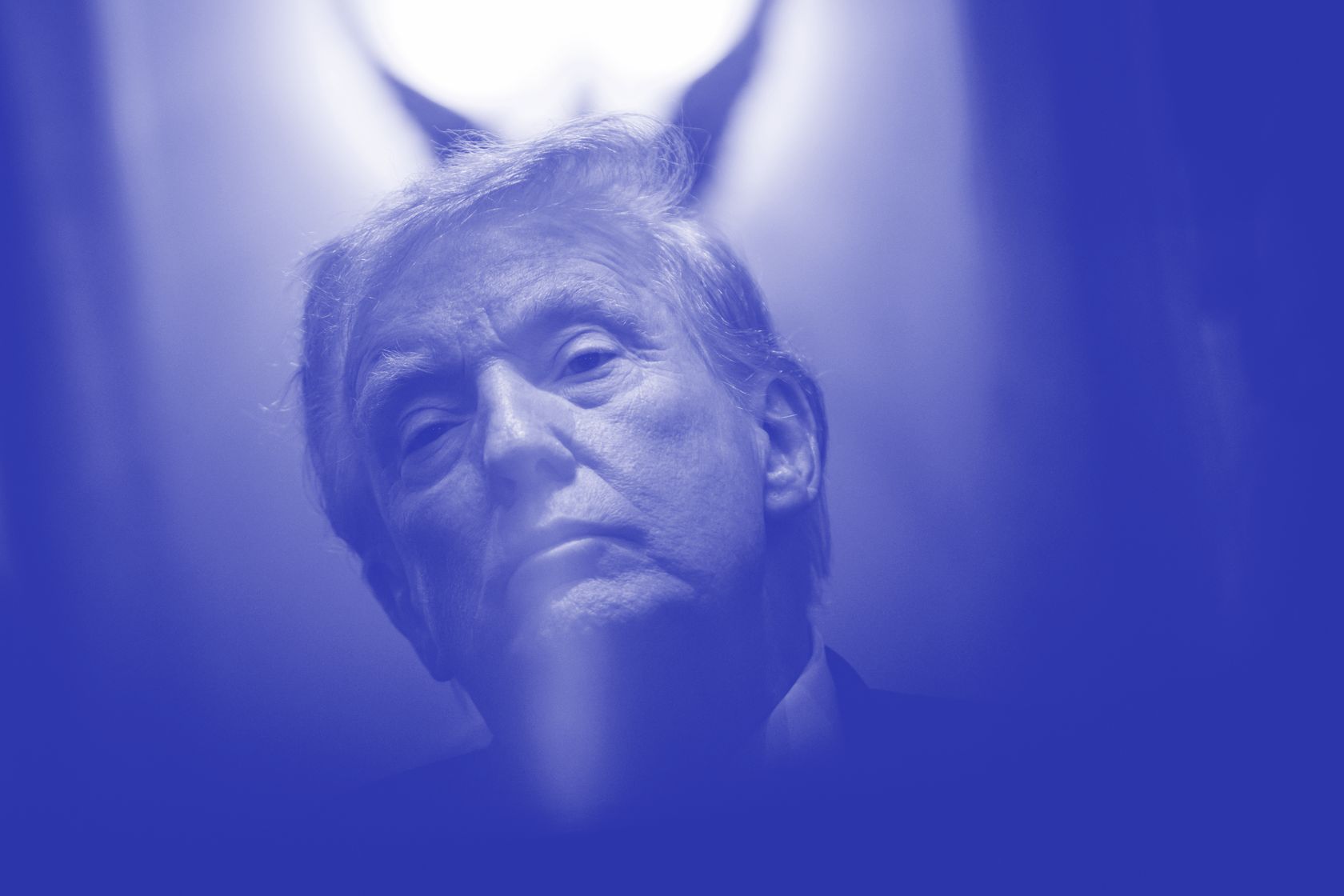
Hostage release: Donald Trump said the remaining hostages in Gaza could be released on “Monday or Tuesday” under the first phase of a peace plan signed between Israel and Hamas. Speaking at a cabinet meeting, the US president described the agreement as a “momentous breakthrough”, adding, “we ended the war in Gaza.” Trump said: “I think it’s going to be a lasting peace, hopefully an everlasting peace. Peace in the Middle East. Gaza is going to be slowly redone. You have tremendous wealth in that part of the world by certain countries, and just a small part of that, what they make, will do wonders for Gaza.” He added he planned to travel to Egypt for an official signing. The agreement comes after months of failed efforts to end the war. Trump credited a September meeting with Arab and Muslim leaders at the UN for building the coalition behind the deal. Foreign ministers from Europe and the Arab world were meeting in Paris to discuss what comes next, including reconstruction, humanitarian access and governance. Iran, Russia and the UN have all welcomed the deal. Even so, the Israeli offensive in Gaza was ongoing as the country’s security cabinet meet ahead of a full government vote on the deal, a step required before the truce takes effect. (Capital Brief)(BBC)(NYT)(Reuters)(AP)
2.
Chips down: Taiwan Semiconductor Manufacturing Co (TSMC) reported a 30% increase in sales during the third quarter, as major US tech firms continue ploughing funds into the AI industry. TSMC’s revenue for the three-month period ending September hit TW$989.92 billion ($49.4 billion), while Bloomberg analysts had estimated sales to come in at TW$962.8 billion. Shares in TSMC have gained more than 30% this year thanks to the prolonged AI boom. Asia’s most valuable company, TSMC, is a key chipmaker for AI designers Nvidia, AMD and Broadcom and also produces processors for Apple devices. In the US, Intel unveiled new products and manufacturing technology that are central to its turnaround bid. Made with 18A technology, Intel’s new Panther Lake processor designs are aimed at high-end, AI-enabled laptops, and will be a major test of the US tech giant’s ability to scale its 18A manufacturing technology and reclaim market share lost to rival AMD. (Capital Brief)(TSMC)(Bloomberg)(Reuters)
3.
Tech comp: OpenAI raised concerns with EU antitrust officials about potentially harmful behaviour by Google, Microsoft and Apple, Bloomberg reported citing notes from the meeting. In meeting with EU antitrust chief Teresa Ribera last month, OpenAI outlined “difficulties” in competing with dominant firms and called for action to “avoid the lock-in of customers by large platforms.” It also stressed that “access to key data is essential” for maintaining competition in AI markets. It was not a formal complaint but could escalate tensions, especially as OpenAI’s relationship with Microsoft becomes increasingly competitive. Elsewhere, Google Cloud unveiled Gemini Enterprise, a USD30-per-user-per-month platform designed to automate tasks and generate content. Google Cloud CEO Thomas Kurian said it offers “a single front door” to enterprise data and agents, and will be rolled out globally with support for over a dozen languages. Meanwhile, the Trump administration is reportedly weighing whether to designate TP-Link a national security threat, following a probe into its China ties, Bloomberg reported. (Bloomberg)(Reuters)
4.
Pen vs sw(AI)rd: The Australian Writers’ Guild has joined some of the world’s most powerful entertainment organisations hitting back at OpenAI for requiring copyright holders to opt out to stop their material being used to train the company’s latest model. The Guild is set to expand its push for compensation from tech giants to include OpenAI, after writing to executives at Amazon and Google directly last year. Australian Writers’ Guild CEO Claire Pullen said putting the onus on rights holders to opt out of having copyrighted works used as inputs to train large language models, such as those that power ChatGPT and its new text-to-video tool Sora 2, amounts to mass theft, Pullen told Capital Brief. The Writers’ Guild is among a growing group of creative industry groups to criticise OpenAI’s approach to training its models, following the high-profile release of its Sora 2 video model, which launched on an invite-only basis last week. (Capital Brief)
5.
Exec in training: Alisa Wu, a 22-year-old solo founder from Sydney, has closed a $2 million pre-seed round in just 36 hours, without any employees or product in place. The raise, backed by Long Journey Ventures, Horizon VC, Weekend Fund and others, highlights growing appetite for AI infrastructure plays and a shift in attitudes towards solo founders. Wu says her startup, Lucent, is building behavioural datasets based on real browser interactions to support AI agents in tasks like booking travel or completing online forms. She said Lucent addresses a specific gap in training data faced by AI labs, which are increasingly bottlenecked by access to high-quality data. "We invested in Lucent because of Alisa," Horizon GP Sandy Kory said. "She has a unique mix of founder experience, deep technical ability, and sharp insight into where AI is headed." This is Wu's second venture at 22. Her previous AI startup, Stella AI, was acquired by a NSW education company in 2024, and she was a founding engineer at MagicBrief, which Canva acquired for over $20 million. (Capital Brief)
6.
Opting for offshore: When Nuno Matos made three C-suite hires on Thursday, his approach was in sharp contrast to his rival banking peers. Not one of his new executives is from Australia. The ANZ chief hired Santander UK’s Christine Palmer to become chief risk officer, Tokyo-based McKinsey senior partner Pedro Rodeia as Australia retail head, and former HSBC UK and Europe chief information officer Donald Patra as chief information officer. All three will move to Melbourne in November and December this year. There are various theories doing the rounds explaining Matos' decision to go international for his poaching spree. Jarden head of financials research analyst Matt Wilson thinks the choice speaks to a lack of local talent in banking since the Global Financial Crisis, while UBS’ head of Australian bank research John Storey thinks Matos hired safe pairs of hands. Elsewhere, The Financial Times reported Macquarie is looking for a new European headquarters in London, considering sites in the City and Canary Wharf for its 2,000+ staff, as it prepares for its lease at Ropemaker Place to expire in 2030. (Capital Brief)
7.
Elettrica spoiled: Ferrari shares fell the most in nine years, after investors reacted to lower-than-expected financial targets and a reduced electric vehicle strategy unveiled at its Capital Markets Day. Ferrari now expects 2030 revenue of EUR9 billion ($15.9 billion) and adjusted earnings of at least EUR3.6 billion, compared with EUR7.1 billion and EUR2.72 billion this year, respectively. The carmaker also cut its 2030 fully electric target to 20% of production, from 40% in its 2022 plan, with hybrids and combustion models each accounting for 40%. "Ferrari's new 2030 guidance falls below Citi and consensus expectations," Citi analysts said in a note. Shares fell as much as 16.18% to EUR350.80 each, their steepest drop since the company listed in Milan in 2016 and erasing about EUR13.5 billion in market value. It closed 15.41% lower. Ferrari also revealed the chassis and powertrain for its first electric model, the Elettrica, due next year. CEO Benedetto Vigna said the EV “is an addition, not a transition,” adding “It's wise to take a prudent approach when you have a new kind of car.” (Capital Brief)(Ferrari)(Bloomberg)( Reuters)
8.
Weighty deal: Novo Nordisk has agreed to buy US biotech Akero Therapeutics in a deal that will help the Danish drugmaker expand beyond obesity drugs. Novo will pay USD54 ($81.77) per share in cash, coming to USD4.7 billion upon closing. Novo said that Akero shareholders will also receive a contingent value right for USD6 per share in cash (USD500 million) if Akero meets certain milestones, including US regulatory approval of Akero’s efruxifermin drug for the treatment of compensated cirrhosis due to metabolic dysfunction-associated steatohepatitis by 30 June, 2031. Novo said that the acquisition will help with its long-term strategy to develop treatments for people with diabetes, obesity and their comorbidities. California-based Akero is developing EFX (efruxifermin), which could be a potential breakthrough in the treatment of fatty liver disease and become a “cornerstone” treatment either on its own or in combination with Wegovy, said Mike Doustdar, president and CEO of Novo Nordisk. (Novo Nordisk)(Capital Brief)
