Trump seizes Iranian ship as ceasefire cracks
Plus: Hormuz shuts again, dragging Australia toward rationing; Firmus escrow questions loom over IPO; Crypto fintechs warn banking rules will crush stablecoins before launch.

Good morning. Here’s what happened overnight and what you need to know today.
Get Standup in your inbox Signed up to Standup
1.
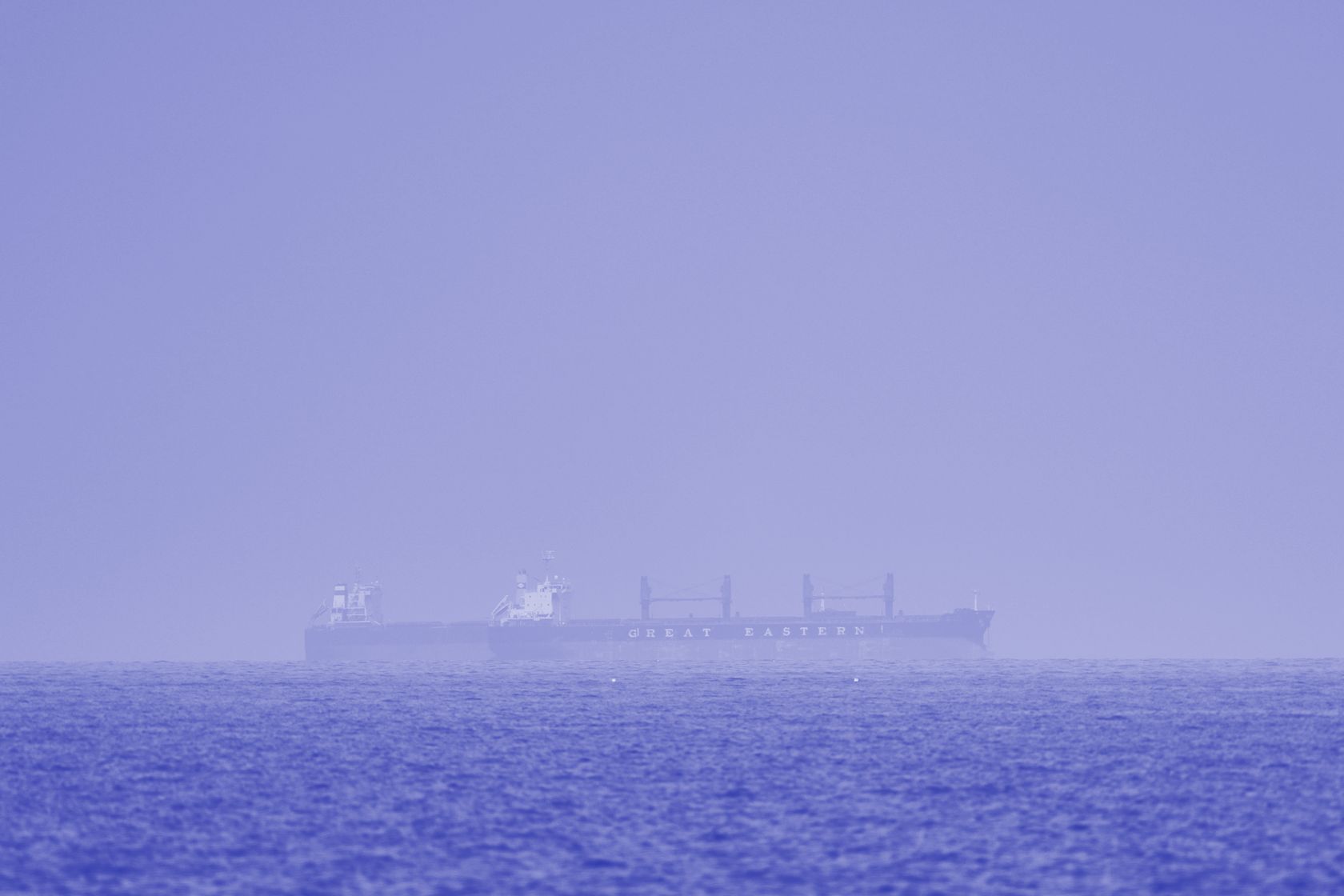
Iran war: The US Navy seized an Iranian cargo ship after blowing a hole in its engine room, Trump announced on social media, as the two-week ceasefire edged closer to its Wednesday expiry with Iran rejecting a second round of peace talks and the Strait of Hormuz remaining shut. Trump said the USS Spruance intercepted the nearly 900-foot Touska in the Gulf of Oman after it tried to breach the naval blockade, with US Marines now in custody of the vessel, which he said was under Treasury sanctions for “prior history of illegal activity.” The announcement came hours after Trump said he was sending his representatives (JD Vance, Steve Witkoff and son-in-law Jared Kushner) to Islamabad for a second round of talks on Monday, threatening that if Tehran rejected his terms, the US would “knock out every single power plant, and every single bridge, in Iran. NO MORE MR NICE GUY!” he said. Iran’s state news agency IRNA rejected the proposed talks, citing Washington’s excessive demands, unrealistic expectations, constant shifts in stance and the ongoing naval blockade. The WSJ reported Saturday that the US military is preparing to board and seize Iran-linked oil tankers and commercial ships in international waters in coming days. Meanwhile, the Strait of Hormuz remains effectively closed after Iranian forces on Saturday fired on two Indian-flagged vessels. Oil prices, which dropped sharply on Friday, face renewed upward pressure when markets open. (Capital Brief)(AP)(Donald Trump)(Reuters)
2.
Strait talk: The Hormuz whiplash over the weekend has pushed Australia closer to fuel rationing, with petrol already at $2.50 a litre and diesel topping $3 at the height of the price shock. AMP chief economist Shane Oliver warned that if oil flow does not quickly resume, recession becomes a live risk. “Our rough estimate is that if the flow of oil through the Strait does not quickly resume we could survive till late next month but beyond that fuel rationing would likely be required which would mean a direct reduction in economic activity and the likelihood of recession,” he wrote to investors. In the brief window before Iran shut the strait again, 18 commercial ships completed outbound transits and 10 made inbound crossings, according to Bloomberg data. However over a dozen others turned back after Tehran reimposed restrictions and fired on vessels attempting to cross. No crossings were recorded on Sunday. Before the re-closure, Energy Minister Chris Bowen told journalists on Saturday that Australia had 46 days of petrol, 31 days of diesel and 30 days of jet fuel on hand, with 61 fuel ships en route. Even if the strait fully reopened it would take weeks for substantial Persian Gulf oil and gas to reach buyers, with the IEA warning this week that more than 80 energy facilities had been damaged and restoring output to prewar levels could take up to two years. (Capital Brief)(Bloomberg)(AFR)
3.
Firmus signal: Firmus latest flashpoint, as the AI infrastructure company’s co-CEOs Oliver Curtis and Tim Rosenfield progress their non-deal roadshow, is whether company insiders and early investors will be allowed to sell shares on day one of its long-awaited IPO. The Australian reported in March, citing a current Firmus investor, that no escrow period would be enforced for pre-IPO shareholders. Firmus declined to comment. A source with knowledge of the process, speaking anonymously, told Capital Brief the report was speculation and not correct. Montgomery Investment Management founder Roger Montgomery publicly warned that without escrow restrictions, new retail investors would become “cannon fodder” for more experienced players and those who had already doubled or tripled their money. Firmus’ valuation has climbed from an estimated $1.9 billion last September to nearly $8 billion following its latest pre-IPO round. One existing Firmus investor, speaking anonymously, told Capital Brief it was “too early to know the full escrow situation,” but highlighted that less escrow means more freely tradable shares, a higher index weighting and more funds forced to buy the stock. Others noted that a $100 million pre-IPO sell-down by the company’s inaugural chair (out of a $700 million holding) may actually suggest founders expect to be locked up post-listing after all. (Capital Brief)
4.
FAR out: Australia’s fintech sector and crypto exchanges warned Treasury it is overestimating startups’ ability to comply with a regime designed for banks and super funds, and that the result will stifle the stablecoin sector before it even gets off the ground. Under the current proposal, stablecoin issuers would be brought under the Australian Financial Services Licence regime and the financial accountability regime (FAR) — designed to improve risk and governance cultures in banking, insurance and superannuation — once they start managing $200 million in client funds. At that level, “the compliance burden is unworkable,” a Coinbase spokesperson told Capital Brief. The exchange’s submission argues imposing “banking-style” oversight on a firm managing a “relatively modest $200 million is excessive” and calls for the threshold to be lifted to $1 billion. Industry group Digital Economy Council of Australia (DECA) agrees, claiming a $1 billion threshold “aligns more accurately with genuine financial stability concerns.” Fintech Australia similarly warned the threshold “may be set too low.” Macropod CEO Drew Bradford’s submission considered the $200 million figure an appropriate trigger but warned the problem was obligations arriving simultaneously the day the threshold is crossed, calling for a phased approach. Treasury’s consultation closed last Friday. Australia’s big four banks declined to share their submissions. (Capital Brief)
5.
Chain reaction: Hackers exploited a cross-chain bridge on Saturday to drain nearly USD293 million ($411 million) from decentralised finance infrastructure, triggering what security firm Cyvers described as a “cross-protocol contagion event” across at least nine platforms in the largest DeFi exploit of 2026. The attacker targeted a system that allows different blockchains to communicate, stealing about 116,500 units of a crypto token called rsETH issued by Kelp DAO, which said in a post on X it had paused operations while it investigated. Aave, the largest DeFi lending protocol with more than USD20 billion in locked assets, froze rsETH markets to contain the damage, Bloomberg reported, with its token falling 20% during Asian trading hours on Sunday, according to CoinGecko. Cyvers chief technology officer Meir Dolev told Bloomberg the protocol was “just three minutes away from losing an additional USD100 million,” with a rapid blacklist blocking a second attack attempt. Elsewhere, two Shanghai government-backed brokerages announced a merger that would create a firm with around USD86 billion in assets. Orient Securities plans to acquire a 100% stake in Shanghai Securities through a combination of A-share issuance and cash, according to a filing to the Shanghai Stock Exchange on Sunday. (Bloomberg)(Bloomberg)(CoinDesk)
6.
One standing: March proved a brutal first quarter for fund managers, with only one active Australian equities fund generating a positive return, Morningstar data exclusively obtained by Capital Brief reveals. Atlantic Pacific Australian Equity Fund returned 0.86% during March, beating its S&P/ASX 200 benchmark, which fell 7.15%. According to the fund’s February factsheet, it increased its energy allocation the day after the Iran war broke out by adding positions in Woodside Energy and Karoon Energy and added an exposure to Santos. For the first quarter of 2026, only 8% of active Australian equity funds made a return, with Argonaut Natural Resources Fund taking the lead at 7%, even if it didn’t beat its S&P/ASX 300 Resources benchmark of 7.5%. Over the year to 31 March 2026, 31% of funds generated a positive return, with hedge fund Paragon Australian Long Short Fund the top performer, though it plummeted 30.3% over the past month as resources and precious metal stocks sold off. VanEck senior portfolio manager Cameron McCormack told Capital Brief the fund returned 24.76% over 12 months and said it was “potentially three years into a 10-year bull run for gold,” adding the team may move to be “more defensively positioned” if consumer discretionary stocks come under further pressure. (Capital Brief)
7.
Trip approved: Donald Trump signed an executive order on Saturday (Sunday AEST) directing the FDA to fast-track the review of ibogaine, a psychedelic compound that is currently illegal in the US. The order also allocates USD50 million to federal research into the drug’s use as a treatment for PTSD in military veterans. Derived from an African plant, ibogaine is a Schedule I controlled substance in the US, meaning it is deemed to have no accepted medical use and a high potential for abuse. It has been shown in small studies to reduce opioid withdrawal symptoms and treat traumatic brain injuries, though clinical evidence remains limited and it carries serious medical risks, particularly heart complications, Bloomberg noted. The order directs the FDA to issue new guidance to researchers, opens access for terminally or “desperately” ill patients to try the drug under the Right to Try law, but does not itself reclassify ibogaine for medical use, although Trump urged health professionals at the Oval Office signing ceremony to reclassify it quickly. FDA commissioner Marty Makary said decisions could come as soon as this summer. (White House)(Reuters)(Bloomberg)
8.
Building up: US building products company QXO agreed to buy insulation giant TopBuild for USD17 billion, its third major acquisition in 11 months as billionaire dealmaker Brad Jacobs races to build a USD50 billion-revenue company. The deal values TopBuild at USD505 per share, a 23% premium to its closing price on Friday. 45% of that will be paid in cash and the remainder in QXO shares, the company said. The transaction was unanimously approved by both boards and is expected to close in the third quarter of 2026. It will be immediately accretive to QXO earnings, it added. The combined company will have more than USD18 billion in revenue, more than USD2 billion in adjusted EBITDA, around 28,000 employees and 1,150 locations across all 50 US states and seven Canadian provinces. QXO chief executive Brad Jacobs said in a statement the deal would give the company “critical mass in the insulation sector” and expand its exposure to large-scale projects including data centres. The deal brings total acquisitions to more than USD13 billion over 11 months, Jacobs said.(QXO)(Reuters)(Bloomberg)