Trump shrugs off USD100 oil as Iran strikes US base, tankers in Iraqi waters
Plus: Australia orders officials out of Israel and UAE; Global stocks slide as oil holds near USD100, private credit stress deepens; Traders price out Fed cuts as Aussie banks tip back-to-back RBA hike.

Good morning. Here’s what happened overnight and what you need to know today.

1.
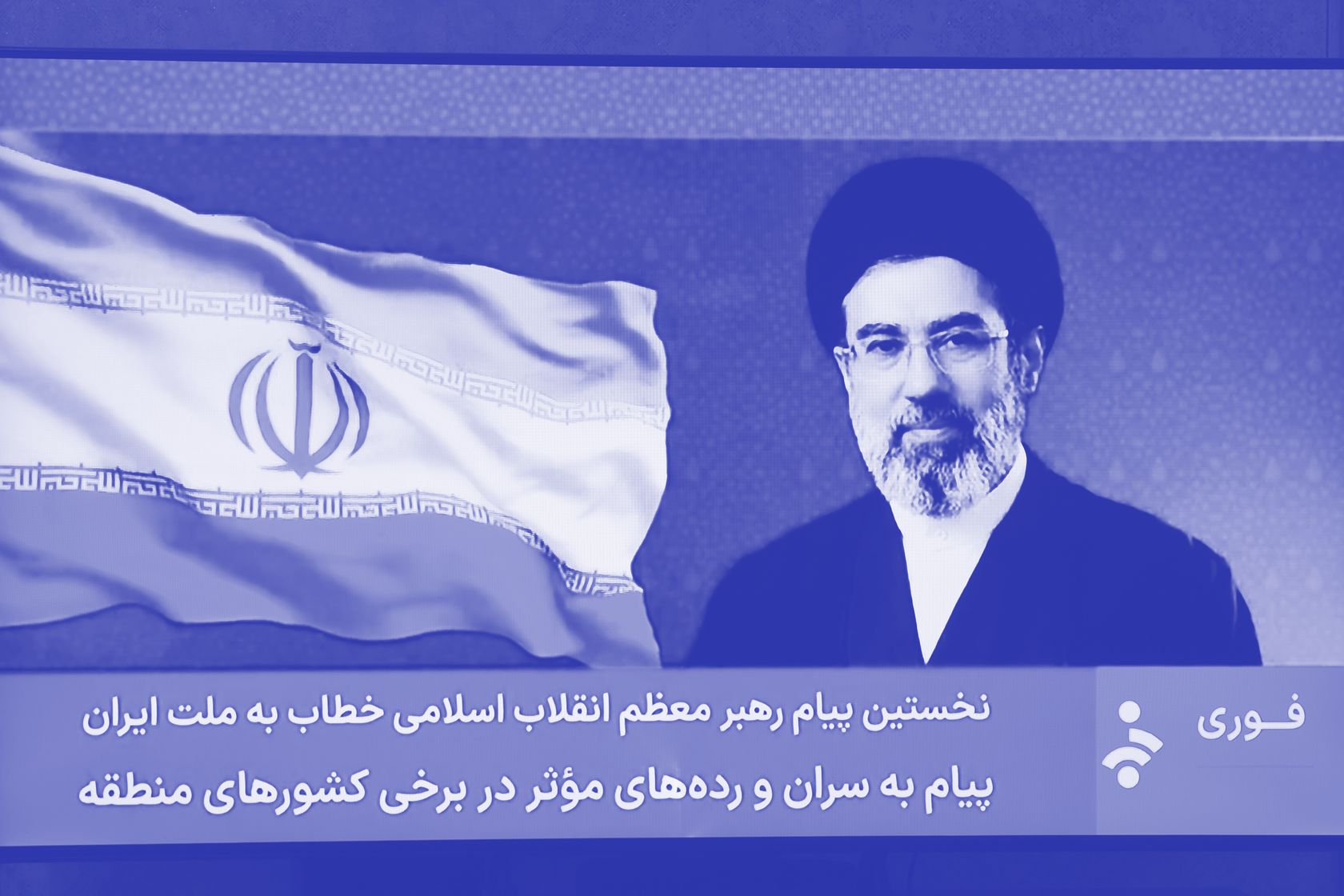
Not all bad: Iran’s new supreme leader Ayatollah Mojtaba Khamenei issued a defiant first statement calling for the Strait of Hormuz to “remain closed” and threatening to open new war fronts, dashing hopes of a swift end to a conflict the IEA has called the largest oil supply disruption in history. Khamenei’s remarks were read by a state television anchor. He did not appear on camera as Western officials reportedly believe he suffered a full or partial leg amputation in the war’s opening salvo. Donald Trump, meanwhile, shrugged off surging oil prices, posting on Truth Social that the US is the largest oil producer in the world “by far, so when oil prices go up, we make a lot of money,” adding that stopping Iran from acquiring nuclear weapons was “of far greater interest and importance.” Iran’s IRGC claimed attacks on the US Navy’s main base in Bahrain’s Mina Salman port and struck two tankers off Iraq’s coast, killing one person and prompting Iraq to suspend all oil terminal operations. Gulf producers have cut at least 10 million barrels a day and Hormuz flows are down more than 90%. Brent crude briefly topped USD100 a barrel, jumping as much as 9.2% before pulling back to just below that level later in the day. Israel ordered its forces to prepare to expand operations in Lebanon, with IDF chief Eyal Zamir warning the campaign “will not be a short campaign”, as evacuation orders now cover 15% of Lebanese territory and the death toll there reached 687. (Capital Brief)(Bloomberg)(NYT)(Reuters)(AP)(WSJ)(FT)
2.
Fare warning: Australia ordered all non-essential officials to leave Israel and the United Arab Emirates due to the “deteriorating security situation,” Foreign Minister Penny Wong said in a statement Thursday, adding that essential staff would remain to support Australians in both countries. Australians have been advised not to travel to either nation, as the Iran war continues to ripple through the aviation sector. Air New Zealand cut 5% of its flights (around 1,100 services) through early May as jet fuel prices surge, joining Qantas, SAS and Thai Airways in announcing fare hikes. Cathay Pacific also said it would more than double its fuel surcharges from 18 March, with long-haul charges rising around 104%. Elsewhere, an armed man rammed a vehicle into Temple Israel, described as the largest Reform synagogue in the United States, in the Detroit suburb of West Bloomfield, Michigan, and was fatally shot by security, the AP reported citing a person familiar with the matter. The vehicle caught fire after the crash. Investigators were still working to establish a motive, the AP reported. (Capital Brief)(AP)(SMH)(Reuters)
3.
War torn: Global stock markets slid as oil held near USD100 a barrel, already about 35% higher since the US and Israel attacked Iran in late February, while traders abandoned bets on Fed rate cuts this year. The IEA described the disruption to global oil flows as the biggest in history, saying a record emergency release of roughly 400 million barrels from member countries’ strategic reserves would be only a “stopgap measure” without a swift resolution to the conflict. Goldman Sachs raised its oil-price forecast for the second time in just over a week, expecting Brent to average USD98 in March-April and saying prices could top USD150 if flows through Hormuz remain depressed through late March. US energy secretary Chris Wright told CNBC the US Navy could begin escorting tankers through the waterway by the end of March, and the Trump administration is considering temporarily allowing foreign ships to carry fuel between US ports to help ease surging domestic fuel costs, though Karoline Leavitt said the action had not been finalised. The S&P 500 was 1.30% lower in late afternoon New York time, the Dow 1.37% lower and the Nasdaq down 1.56%, with markets also rattled by deepening stress in private credit. Morgan Stanley and Cliffwater are among the latest funds to cap withdrawals after redemption requests surged. Partners Group chair Steffen Meister warned private credit default rates could double in coming years. And Deutsche Bank disclosed a EUR25.9 billion private credit portfolio, flagging potential indirect credit risks, as its shares fell more than 4%. (Bloomberg)(Reuters)(WSJ)(FT)
4.
Rate reckoning: Bond markets also sold off as traders priced in less than one Fed rate cut for all of 2026, down from two cuts fully priced less than a fortnight ago. A Reuters poll of 96 economists nonetheless held to a June cut as the base case, with nearly 40% expecting just one reduction or none this year. Meanwhile in Australia, all four major banks shifted to expecting the RBA to raise rates for the second consecutive month when it meets on Tuesday, taking the cash rate to 4.1%. The Australian Financial Review reported Treasurer Jim Chalmers told colleagues that Treasury’s preliminary analysis pointed to headline inflation reaching the “high 4s” this year, well above the RBA’s 2%-3% target band, the paper reported citing an unnamed government source not authorised to speak publicly. Chalmers is expected to include the updated forecast in the 12 May budget, the paper said. And separately, US Fed Vice Chair Michelle Bowman outlined revised Basel capital rules that would lower large bank requirements by a small amount to roughly 2019 levels, in a turnaround from the 19% increase proposed in 2023. (Capital Brief)(AFR)(Bloomberg)(Reuters)
5.
The cull list: Macquarie significantly walked back the number of funds slated to be axed from its superannuation wrap platform, quietly reinstating another 88 funds to its investment menu following campaigns from investors. In October, Macquarie decided to remove 243 funds from the platform by 31 March, prompting an outcry from fund managers. Now, only 80 funds remain on the cull list. “To help advisers and their clients manage the transition to our simplified super investment menu, some additional funds will be retained on the platform but with a reduced investment limit,” a Macquarie spokesperson told Capital Brief. The change was made as part of an effort to improve governance following the collapse of Shield Master Trust, which had been available as an investment on Macquarie Wrap. Global X, which has had four of seven funds reinstated, and boutique fund manager Pella Funds Management said that their reinstatement was largely driven by clients championing the cause. (Capital Brief)
6.
Ordered on Amazon: AI factory startup Firmus unveiled its first US hire as it quietly plots an expansion in North America while gearing up for one of the most hyped ASX listings of the year. Former Amazon Web Services and Telstra executive Trent Viengsone has been appointed vice president for the region, tasked with leading engagements and connecting new customers to Firmus’ multi-site AI factory program, Project Southgate, in Australia. A Firmus spokesperson told Capital Brief: “In terms of expansion our goal is to lead Australia’s token export market by connect[ing] the world’s largest AI token consumers with our Project Southgate in Australia.” According to his LinkedIn profile, Viengsone is currently based in Los Angeles. The company is also hiring a solutions architect in San Francisco, but declined to comment on the scale, or specific location, of its wider US recruitment drive. The company is now finalising plans for another major equity round before a planned IPO on the ASX. (Capital Brief)
7.
Partners in cr(AI)me: Palantir unveiled a sovereign AI OS reference architecture developed with Nvidia on Thursday, providing a complete AI data centre stack that combines Nvidia’s Blackwell GPU infrastructure with Palantir’s full suite of software. The news comes as Palantir CEO Alex Karp told CNBC his company is still using Anthropic’s Claude despite being designated a supply chain risk by the Pentagon. Karp said that while the Department of War is planning to phase out Anthropic, it has not yet been phased out, and added that Palantir will “probably be integrated with other large language models” in the future. On Monday, Anthropic filed two federal lawsuits challenging the Pentagon’s decision to label it a supply chain risk after the AI startup refused to allow its technology to be used for autonomous lethal weapons or mass domestic surveillance. Palantir separately announced that it is expanding its partnership with GE Aerospace, deploying advanced agentic AI-powered solutions to ensure GE can “maximise production and aircraft remain mission ready.” (Palantir)(Palantir, GE Aerospace)(CNBC)
8.
Fat (lazy) cats: Europe must realise its relationship with Washington is now “conditional”, after US President Donald Trump “woke up” the continent to a need to boost defence spending, Estonia’s top diplomat argues. In an interview with Capital Brief during his visit to Canberra, Estonian Foreign Minister Margus Tsahkna also echoed calls for smaller powers, like Australia and Estonia, to bind together at a time when “the great superpowers are changing the world”. “From the Estonian perspective, actually, we’re really happy that Trump is so brutal about Europe,” Tsahkna said. “Europe as a whole has been like a fat, old, lazy cat about defence spending...[But] the relationship between Europe and the US is not unconditional anymore, it is conditional. We need to understand that, and we need to do our part.” Tsahkna, who met with Foreign Minister Penny Wong in parliament on Thursday, said the outbreak of war in the Middle East showed that conflicts across the globe were interconnected. (Capital Brief)
