Trump teases US ‘may or may not’ strike Iran
Plus: US Fed signals slower rate cuts ahead, still sees two in 2025; Macquarie buys stakes in three major UK airports; Nippon closes US Steel buy after 18-month saga.

Good morning. Here's what happened overnight and what you need to know today.

1.
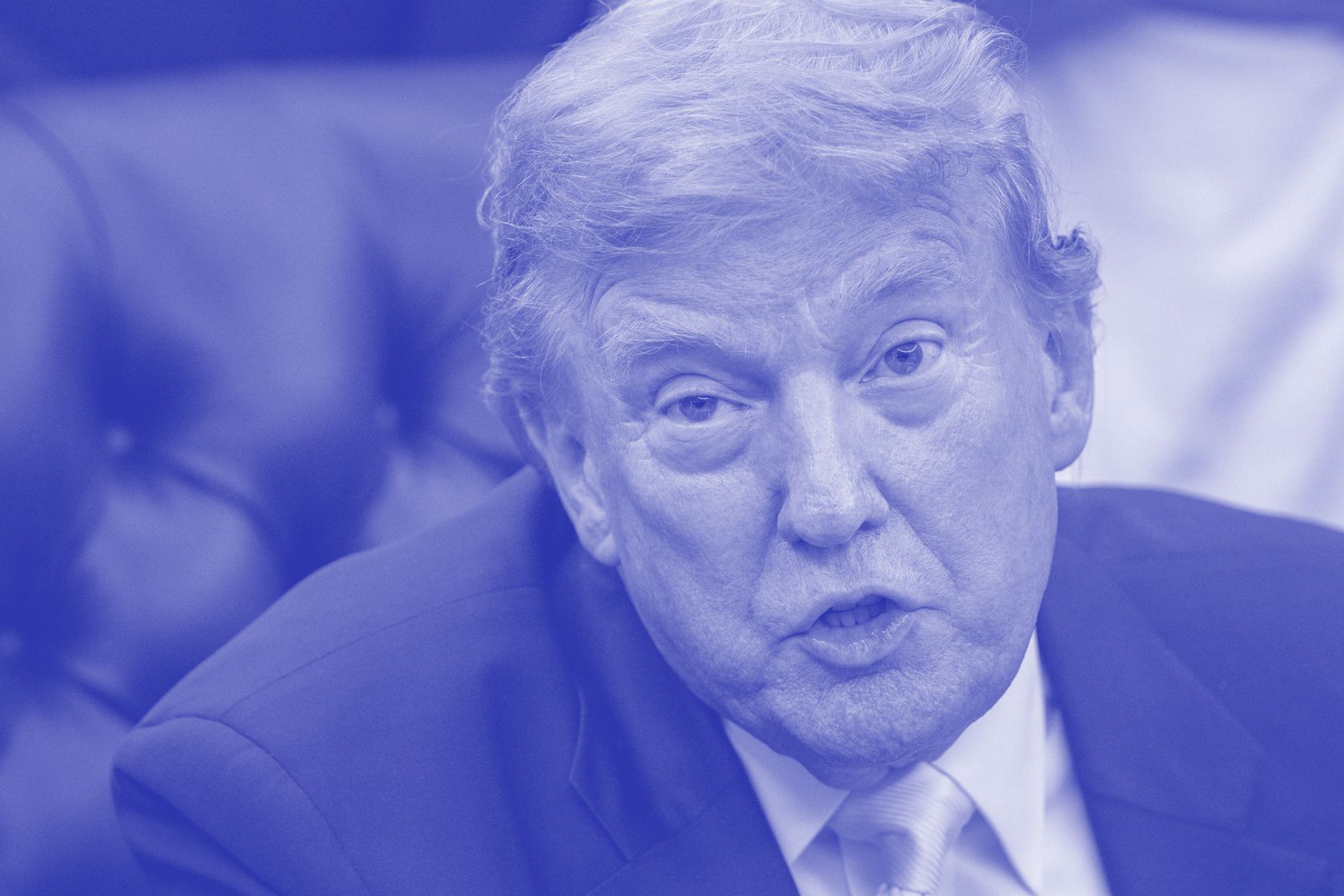
War words: Donald Trump refused to say whether he will order US strikes on Iran’s nuclear sites, saying “I may do it. I may not do it. I mean, nobody knows what I’m going to do,” as Iran’s supreme leader Ayatollah Ali Khamenei warned any US military intervention would result in “irreparable damage.” Trump said Iranian officials had proposed negotiations and even a meeting at the White House, but added “it’s very late to be talking... I said to people why didn’t you negotiate with me two weeks ago? You could have done fine. You would have had a country.” Iran’s mission to the UN denied that, posting “no Iranian official has ever asked to grovel at the gates of the White House.” As the conflict continued for a sixth day, Khamenei rejected Trump’s demand for “unconditional surrender” and Defense Secretary Pete Hegseth told lawmakers the Pentagon was providing Trump with military options. Trump’s posture has divided his “America First” base, even as he insisted his supporters “are more in love with me today.” (Capital Brief)(NYT)(AP)(Reuters)
2.
Fed cuts: The US Fed held interest rates steady at 4.25% to 4.5% and reaffirmed expectations for two cuts later this year, but signalled a slower expected pace of easing in 2026 and 2027. New 2025 projections show core inflation rising to 3.1% (up from 2.8% in March), unemployment increasing to 4.5% (from 4.4%) and GDP growth slowing to 1.4% (from 1.7%). Fed chair Jerome Powell said ongoing uncertainty and inflation risks from tariffs were still making it harder for the central bank to proceed confidently with rate cuts. “We're adapting in real time, and what you see is an accumulation of individual assessments,” he said. While the Fed maintained the forecast for two 2025 cuts totalling 50 basis points, projections for 2026 and 2027 were lowered to one quarter-point cut each, down from two in each year. Earlier in the day, President Trump, who had called for cuts of up to 2.5 percentage points, pre-emptively attacked the expected decision and labelled Powell “a stupid person.”(Capital Brief)(US Federal Reserve)(Fed projections)
3.
Infra landing: Macquarie agreed to acquire ownership stakes in Bristol, Birmingham and London City airports from Ontario Teachers’ Pension Plan. The investment, made via Macquarie Asset Management’s European Infrastructure Fund 7, includes a 55% stake in Bristol, 26.5% in Birmingham and 25% in London City, for an undisclosed amount. The London City deal has reached financial close, while the other two are expected to complete by the fourth quarter of fiscal 2025, subject to regulatory approvals, it said. Together, the airports serve over 25 million passengers annually. Macquarie said it plans to support them long term by expanding route networks, improving passenger experience and working on sustainability strategies. It has invested in airports globally for over 20 years and operated in the UK for 35, with past holdings in Australia, Europe, Latin America and the UK. The announcement comes a day after Macquarie announced the closure of the $US6.8 billion Macquarie Infrastructure Partners VI fund for investments in the Americas, alongside $US1.3 billion in co-investment capital. (Capital Brief)(Macquarie)
4.
Sold out: Nippon Steel closed its USD14.1 billion ($21.8 billion) takeover of United States Steel Corporation, creating the world’s second-largest steelmaker. The USD55 per share transaction will allow the Japanese steelmaker to gain a strategic US foothold that will help it to avoid Trump’s 50% steel tariffs. The parties were able to reach a conditional agreement with the Trump administration last Friday, 18 months since the companies first announced the transaction in December 2023. The breakthrough came after Nippon agreed to invest an additional USD11 billion in the Pittsburgh-based business, as well as issuing the US President certain veto rights. The deal’s “golden share” in US Steel held by the US government gives the administration veto power over certain aspects of corporate governance, US production and trade. “We have a golden share, which I control,” Trump explained on Thursday. The extended transaction has spanned two presidential administrations, legal actions, union battles and lobbying campaigns. (Capital Brief)(Nippon Steel)(Nippon Steel)(Reuters)(Bloomberg)(White House)(Atlantic Council)
5.
Bank breach: A swathe of sensitive UBS employee data was leaked on the dark web following a cyberattack on one of the bank’s suppliers, Chain IQ. Swiss newspaper Le Temps first reported that data on over 130,000 UBS employees was subject to a ransomware attack, reportedly carried out by hacker group World Leaks, which accessed the procurement service provider’s systems. Chain IQ said that it and 19 other companies had been targeted. A statement released by UBS and seen by Bloomberg confirmed the data breach, stating: “A cyber-attack at an external supplier has led to information about UBS and several other companies being stolen…No client data has been affected. As soon as UBS became aware of the incident, it took swift and decisive action to avoid any impact on its operations.” UBS chief Sergio Ermotti’s direct phone number was among the leaked information, which also included employee addresses and the floor that they work on. (Capital Brief)(Le Temps)(Bloomberg)(Reuters)
6.
Tech wars: OpenAI said it would phase out working with Scale AI, saying it had already started winding down its reliance on the startup before Meta took a 49% stake. Last week reports emerged that Zuckerberg was personally hiring top AI talent for a new “superintelligence” group, and announced a USD14.8 billion ($22.7 billion) investment into Scale AI – recruiting its CEO Alexandr Wang in the process. The news comes after OpenAI CEO Sam Altman accused Meta chief Mark Zuckerberg of trying to poach his developers with the promise of USD100 million sign-on bonuses and even more in remuneration. Speaking on the Uncapped podcast, Altman said “It is crazy…I’ve heard that Meta thinks of us as their biggest competitor.” He claimed no OpenAI employees have taken Zuckerberg up on the offer yet. Meanwhile, Bloomberg reported Microsoft is planning another round of layoffs targeting sales roles after its fiscal year ends, as the company prioritises spending on AI infrastructure. (Uncapped Podcast)(FT)(Bloomberg)(TechCrunch)
7.
Closed investigation: Investigators looking into the cause of the Air India plane crash which killed 270 people believe that the Boeing plane had an emergency-power generator operating when it crashed just 50 seconds after takeoff, the Wall Street Journal reports. The preliminary finding raises questions as to whether the plane’s engines were functioning properly during takeoff from India’s Ahmedabad airport, sources told the WSJ. The 787 Dreamliner’s ram air turbine is a backup power source that deploys if engines or hydraulics fail. The WSJ explains that if both engines fail, or if all three hydraulic system pressures are low, the ram air turbine can deploy automatically. Pilots can also deploy the turbine manually if needed, such as in the event of a double engine failure. Despite the findings, people familiar with the crash told the WSJ that the probe is ongoing and investigators haven’t confirmed whether engine, hydraulic or other problems triggered the emergency system.(WSJ)(Capital Brief)
8.
Trans blocked: The US Supreme Court upheld a Republican-backed Tennessee law banning gender-affirming medical care for transgender minors, in a 6-3 ruling that rejected arguments the law violated the Constitution's equal protection guarantee. The decision affirmed a lower court ruling and preserves similar measures in more than two dozen states. Tennessee’s 2023 law prohibits puberty blockers, hormone therapy and surgery for people under 18 seeking to transition, but allows them for other medical purposes. Chief Justice John Roberts wrote that the ban responds to “an ongoing debate among medical experts.” The Biden administration had challenged the law and Trump administration reversed that stance. Liberal justices dissented, with Justice Sotomayor writing the court “abandons transgender children and their families to political whims.” (WSJ)(NYT)
