Trump threatens 100% secondary tariffs on countries trading with Russia
Plus: Bitcoin tops $120k as Washington kicks off ‘crypto week’; Powell seeks review of US$2.5b Fed HQ amid Trump pressure; Analysts forecast 10% drop in IB revenues.

Good morning. Here's what happened overnight and what you need to know today.

1.
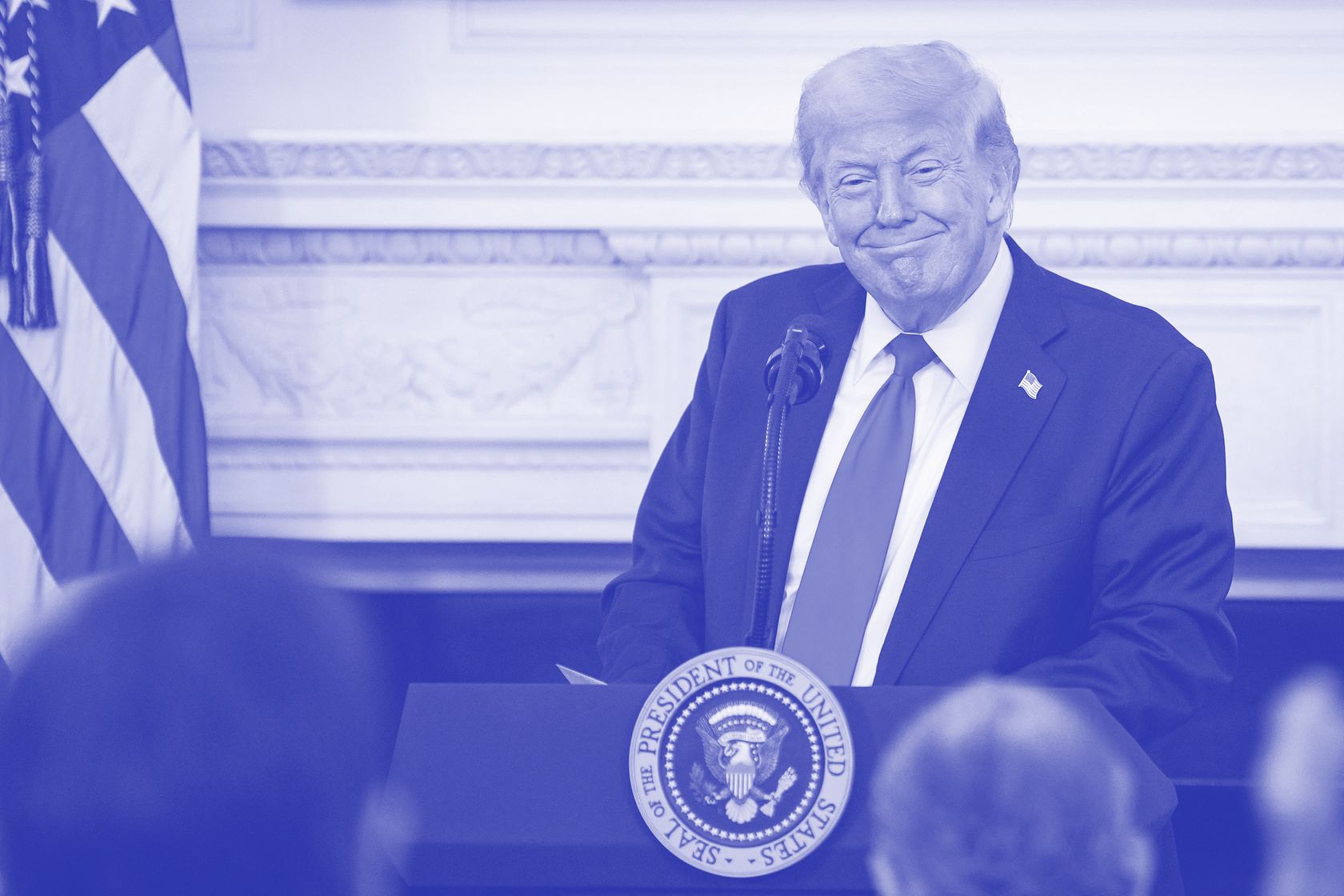
Secondary tariffs?: US President Donald Trump said the US would impose 100% secondary tariffs on countries trading with Russia should Vladimir Putin fail to agree to a ceasefire deal in the next 50 days. Speaking alongside NATO leader Mark Rutte from the White House on Monday, Trump also said the US would send Patriot missile systems and other weapons to Ukraine. “We’re not buying it, but we will manufacture it,” he said, adding that "billions of dollars’ worth of military equipment" would be purchased from the US by NATO allies, which would then be “quickly distributed to the battlefield” in Ukraine. About the so-called “secondary tariffs” Trump said: "We're going to be doing secondary tariffs... If we don't have a deal in 50 days, it's very simple, and they'll be at 100%." Minutes after Trump’s remarks Commerce Secretary Howard Lutnick told reporters: “So, it’s economic sanction, not a sanction,” Lutnick said. “You can do tariffs or you can do sanctions. Those are both tools in his toolbox.” (Capital Brief)
2.
Crypto week: Bitcoin surged past USD120,000 as US lawmakers prepared to pass landmark legislation during what supporters have dubbed “Crypto Week” and regulators cleared the way for banks to offer custody services. The House will vote on three bills: the GENIUS Act, which would require stablecoins to be backed by liquid reserves; the CLARITY Act, which would set broader market structure rules for crypto; and the Anti-CBDC Surveillance State Act, which would ban the Fed from issuing a digital currency. The GENIUS Act has already passed the Senate. Meanwhile, US regulators issued a joint statement outlining risk-management considerations for banks providing crypto-asset safekeeping services. The Federal Reserve, FDIC and OCC reminded banks that such activities must be conducted in compliance with applicable laws, while clarifying the statement sets no new supervisory expectations. The legislative momentum briefly drove Bitcoin to an all-time high of USD123,205 on Monday. (Capital Brief)(Bloomberg)(NYT)(Reuters)(WSJ)(FT)
3.
Powell review: US Federal Reserve Chair Jerome Powell asked the central bank’s inspector general, Michael Horowitz, to review the costs of the Fed’s USD2.5 billion ($3.82 billion) headquarters renovation, amid growing criticism from Trump administration officials. The request, first reported by Axios, was made over the weekend and confirmed to Bloomberg by a spokesperson for the inspector general’s office. Republicans have criticised Powell over cost overruns and alleged unauthorised changes, with some suggesting they could justify removing him “for cause.” At a congressional hearing last month, Powell denied reports of luxury upgrades such as private elevators to a dining room. Trump, who has long attacked Powell for not cutting rates, is now using the project to push for his removal. Over the weekend, the Fed published a Q&A rejecting claims of VIP perks and defending the project as necessary to consolidate operations and modernise two historic buildings not fully renovated since the 1930s. (Capital Brief)(Fed)(Axios)(Bloomberg)
4.
Coming up empty: Investment banking (IB) is set to extend its worst run in over a decade, injecting less than 25% of Wall Street revenues at the largest US banks for the 14th quarter running, according to the Financial Times. Analysts expect traders to bring in total revenues across the five biggest Wall Street banks of USD31 billion ($47.3 billion), over four times the amount expected to be generated for IB. Bulge bracket banks will begin reporting Q2 2025 results from today, with forecasts for IB expected to fall almost 10% to USD7.5 billion according to Bloomberg data. Despite the bleak outlook, Bloomberg reports that Wall Street banks are also set to benefit from a material shift in the regulatory environment toward deregulation under President Trump, as well as a wave of M&A in the second half of the year. M&A prospects among large and regional US banks are also ticking up. (FT)(Bloomberg)(Reuters)
5.
Titan build: Mark Zuckerberg said Meta will spend “hundreds of billions of dollars” to build massive AI data centres to power its superintelligence ambitions. Posting on Threads, he said just one of the titan clusters will cover “a significant part of the footprint of Manhattan.” The first, Prometheus, is due online in 2026, while Hyperion will scale to 5 gigawatts. The announcement follows Meta’s creation of Superintelligence Labs, formed after setbacks with its Llama 4 model and staff departures. The unit, led by Alexandr Wang and Nat Friedman, reflects Zuckerberg’s aggressive talent push. In April, Meta raised its 2025 capital expenditure to between USD64 billion and USD72 billion, Reuters reported. Meanwhile, a non-jury trial begins Wednesday in Delaware, where shareholders are suing Zuckerberg and other Meta leaders to recover more than USD8 billion in fines and costs over alleged violations of a 2012 FTC data privacy agreement linked to the Cambridge Analytica scandal. (Capital Brief)(Mark Zuckerberg)(Reuters)(Bloomberg)
6.
Case closed: An investigation into whistleblower claims against the National Reconstruction Fund Corporation has raised concerns over the organisation's workplace culture and approach to document management, but cleared it of any serious misconduct. The Albanese government's flagship $15 billion manufacturing fund was the subject of a formal Public Interest Disclosure investigation after an anonymous whistleblower made serious allegations about governance failures and workplace culture in March 2025. David Gall, the fund's chief executive, announced the conclusion of the investigation in a letter seen by Capital Brief, finding that while some procedural issues occurred, none constituted "serious disclosable conduct" under the Public Interest Disclosure Act. (Capital Brief)
7.
Talisman Sabre: Australia’s defence forces have fired HIMARS (High Mobility Artillery Rocket Systems) for the first time on Monday, as the country commenced day one of its largest war games to date. Australia launched missiles from its truck-mounted long-range systems during five live-fire exercises at the Shoalwater Bay Training Area, a 4,500 square kilometre expanse in outback Queensland. Up to 40,000 troops from 19 nations are taking part in the ‘Talisman Sabre’ military exercise. Chinese surveillance ships typically monitor naval exercises of the Australian coast and were expected to be monitoring the current drills. The military drills began one day after Prime Minister Anthony Albanese began his six-day tour of China, where he is expected to hold his fourth face-to-face meeting with Chinese leader Xi Jinping on Tuesday. Albanese said on Monday that Chinese surveillance of the drills would not be an issue raised with Xi during his tour. (APT)(Capital Brief)(Reuters)(ABC News)
8.
Black box: Initial findings into the potential cause of the fatal Air India crash in June raised more questions, according to the airline’s CEO Campbell Wilson. Wilson’s internal memo sent to employees, seen by the WSJ and Bloomberg, said that the preliminary report “provided both greater clarity and opened additional questions.” Wilson urged staff to avoid drawing premature conclusions after the Aircraft Accident Investigation Bureau’s report ruled out mechanical or maintenance issues, turning attention to the pilots’ actions. The report showed that two fuel switches in the cockpit were moved to a cut-off position one by one, causing the plane to lose power and crash 30 seconds after take-off, killing all but one person on board, as well as 19 on the ground. Wilson added “over the past 30 days, we’ve seen an ongoing cycle of theories, allegations, rumours and sensational headlines, many of which have later been disproven.”(WSJ)(Bloomberg)
