Trump threatens Iran oil strikes ‘for fun’, demands allies join Hormuz fight
Plus: RBA seen lifting rates Tuesday, markets bet on more; Koala snuggles up to investors with trimmed float; Atlassian staff reel as high performers find themselves among the axed.


Good morning. Here’s what happened overnight and what you need to know today.

1.
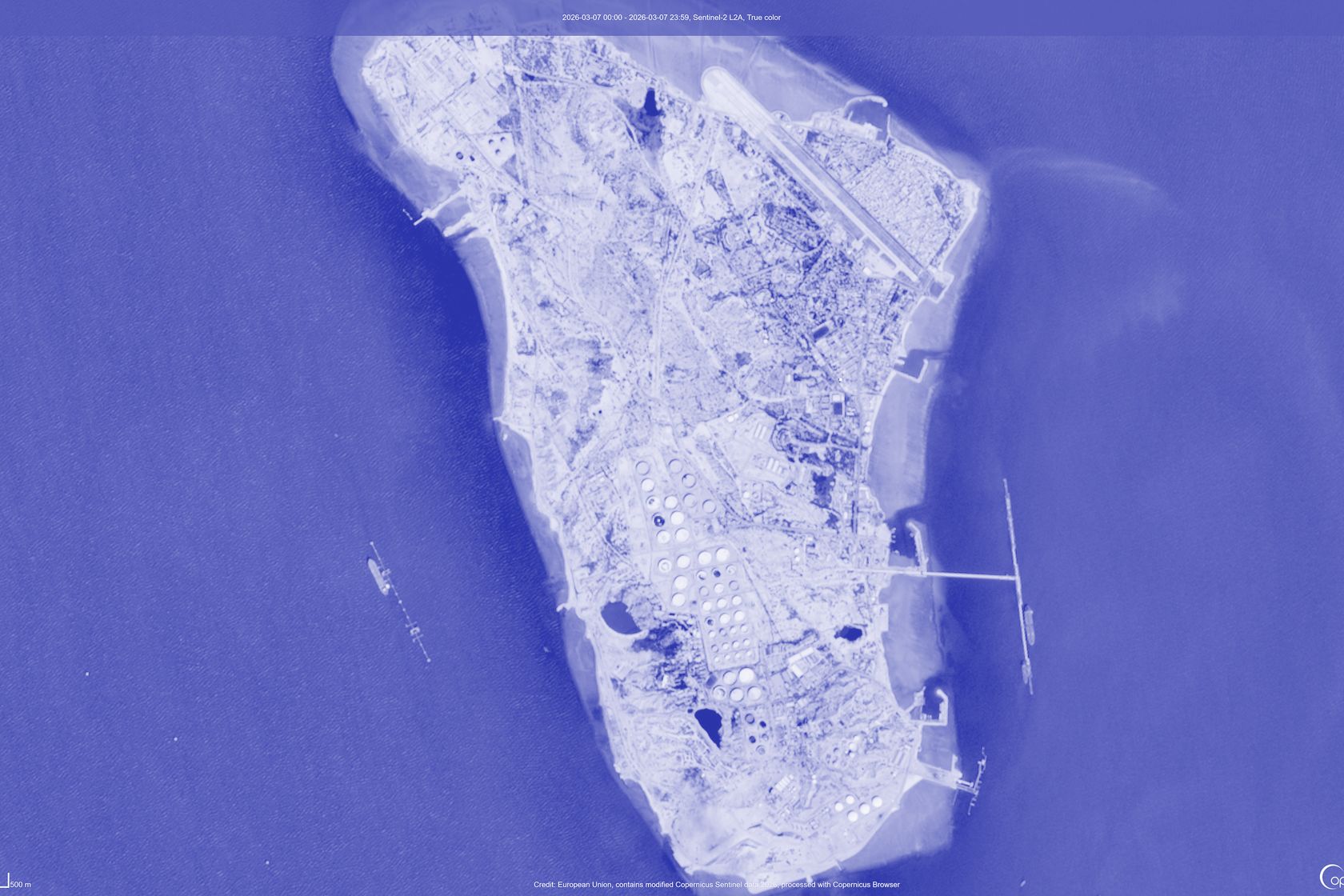
For fun: Donald Trump threatened to strike Iran’s Kharg Island oil terminal again “just for fun" while simultaneously calling on allies to help reopen the Strait of Hormuz, as the US-Israel war on Iran entered its third week with no diplomatic resolution in sight. In a Truth Social post on Saturday, Trump named China, France, Japan, South Korea and the UK, urging them to send warships, writing “this should have always been a team effort, and now it will be.” Responses were cautious at best. China has not publicly responded. The UK said it was “intensively looking” at options including autonomous minehunting equipment. Japan warned the hurdle was “very high”. And South Korea said only it would “communicate closely” with the US. EU foreign ministers were set to meet Monday to discuss widening the Aspides naval mission (which try to protect Red Sea shipping from Houthi attacks) to the Strait of Hormuz, though Germany’s Foreign Minister Johann Wadephul told public broadcaster ARD he was “very sceptical” it would provide more security there given it had not been effective in the Red Sea. Meanwhile, Trump claimed Iran wanted to make a deal but told NBC News “the terms aren’t good enough yet,” a claim Iran’s Foreign Minister Abbas Araghchi flatly contradicted, telling CBS that Iran had “never asked for negotiation” and was “ready to defend ourselves as long as it takes.” Iran’s military also responded to Trump’s threats, warning it would retaliate by destroying energy infrastructure across the region with American ties, turning them “into ashes.” US Energy Secretary Chris Wright, and White House economic adviser Kevin Hassett estimated the conflict would take four to six weeks. (WSJ)(NYT)(Reuters)(FT)
2.
Rate hike: Money markets are pricing in a near-certain rate hike on Tuesday, and all four major banks are also tipping a 25 basis point rise to 4.1%. The shift follows an unexpected podcast appearance by RBA deputy governor Andrew Hauser, which rapidly changed expectations and spooked bond markets, which are now pricing in as many as three further hikes by year-end to take the cash rate to 4.6%, its highest since October 2011. Speaking on Sky News on Sunday, Treasurer Jim Chalmers said Treasury modelling had inflation peaking at the “mid to high fours,” up from 3.8% in January and well above the RBA’s 2 to 3% target. He said he did not expect the economy to fall into recession, with Treasury scenarios expecting “a hit to growth but not a hit to growth that would deliver a shrinking economy.” Yet, economists are far from unanimous that hiking into this uncertainty is the right call. HSBC chief economist Paul Bloxham said the RBA finds itself “in a tricky spot.” AMP’s Shane Oliver said that surging petrol prices would act as “a dampener on consumer spending” but that money markets pricing in three further hikes by year-end “looks a bit overdone.” Bank of Queensland chief economist Peter Munckton, meanwhile, says there were “good arguments for caution” and for waiting until May, though he too has shifted to expecting a rise on Tuesday. (Capital Brief)(ABC)
3.
Listed species: Nine months after shelving plans for a circa $100 million IPO, Koala chief executive and co-founder Dany Milham is back having another run at the ASX. This time, however, at the lower end of its previous $300–450 million target range, seeking to raise $68 million with shares priced at $3.40 each. Koala lowered its ambitions under advice from underwriter Barrenjoey, Capital Brief reported citing a source briefed on the plans. The source said Koala’s collapsed IPO, combined with market volatility since US-Israeli attacks on Iran, forced a conservative approach to pricing. Milham told Capital Brief the price was “reasonable,” describing Koala as “a two, three-hundred-year business” and saying investors “weren’t really fazed” by outside noise. The company published its IPO prospectus on Friday, with a retail offer on 23 March and listing slated for 31 March. The documents detail plans for entry into Europe and Canada over the next 12 to 24 months, beyond its current operations in Japan, the US and the UK. Existing investors include Perennial Partners, Alium Capital Management, Partners For Growth and cricketer Steve Smith. Six new cornerstone institutional investors committed to the IPO last week. (Capital Brief)
4.
Peak framing: Last 12 March, Atlassian employees around the world opened their laptops to find an email telling them whether they still had jobs. For many, what stung was not the news itself but the suggestion that performance had played a role in who was cut. CEO Mike Cannon-Brookes announced the 10% reduction — roughly 1,600 roles — in a blog post that morning, framing the decision as necessary to “self-fund further investment in AI and enterprise sales,” saying the company had retained staff with the skills to thrive as “an AI-first company,” including strong performers. Affected employees pushed back hard on Reddit. One seven-year staffer, consistently rated at or above expectations, who had won a mentor’s award at Atlassian’s internal AI Builder’s Week and was actively developing an AI prototype, wrote simply: “Didn’t matter.” Another, rated above expectations in their most recent reviews and the only person in their role on the team, wrote: “It feels like they’ve just picked names out of a hat.” An anonymous current employee told Capital Brief they knew “incredibly high performance” colleagues among those cut — including people working on AI projects. An Atlassian spokesperson told Capital Brief cuts could reflect “structure, team composition and size, performance or skills.” The company now sits at 3.1 stars on Glassdoor, with culture and values rated just 2.8 — a long way from the workplace that once ranked seventh on Fortune’s Best Places to Work. (Capital Brief)
5.
Energy deals: Asia-Pacific nations struck USD57 billion worth of 22 deals with American energy companies at the Indo-Pacific Energy Security Ministerial and Business Forum in Tokyo over the weekend, a Trump administration official said ahead of the US president meeting with his Japanese counterpart this week. US Interior Secretary Doug Burgum told Fox News the total was revised up from USD56 billion after an additional deal was finalised following the close of the conference. Burgum said the deals underscored the “need to sell energy to our friends and allies so they are not forced to rely on adversaries.” He did not name which countries were party to the 22 deals. Burgum also said Japan is helping lead the coalition of nations to put more oil supply in the market. Meanwhile, Australia’s Minister for Resources Madeleine King used the forum to tout the country’s reliability as an LNG supplier and call for further investment, Bloomberg reported. “The vulnerabilities of global energy supply chains have been exposed by the current conflict in the Middle East,” King said in a speech. “Australia by contrast has remained a trusted and reliable supplier.” (Reuters)(Bloomberg)(Fox News)
6.
Efficiency mode: Meta is planning its most sweeping layoffs since its 2022 so-called ‘year of efficiency’ with cuts that could affect 20% or more of its workforce, Reuters reported citing three unnamed sources. No date has been set and the magnitude has not been finalised, but top executives have recently signalled the plans to senior leaders and told them to begin planning how to pare back, according to the news outlet. Meta spokesperson Andy Stone in a statement called it “speculative reporting about theoretical approaches”. Meta employed nearly 79,000 people as of 31 December. It laid off 11,000 staff in November 2022, around 13% of its workforce, then announced a further 10,000 cuts four months later. It comes as CEO Mark Zuckerberg has been pushing Meta to compete more forcefully in generative AI, offering pay packages worth hundreds of millions of dollars to court top researchers to a new superintelligence team. The team is building a model called Avocado, though its performance has reportedly lagged expectations, following setbacks with its Llama 4 models. (Reuters)
7.
Taxed out: Google told the federal government it is withholding a $20 billion investment in what its spokeswoman called a “generational opportunity” for Australia to become an Asia-Pacific AI and data centre hub, because of the risk of exposing its broader operations to higher taxes, The Australian Financial Review reported. Google fears a local data centre operation could cause the ATO to argue the company has a “permanent establishment,” the publication said citing three unnamed sources. That would risk exposing its existing local cloud computing, search and advertising operations to the 30% corporate tax rate, it said. A Google spokeswoman said in a statement the company is “not asking for incentives, public funds, or changes to the treatment of its existing businesses in Australia.” Treasurer Jim Chalmers met Google executive Bikash Koley in November, with tax among the key discussion points, according to a Treasury briefing released Friday under freedom of information. The AFR reported there are mixed views inside government on whether Google’s tax concerns are genuine or an attempt to create a favourable global precedent. (AFR)
8.
War pit: Formula 1 cancelled its Bahrain and Saudi Arabian Grands Prix scheduled for April due to the Iran war, cutting the 2026 season from 24 to 22 races and leaving a five-week gap before Miami on 3 May. F1 CEO Stefano Domenicali said in a statement that “while this was a difficult decision to take, it is unfortunately the right one at this stage considering the current situation in the Middle East.” Bahrain’s hosting fees were estimated at around USD45 million annually, according to Reuters, with Saudi Arabia’s likely higher. ESPN sources said the Saudis pushed to proceed, but F1 refused to risk an escalation with personnel in-country. Iranian missiles had struck Manama hotels and airports had closed, with a freight deadline of 20 March looming. F1’s remaining Middle East races in Qatar (late November) and Abu Dhabi (early December) are still on the calendar. Meanwhile, four of the seven Iranian women footballers who had sought asylum in Australia have now decided to return to Iran, including three who reversed their decision over the weekend, Home Affairs Minister Tony Burke said. Only two of the original seven have chosen to stay. And Iran’s soccer team rejected Trump’s suggestion they skip the World Cup, posting on Instagram that “no one can exclude” them. Iran’s sports minister had told state TV participation was currently “not possible.” (Reuters)(AP)
