Trump threatens Musk deals, Musk hits back with Epstein claim
Plus: Angus Taylor’s inflation-linked tax rebate was blocked by Dutton; Xi urges Trump to take ‘realistic view’ and drop China measures; StrongRoom AI in liquidation after creditor coup.

Good morning. Here's what happened overnight and what you need to know today.

1.
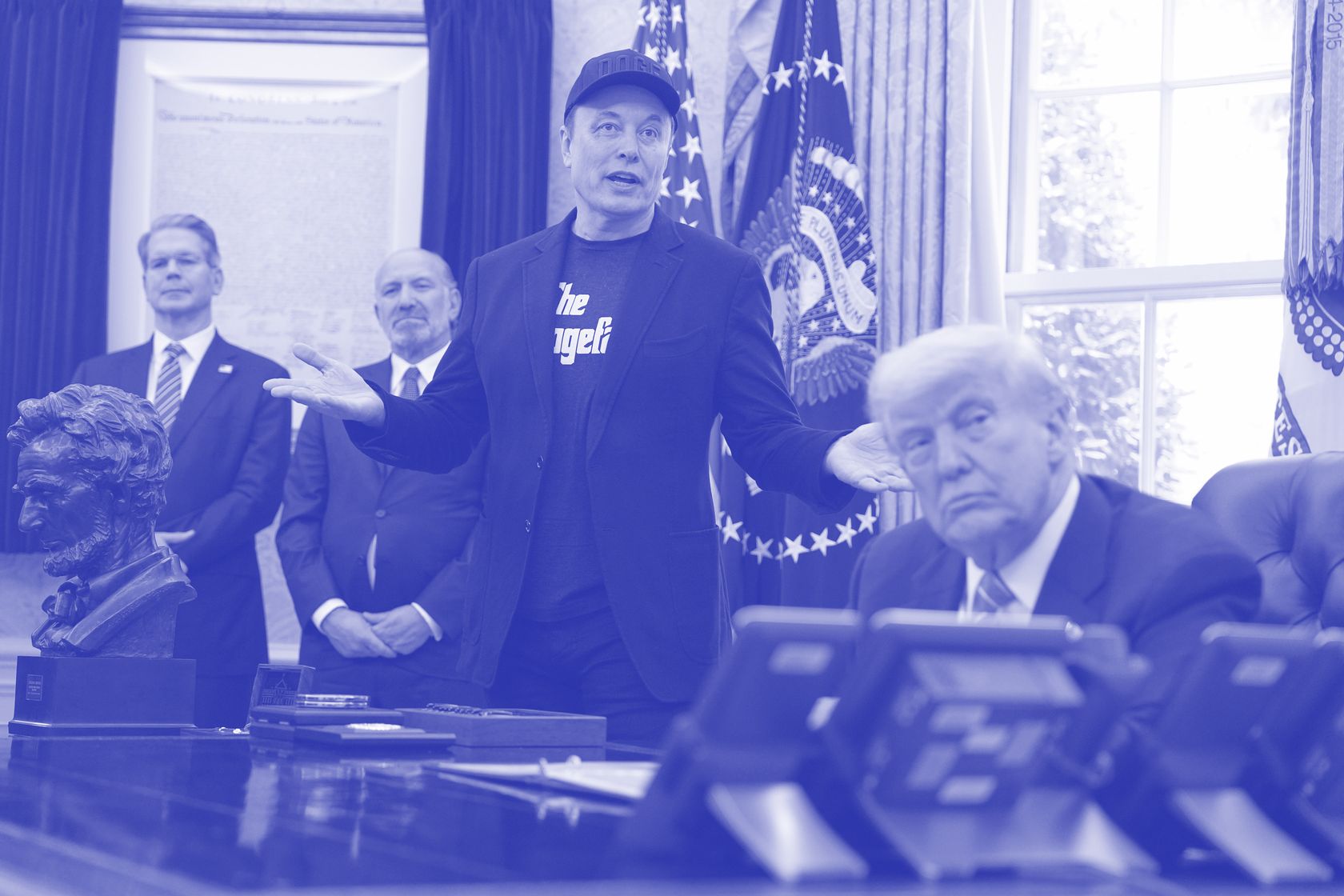
M(A)EGA meltdown: US President Donald Trump threatened to terminate Elon Musk’s federal contracts and subsidies, saying it would save “Billions and Billions of Dollars,” adding he was “very disappointed in Elon” over his attacks on the president’s “big, beautiful bill.” As Trump spoke from the Oval Office, Musk responded live on X, calling him “ungrateful” and claiming, “without me, Trump would have lost the election.” Trump said Musk’s opposition was driven by cuts to EV tax credits, which Musk denied in real time, calling again to “ditch the MOUNTAIN of DISGUSTING PORK in the bill.” Minutes later, Musk again escalated the feud by posting: "Time to drop the really big bomb: @realDonaldTrump is in the Epstein files. That is the real reason they have not been made public. Have a nice day, DJT!" Tesla shares closed 14.26% lower. (Capital Brief)(Donald Trump)(NYT)(Bloomberg)(WSJ)(Elon Musk)
2.
Party politics: Capital Brief has revealed that Angus Taylor proposed an automatic tax rebate tied to inflation months before the election, but the plan was rejected by Peter Dutton’s office in favour of halving the fuel excise for 12 months. Senior Liberal sources told Capital Brief that Taylor repeatedly pushed the rebate including in the lead-up to Dutton’s 27 March budget reply speech. The proposal, which Taylor began developing as early as last year, was knocked back and never reached the shadow expenditure review committee or shadow cabinet. Under Taylor’s proposal, which has not been revealed until now, all taxpayers would have received a rebate at the end of the financial year if inflation rose above the Reserve Bank’s 2–3% target range. The revelation comes as internal Liberal tensions grow over how to rebuild the party’s low-tax credentials after its election defeat.(Capital Brief)
3.
Trade call: Donald Trump and Chinese leader Xi Jinping spoke by phone, their first known conversation since Trump took office in January, amid renewed tensions over trade and rare earths. Trump called the 90-minute call “very good” and said it focused almost entirely on trade, with both leaders agreeing to resume talks “shortly, at a location to be determined.” He said the rare earth issue had been addressed, though details remained unclear. “Nothing was discussed concerning Russia/Ukraine, or Iran,” Trump said in a post. China said the call was made at Trump’s request, and according to a statement published by state-run Xinhua, Xi told Trump “the US side should take a realistic view of the progress made and withdraw the negative measures imposed on China”. The call comes after a 90-day truce in May to reduce tariffs. Beijing had earlier resisted direct talks, reportedly seeking a reduction in US pressure before engaging.(Capital Brief)
4.
In liquidation: Creditors voted to liquidate StrongRoom AI after investor EVP secured a surprise court order recognising it as a $10 million creditor, giving it decisive influence over the outcome and derailing a rival rescue plan led by InterValley. EVP supported liquidation to preserve its ability to pursue the company’s founders through the courts, according to the final creditors’ report by HLB Mann Judd. After InterValley’s deed of company arrangement that would have allowed it to keep operating appeared unlikely to succeed, it submitted a competing asset purchase offer against the current $3 million bid by pharmaceutical entrepreneur Joe Zhou. EVP’s ongoing asset freeze could block any alternative sale. Administrators backed liquidation, citing potential recoveries of $9.9 million in “unfair preference” transactions and up to $3.4 million in personal liability for insolvent trading. A decision on which buyer will acquire StrongRoom’s assets is expected in the next few days. (Capital Brief)
5.
Trade gap: The US trade deficit narrowed sharply in April to USD61.6 billion ($94.6 billion), the lowest level since September 2023, as imports dropped by a record 16.3% to USD351 billion and exports rose 3% to an all-time high of USD289.4 billion, according to the Commerce Department. Imports of consumer goods, mostly pharmaceuticals from Ireland, fell by USD33 billion, while car imports dropped USD8.3 billion. The figures reflect a sharp reversal from March’s revised record deficit of USD138.3 billion, driven in part by businesses rushing to bring goods into the US ahead of Trump’s tariffs announced in early April. Meanwhile, Australia’s brief trade surplus with the US reversed in April, with $2.29 billion in exports and $3.99 billion in imports, following a fall in gold shipments that had driven the earlier surplus. And Canada’s trade deficit widened to a record C$7.1 billion after exports to the US fell 15.7%. (Commerce Department)(Labor Department)(Reuters)(Bloomberg)(WSJ)
6.
Bourse blow: Wise, one of just a handful of tech stocks listed on the London Stock Exchange (LSE), will switch its primary listing to the US in attempts to attract more investors and plump up its valuation. The money transfer firm first listed on the LSE in 2021 at an almost £9 billion ($18.75 billion) valuation. Shares climbed over 12% in Thursday morning trading pushing its market capitalisation to over £12.5 billion. Wise co-founder and CEO Kristo Käärmann said the addition of a primary US listing would help boost brand awareness in the US, which it sees as the biggest market opportunity in the world for its products, as well as “enabling better access to the world's deepest and most liquid capital market.” The LSE departure is the second hit for the bourse this week, after Glencore-backed Cobalt Holdings pulled its planned London IPO which had been set for Thursday. (Capital Brief)(Wise LSE)(Bloomberg)(FT)
7.
Dependable partner: Trade Minister Don Farrell said that Australia offers a secure alternative supply for critical minerals vital to industry in the face of concerns about Beijing’s minerals dominance. In an interview with Reuters in Paris on Thursday, Farrell said: "We can be a safe and reliable supplier into the supply chain for critical minerals around the world,” and that critical minerals could be included in a free trade agreement (FTA) between the EU and Australia. Talks between the parties for a FTA collapsed in 2023 over agricultural conflicts, but reignited last month after PM Anthony Albanese said Australia was “up for a deal but not any deal at any price,” with the bloc. Australian trade officials are in Brussels this week to push forward with an agreement as both sides navigate new partnerships in the face of Trump’s aggressive trade tariff barriers. (Reuters)
8.
Not over: The European Central Bank (ECB) cut rates for the eighth consecutive time on Thursday, as inflation slipped under 2% and the economy takes hits from US tariff uncertainty. Cutting rates by one quarter point to 2%, the ECB has now halved borrowing costs from a peak of 4% in June 2024. ECB president Christine Lagarde said the bank’s easing cycle has “nearly concluded.” Rate makers anticipate that inflation (excluding energy and food) will average 2.4% in 2025 and 1.9% in 2026. “While the uncertainty surrounding trade policies is expected to weigh on business investment and exports…rising government investment in defence and infrastructure will increasingly support growth over the medium term,” the ECB said. Lagarde also brushed off rumours on Thursday that she would leave her post early to lead the World Economic Forum. “I regret to tell you that you’re not about to see the back of me,” Lagarde quipped. (Capital Brief)(ECB)(Bloomberg)(FT)
