Trump’s Canada-Mexico tariffs kick off Tuesday, China added
Plus: Wall Street struggles as Nvidia, tariffs and data bite; Star Entertainment faces suspension amid reports books unsigned; Amazon unveils quantum chip Ocelot.

Good morning. Here's what happened overnight and what you need to know today.

1.
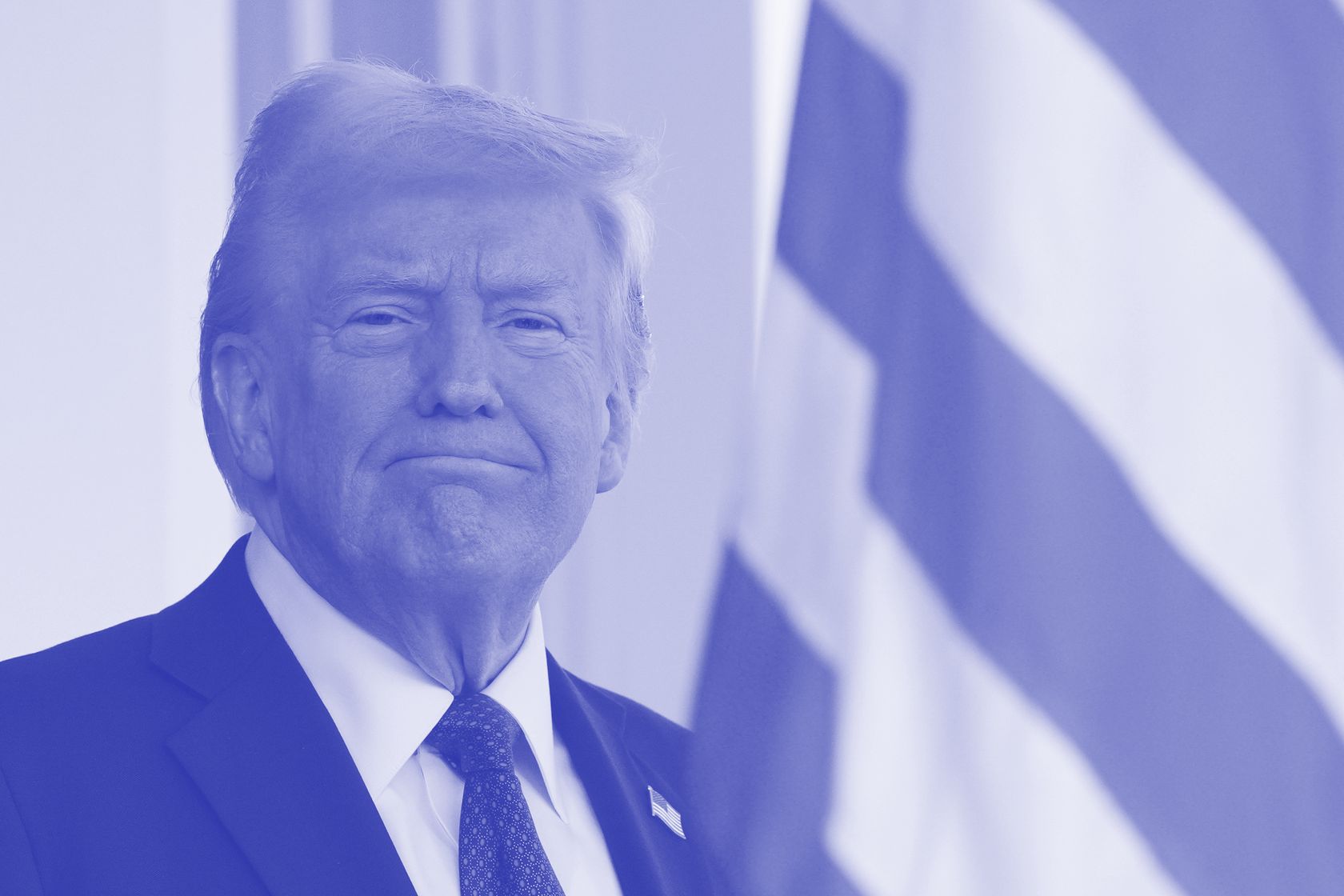
Trump tariffs: US President Donald Trump is imposing tariffs on key trading partners, confirming 25% duties on Canadian and Mexican imports from 4 March, along with a 10% tariff on Chinese goods. On Truth Social, he cited “very high and unacceptable” drug inflows, vowing the tariffs would take effect “as scheduled.” The measures were delayed a month after Canada and Mexico agreed to new border security steps. Trump also reaffirmed his 2 April reciprocal tariff plan, which aligns US import taxes with those of other countries. Canada and Mexico are seeking exemptions, while China has called for dialogue. In 2023, US-Canada trade was valued at USD920 billion, US-Mexico at nearly USD900 billion. Canadian energy products face a lower 10% tariff. Meanwhile, consumer confidence fell 7 points to 98.3, the sharpest drop since 2021, as tariff concerns grew. Trump insisted, “The proposed TARIFFS… will, indeed, go into effect, as scheduled.” (Donald Trump social media post)(Bloomberg)(Capital Brief)
2.
Market drag: US stocks fell as investors reacted to Nvidia’s earnings, rising jobless claims and Donald Trump’s tariff announcements. The S&P 500 and Nasdaq declined, weighed down by concerns over economic data, trade policy, and Nvidia’s 4.57% intraday drop after its earnings report was seen as good but not great, signalling tighter-than-expected margins. US jobless claims surged a higher-than-expected 22,000 to 242,000, the highest since October, with a spike in Washington DC claims, reflecting cuts at firms that do business with the government. Fourth-quarter GDP growth remained at the previously reported 2.3%, with core inflation revised up to 2.7%. Treasury yields rose and the US dollar strengthened as markets assessed economic data, Nvidia’s earnings and Trump’s confirmation of 25% tariffs on Canada and Mexico and an additional 10% tax on Chinese imports. (Bloomberg)(Reuters)
3.
Falling Star: The Star Entertainment Group is set to delay its half-yearly results due Friday and enter a trading halt, after the board was unable to sign off on accounts that say the company is a going concern, according to sources cited by The Australian and AFR. The Group has been under extreme financial pressure as it manages ongoing regulatory probes and a collapse in revenue. The failure to sign off on financial statements, for the second time in six months, suggests that CEO Steve McCann and his bankers have not been successful in raising short-term funding required to meet near-term payments, including payroll and interest payments. Per ASX listing rules, Star must publish its half-yearly results by close of business on Friday, or risk being suspended from trading. (The Australian)(AFR)(Capital Brief)
4.
Quantum scale: Amazon Web Services (AWS) unveiled Ocelot, a quantum computing chip designed to advance scalable quantum computers. The prototype tests AWS’s quantum error correction architecture, potentially reducing the qubits needed for error correction by up to 90% and lowering costs. Unlike conventional methods requiring a million physical qubits, AWS claims its approach could enable useful quantum computers with as few as 100,000. Developed at the AWS Center for Quantum Computing in Pasadena, California, its release coincided with a peer-reviewed paper in Nature. AWS director of Quantum Hardware Oskar Painter said the hardware-efficient design could cut quantum chip costs by 80% and accelerate practical quantum computing by up to five years. He added that Ocelot could achieve transformative societal impact with just one-tenth of the resources needed for standard error correction. (AWS)(Capital Brief)
5.
Chip lobbying: Microsoft’s president Brad Smith has urged the Trump administration to relax curbs on AI chip exports to “strategically vital markets.” In a Microsoft blog post, Smith lamented the Biden administration’s ‘AI Diffusion Rule caps’ as undermining two key priorities for the Trump administration: “strengthening US AI leadership and reducing the nation’s near trillion-dollar trade deficit.” The proposed system as it stands would give US allies a second-tier ranking (out of three possible tiers), which Microsoft argues would lead to countries turning to China for their advanced chips. Should the rules be left unchanged, Smith says “China will gain a strategic advantage in spreading over time its own AI technology, echoing its rapid ascent in 5G telecommunications a decade ago.” The WSJ reports that US government officials are now weighing steps to strengthen the restrictions while simplifying the export control rules. (Microsoft)(Wall Street Journal)
6.
Earning its stripes: Fintech giant Stripe launched a tender offer for employees and shareholders, valuing the company at USD91.5 billion ($146.3 billion). While below its 2021 peak of USD95 billion, the valuation marks a 41% increase from 2024. In their annual letter on Thursday, founders Patrick and John Collison said Stripe processed USD1.4 trillion in payments last year, up 38% from 2023. The company said it was profitable in 2024 and expects to remain so this year. It said its Revenue and Finance Automation Suite, led by Billing, was proving to be a key revenue generator. Billing, now used by over 300,000 companies to manage 200 million active subscriptions, is “emerging as the revenue engine of the AI era.” Meanwhile, Bloomberg reports investors are pressuring Revolut to approve a USD60 billion secondary share sale as demand for stakes in the fast-growing fintech surges ahead of its expected record USD1 billion profit. (Stripe)(Reuters)
7.
Oil spring: BP CEO Murray Auchincloss told the FT he plans to more than double the oil major’s market value, aiming for a market value of over USD200 billion ($318.9 billion) by the end of the decade. The company’s current market value sits just under USD89 billion. Earlier this week, BP announced it would abandon its plan to reinvent itself as a green energy company, and instead capitalise on “tremendous” demand for oil and gas. BP said that it will increase spending on oil and gas by USD10 billion annually, while cutting spending on renewables by 70%. Activist hedge fund Elliott Management revealed its USD4.8 billion stake in BP earlier this month. At 5%, the stake makes it BP's third largest shareholder. On Thursday reports emerged that Elliott is unsatisfied with BP’s new strategy, arguing that it falls short of expectations and is lacking in urgency. (Financial Times)(Bloomberg)(Capital Brief)
8.
ESG drain: The UK’s largest pension fund, The People’s Pension, moved £28 billion ($56.3 billion) in assets from State Street to Amundi and Invesco, citing the companies’ sustainability and responsible investment credentials. The fund awarded £20 billion to Amundi to manage in passive developed market equities, while Invesco will take over £8 billion in active fixed income investments. A company statement says that the mandates follow a review of its Responsible Investment Policy which was updated to include climate indices in March 2024. State Street is among a slew of Wall Street giants which have stepped back from environmental, social and governance programs that are out of favour with the current administration. State Street will continue to manage the remaining amount in the People’s Pension portfolio, which has a total of around £32 billion. The introduction of new asset managers will come into effect by the end of Q1. (The People’s Pension)(Capital Brief)
