Trump’s primetime Iran address has world holding its breath
Plus: Oil crisis set to double in April, IEA warns; Australia’s Sharon AI surges on USD1.3b GPU deal, Canva win; Musk’s SpaceX files confidential docs for historic IPO.


Good morning. Here’s what happened overnight and what you need to know today.

1.
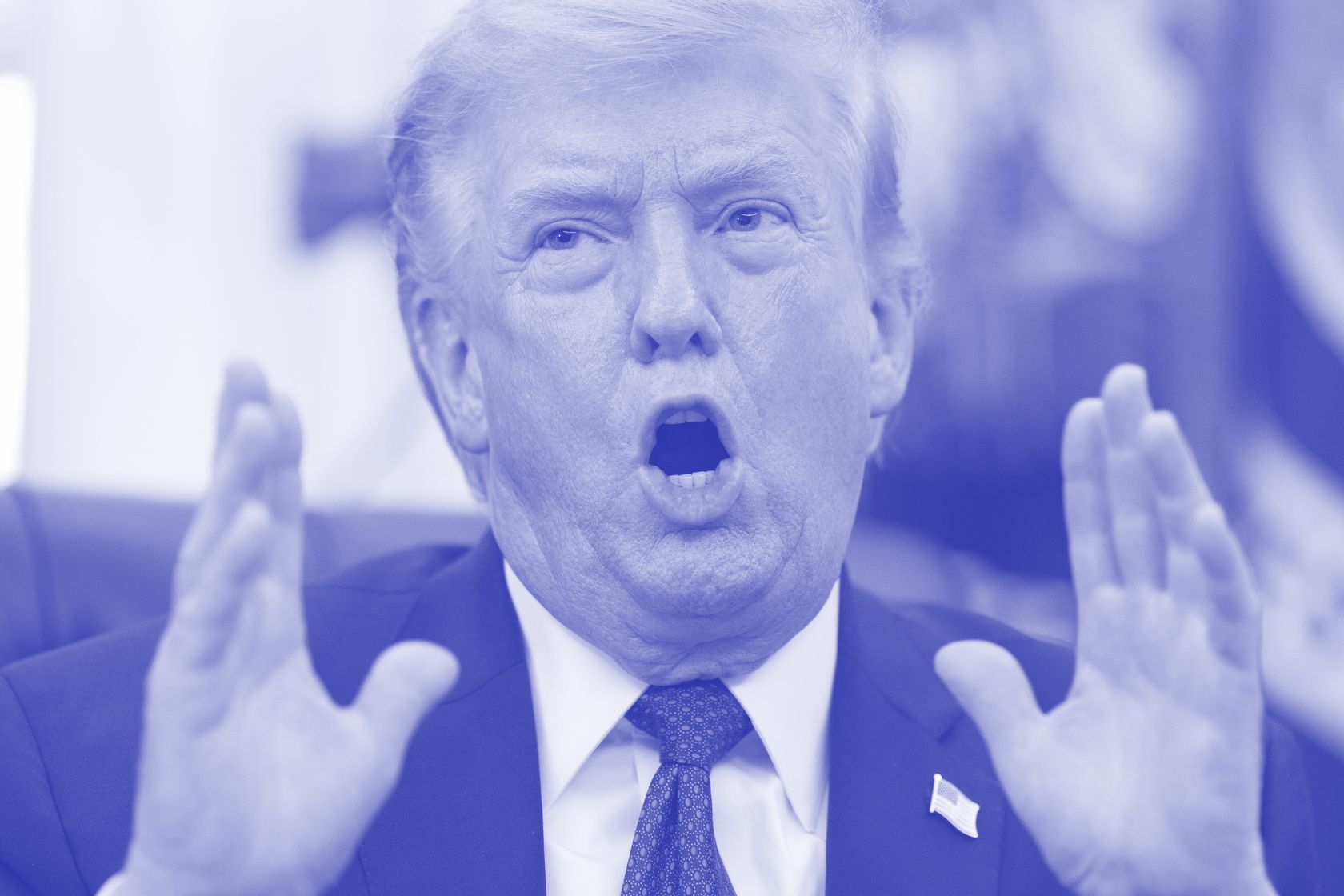
Chief message: Donald Trump sent fresh conflicting signals telling Reuters he no longer cares about Iran’s stockpile of near-bomb-grade uranium because it is “so far underground,” adding “we’ll always be watching it by satellite.” The comment was sharply at odds with his stated justification for the war, which centred on preventing Iran from building a nuclear weapon. Meanwhile, with hours to go before the US President delivers a national address on the Iran war, The New York Times also reported the Pentagon is doubling its Middle East fleet of A-10 “Warthog” attack planes, dispatching 18 additional aircraft to join roughly a dozen already in the region. Two Pentagon officials told the paper the planes could be used to help US ground forces seize territory near the Strait of Hormuz or Kharg Island, Iran’s main oil hub. Trump is scheduled to deliver the address at 10am AEDT, with reports he expects to confirm a two-to-three-week timeline to end its Iran campaign and continue criticism against NATO. Separately, Iran’s foreign ministry spokesman Esmaeil Baghaei denied in a statement, reported by state-owned network Press TV, that Tehran had requested a ceasefire, calling Trump’s claim to that effect “false and baseless.” Trump had posted on Truth Social that Iran’s “New Regime President” had asked for a ceasefire, which he would consider only “when Hormuz Strait is open, free, and clear.” (Capital Brief)(NYT)(Bloomberg)(AP)(FT)(Reuters)
2.
Crude hope: Wall Street rallied for a second consecutive day as hopes grew that the Iran war could be nearing its end, with the S&P 500 up 0.56%, the Nasdaq up 0.87% and the Dow up 0.45% in afternoon New York trading at time of writing. Brent crude briefly fell below USD100 a barrel before recovering to around USD101.55, as IEA executive director Fatih Birol said the global oil crisis in “April will be much worse than March”, with supply losses expected to be double because March oil supplies had benefitted from shipments already under way before the war started. Nike slumped after forecasting a surprise fourth-quarter sales drop including a projected 20% decline in China. Intel shares surged after agreeing to buy back Apollo Global Management’s 49% stake in its Ireland chip factory for USD14.2 billion. And Boeing shares also rose after inking a seven-year Pentagon deal to triple production of Patriot missile seekers. Elsewhere, Anthropic raced to contain the fallout after accidentally exposing the underlying source code behind its Claude Code agent on GitHub. It then issued more than 8,000 copyright takedown requests, the WSJ reported. (WSJ)(Reuters)(Bloomberg)
3.
SHAZ deal: Shares in Sharon AI Holdings surged over 27% to USD28.88 each after the Australian neocloud operator signed a USD1.25 billion ($1.8 billion) cloud infrastructure deal worth multiples of its entire market capitalisation. Under the five-year agreement with ESDS Software Solutions, Sharon AI will deploy approximately 8,200 NVIDIA B300 GPUs and 17.80 petabytes of VAST storage within its existing NEXTDC data centre in Australia, with delivery required by 16 September, 2026. ESDS holds an option to extend the contract for a further two years. Sharon AI does not build its own data centres but instead installs and operates equipment within existing infrastructure. It has secured up to 54 megawatts of capacity across multiple NEXTDC facilities in Melbourne and Sydney. The company listed on Nasdaq in February 2026 at USD30 per share, raising USD125 million, and Capital Brief reported in March the company was targeting an ASX listing in April or May, with Canaccord and Macquarie Bank engaged in that process. The contract announcement came alongside Sharon AI’s full-year 2025 results disclosing what it described as its first major customer win. “In January 2026, we signed our first major customer contract with lighthouse customer Canva and industry participant GMI Cloud US Inc,” Sharon AI said. “We are continuing the strong momentum and aiming to convert the pipeline of customers into signed agreements to materially scale the business.” Revenue grew to USD1.57 million from USD438,000 in 2024 and its net loss widened sharply to USD39.8 million from USD3.9 million. The bulk of that loss reflected a non-cash fair value movement on convertible notes issued last December. (Capital Brief)
4.
Project Apex: Elon Musk’s SpaceX has filed confidentially with the US SEC for what is expected to be the biggest IPO in history, putting the company on track for a June listing that according to reports could raise as much as USD75 billion ($108.1 billion) dwarfing Saudi Aramco’s USD29 billion record debut in 2019. Bloomberg previously reported the company could seek a valuation of more than USD1.75 trillion, after acquiring Musk’s AI startup xAI in a deal that valued the enlarged entity at USD1.25 trillion. The listing, which is internally codenamed Project Apex, has enlisted at least 21 banks in one of the largest underwriting syndicates assembled in recent years, Reuters reported citing unnamed sources. Those banks include Morgan Stanley, Goldman Sachs, JPMorgan, BofA and Citi serving as lead bookrunners and 16 banks in smaller roles including Barclays, Deutsche Bank, UBS, Macquarie, Mizuho and Royal Bank of Canada. SpaceX is reportedly considering a dual-class share structure and may allocate as much as 30% of the offering to retail investors. According to Bloomberg Intelligence, the company’s rocket and Starlink businesses generate the majority of revenue, approaching USD20 billion in 2026, with xAI likely to contribute less than USD1 billion. (Capital Brief)(Bloomberg)(Reuters)
5.
SaaS signal: Xero’s partnership with Anthropic may have handed the battered SaaS sector a lifeline, suggesting that even the most powerful AI disruptors may prefer to work with incumbent software companies rather than replace them. Investors are watching closely for whether others will follow suit. The deal was framed as bringing “Claude’s AI directly into Xero — and Xero’s financial data and tools into Claude.ai,” the company said. The partnership came less than two months after Anthropic’s product update prompted fears of a worldwide SaaS-pocalypse and sent Xero’s shares crashing. Milford portfolio manager Jason Kururangi, who holds Xero shares on behalf of clients, told Capital Brief the deal was “a bit of an endorsement of existing software companies” and suggested Anthropic had taken the view it would “rather be a B2B provider more broadly.” Wilson Asset Management analyst Hailey Kim said it was a positive signal but noted “there’s a reason why they are making this announcement, to signal to the market where they are positioned in this ecosystem. I wouldn’t be surprised if there are more announcements like this,” she added. Meanwhile, Anthropic boss Dario Amodei was in Canberra yesterday signing a memorandum of understanding with the federal government. (Capital Brief)
6.
Not so Sympli: On the same day PEXA effectively bid farewell to a decade-long effort to force it to face competition, a NSW regulator drastically ramped up pressure on the ASX-listed company’s margins and tanked its stock. While escaping the threat of competition, PEXA (which processes 90% of all Australian property transfers) now faces the prospect of having its pricing tightly regulated by IPART. As UBS analyst Kieran Chidgey pointed out in a note, IPART’s proposed building block framework for more tightly regulating electronic lodgement network operator pricing “is significantly uncertain.” He downgraded PEXA from buy to neutral and cut his 12-month price target from $17.50 to $15.70. PEXA shares closed down 14.7% at $12.97. PEXA told the ASX in a statement the proposal “does not constitute a decision, is open to change and contains illustrative examples which should not be read as guidance.” The regulatory pressure came hot on the heels of electronic conveyancing regulator ARNECC announcing it would not proceed with interoperability reforms that would have connected PEXA’s network with smaller rival Sympli. Conveyancer Angie Nguyen told Capital Brief she doubted the IPART proposal would amount to anything, however, saying regulators lacked meaningful enforcement powers. (Capital Brief)
7.
Moon bound: Four NASA astronauts are set to lift off from Kennedy Space Center in Florida in the first crewed mission to the moon in more than 50 years. It marks the biggest milestone yet in the US space agency’s race to establish a permanent human presence on the lunar surface before China. Weather conditions were 80% favourable at time of writing for the two-hour launch window, which opens at 6:24pm local ET time (9:24am AEDT). If the launch is delayed, NASA has backup opportunities through 6 April, after which it would have to wait until at least 30 April, according to reports. The crew, including commander Reid Wiseman, pilot Victor Glover, mission specialist Christina Koch and mission specialist Jeremy Hansen, will not land on the moon. Instead, they’ll travel aboard the Lockheed Martin-built Orion capsule atop Boeing’s Space Launch System rocket on a 10-day journey that Reuters reported will take them some 252,000 miles (406,000 kilometres) into space, surpassing the record of roughly 248,000 miles set by the Apollo 13 crew in 1970. The mission includes several other historic firsts: Koch will be the first woman to fly near the moon, Glover the first Black astronaut to do so and Hansen the first Canadian. NASA administrator Jared Isaacman has a decade-long USD30 billion plan to build a permanent base on the moon, with a first lunar landing targeted for 2028 and crewed missions to follow at least once a year. Meanwhile, plans for the previously planned Lunar Gateway orbital space station have been reportedly shelved as part of the revamped programme. (NYT)(FT)(Reuters)(BBC)
8.
Citizen ship: Donald Trump became the first sitting US president to attend Supreme Court oral arguments, watching from the public gallery as justices signalled scepticism of his executive order to end automatic birthright citizenship. Justices from both the conservative and liberal wings questioned Solicitor General Daniel John Sauer, who argued the 14th Amendment’s citizenship clause should apply only to children with at least one parent who is a citizen or permanent resident. The US president departed about 13 minutes into the presentation by the lawyer challenging his order, Cecillia Wang, herself a birthright citizen. Trump subsequently posted on his social media site that the US was “the only Country in the World STUPID enough to allow ‘Birthright’ Citizenship!” a claim Reuters noted contrasts with Pew Research Center data showing 32 other countries have similar policies. If upheld, Trump’s order would affect an estimated 250,000 children born to undocumented immigrants and temporary visitors each year. Wang argued the rule was “enshrined in the 14th Amendment to put it out of the reach of any government official to destroy.” A ruling is expected by late June or early July. (WSJ)(NYT)(Bloomberg)(FT)(Reuters)
