US and Iran hold first talks as Trump threatens hit
Plus: Starmer considers resigning as UK prime minister; Aussie auctions go cold as buyers bail; KPMG chairman fights to keep job as pressure mounts.


Good morning. Here’s what happened overnight and what you need to know today.
1.
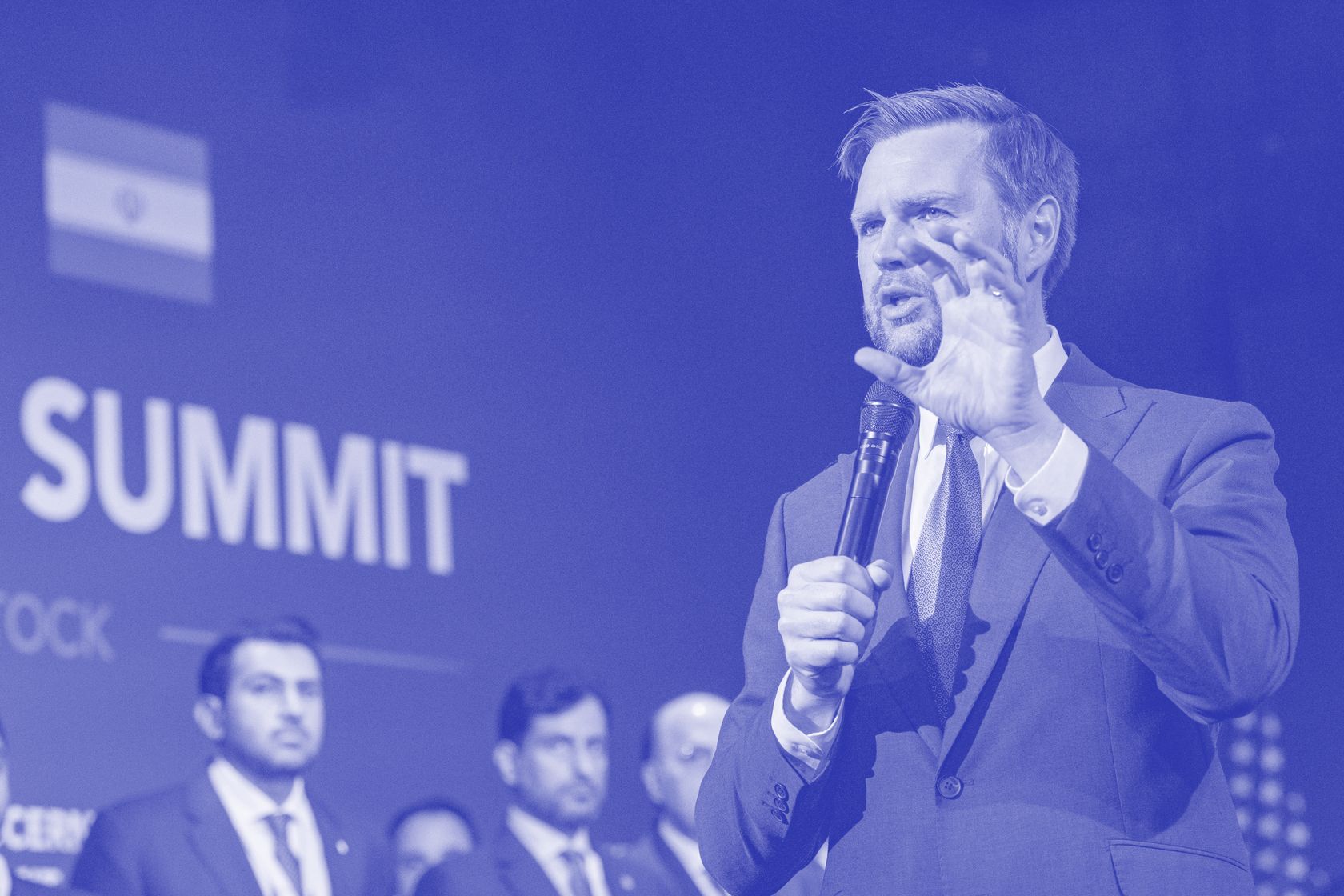
Pressure point: Negotiators for the US and Iran met in Switzerland for a little over an hour on Sunday (Monday AEST) as they sought to turn a 60-day ceasefire into a lasting peace, but it was quickly apparent how far apart the two sides remained. Iranian negotiators insisted on an end to the war between Israel and Iran-backed Hezbollah in Lebanon as a condition for further talks, the NYT reported, citing Iranian state media. The talks were held at the Qatari-owned Bürgenstock resort near Lake Lucerne and mediated by Pakistani and Qatari officials. US Vice President JD Vance, leading the American delegation, told reporters the US wanted to “turn over a new leaf”. But as Vance hailed “great progress” on Lebanon, Donald Trump posted that the US would hit Iran “very hard again” if it did not rein in Hezbollah. Iran’s lead negotiator Mohammad Bagher Ghalibaf responded Trump should be careful about issuing threats and that Iranian armed forces were prepared to respond. The talks were further strained by Iran’s announcement on Saturday that it had again closed the Strait of Hormuz over Israel’s attacks in Lebanon, though US Central Command disputed that the waterway was shut. (NYT)(AP)(Reuters)(FT)(Bloomberg)
2.
End game: Keir Starmer is on the brink of resigning as UK prime minister, according to multiple reports. The move could clear the way for Andy Burnham, who has just won a by-election returning him to parliament and who describes his economic model as ’business-friendly socialism’, to take over. According to the FT, colleagues expect Starmer to agree to an “orderly” timetable for a transition of power in the face of a growing cabinet revolt and ebbing support from Labour MPs. Business secretary Peter Kyle told Sky News that Starmer was reflecting on “political realities”, while Reuters reported Starmer could decide as soon as Monday whether to step aside or fight a leadership contest, citing one source. The pressure followed Burnham’s decisive Makerfield by-election victory last week, and came amid reports that foreign secretary Yvette Cooper had privately called on Starmer to stand down and that his home secretary and energy secretary had also urged him to set an exit date. According to Bloomberg, a clear majority of cabinet believe it is inevitable Burnham will replace Starmer. US President Donald Trump, no admirer of Starmer, seized the moment, posting that Starmer would resign, having “failed badly” on immigration and energy, before adding, “I wish him well!” (The Observer)(FT)(Reuters)(Bloomberg)
3.
Under hammer: Australia’s auction clearance rates have fallen below 50% for the first time since April 2020, with the weighted average hitting 47% over the past week. Cotality research director Tim Lawless said the final figure, due Wednesday, could land in the low-40% range, since preliminary data is typically revised down by about 5.5%. Lawless attributed the slide to three interest rate rises earlier this year, a crisis in confidence amid the Iran war and higher inflation, plus a further post-budget blow to confidence. He said vendors were increasingly unwilling to test the market under auction conditions, with 23.6% of auctions withdrawn last week and 48% sold beforehand. It comes as the RBA kept rates on hold at 4.35% this month after three increases this year. Hoping to help first home buyers, Labor plans negative gearing restrictions and a minimum 30% tax on capital gains from July 2027. “For the young Australian who yesterday turned up at an auction, unlike last year, they weren’t competing with investors who had taxpayer support. So that if it was another $20,000 or $50,000, that investor could go that bit higher and outbid the first home buyer,” Albanese told Sky News. (ABC)(AFR)
4.
Audit trail: KPMG Australia faces mounting pressure this week after a bruising parliamentary hearing left its chairman exposed and its handling of a data-misuse scandal under fresh scrutiny. Chairman Martin Sheppard agreed late on Friday to hand over investigation files he had spent the day refusing to release on legal privilege grounds, setting up the release of internal reports by law firms Ashurst and Allens that could deepen the firm’s troubles. The hearing confirmed staff shared sensitive Optus information with a separate team bidding for rival Telstra’s audit contract, a breach of ethics, widening the scandal that began when Labor senator Deborah O’Neill aired whistleblower claims under parliamentary privilege in March. In submissions released late Friday, the whistleblower alleged a senior KPMG figure in an overseas arm of the firm exposed his identity the day after O’Neill’s March speech. He added the conduct could breach whistleblower-protection laws and carry criminal or civil consequences in two jurisdictions. With KPMG having already lost chief executive Andrew Yates and audit head Julian McPherson, attention has also turned to whether Sheppard survives. Committee members even urged him to resign during a break. Greens senator Barbara Pocock is also pushing for the government to separate audit and consulting arms and to wind back the partnership structure that keeps the Big Four outside the corporate regulator’s reach. (Capital Brief)(Reuters)(Bloomberg)
5.
Coconut run: TPG Capital sold the drinks business behind coconut water brand Cocobella and Rokeby protein shakes to France’s Danone in a deal that delivers the private equity firm a nearly $2 billion payday, The Australian Financial Review reported. Danone was advised by UBS, TPG by Bank of America. Euronext Paris-listed Danone will add Melbourne-based Made Group to a portfolio spanning high-protein yoghurt YoPRO, Evian mineral water, Silk plant-based milk and baby formula Aptamil. The purchase, expected to be announced this week, will see TPG paid five or six times its initial investment, the paper said. Made was founded in 2005. TPG acquired it from The Coca-Cola Company, Coca-Cola Amatil and its founders in 2021, when Made was delivering EBITDA of $22.6 million. It generated earnings of about $110 million in the last financial year. Made chief executive Amanda Butler was expected to stay on under Danone’s ownership, while co-founders Luke Marget and Matt Dennis will both sell out. (AFR)
6.
Spin cycle: The University of Sydney is set to launch a venture capital fund to commercialise the deep tech and biotech spin-outs developed within its walls. The university is calling on the venture capital and superannuation sectors to help design the vehicle. Deputy vice-chancellor for research Mike Ryan told The Australian Financial Review that academics were producing investible research faster than existing capital could support, so the university wanted a later-stage fund to make initial and follow-on investments. It already runs a $25 million pre-seed fund off its balance sheet that has backed 12 ventures, some developing treatments for cardiovascular disease and type 1 diabetes, and over the past decade has produced 66 spin-outs, including Kinoxis Therapeutics and quantum software startup Q-CTRL. Separately, Street Talk reported Sydney drone-detection startup Visionary Machines is preparing to list on the ASX. It reportedly sent Canaccord Genuity and MA Moelis out last week to raise $6 million in a pre-IPO round, telling investors to think about a $40 million post-money valuation cap. The round was upsized to $9.5 million and closed on Friday, with listing expected in about six months. (AFR)
7.
No begging: Italian Prime Minister Giorgia Meloni escalated her feud with Donald Trump, abandoning years of cautious deference to accuse the US president of lying and treating the enemies of the West with more indulgence than his allies. The spat was triggered when Trump told Italian broadcaster La7 that Meloni had “begged” him for a photo at last week’s G7 summit in France, a claim she called “completely made up”. Meloni responded that neither she nor Italy ever begs and advised Trump to focus on his own poll ratings rather than hers. Trump escalated on Truth Social, insisting she had asked “over and over" for the photo and complaining that Italy refused to let the US use its air bases during the Iran war. Italian foreign minister Antonio Tajani cancelled a planned US visit over Trump’s “offensive words”, and a US-Italy business conference in Miami was also called off. The rupture comes as Meloni gears up for a re-election battle in which her closeness to Trump, now seen as electorally toxic in Europe, has become a liability. The two are due to meet again at next month’s NATO summit in Turkey. (Bloomberg)(Reuters)(FT)
8.
Too hot: Economists will be weighing the path ahead for inflation, the labour market and the RBA’s next move this week as critical CPI and unemployment data lands. The worst inflation fears from the Middle East conflict have, so far, not materialised, but CPI is still running too hot. Ahead of Wednesday’s May CPI print, Commonwealth Bank is tipping headline inflation to drop to 4.1% from 4.2%, largely on lower fuel prices, while the trimmed mean edges up to 3.5% with risks to the upside, Capital Brief reported. UBS, which a month ago warned of a shock comparable to 2022, now sees those measures easing alongside lower global oil prices, but tips the trimmed mean to lift to 3.6%, the fastest annual pace since 2024. Westpac, ANZ, NAB, Goldman Sachs and AMP forecasts cluster around a 3.5% to 3.6% trimmed mean. Adding a fresh variable, the federal government extended its fuel excise cut over the weekend by one month at half the rate, which will reshape predictions for the months ahead. Thursday also brings the closely watched labour force data for May, with economists eyeing unemployment around 4.4%. (Capital Brief)
