US-China trade talks stretch into second late night
Plus: World Bank slashes 2025 growth forecast to 2.3%; Meta recruits Scale team to build AI ‘superintelligence’ lab, reports say; ABC axes Q+A after nearly two decades on air.

Good morning. Here's what happened overnight and what you need to know today.
1.
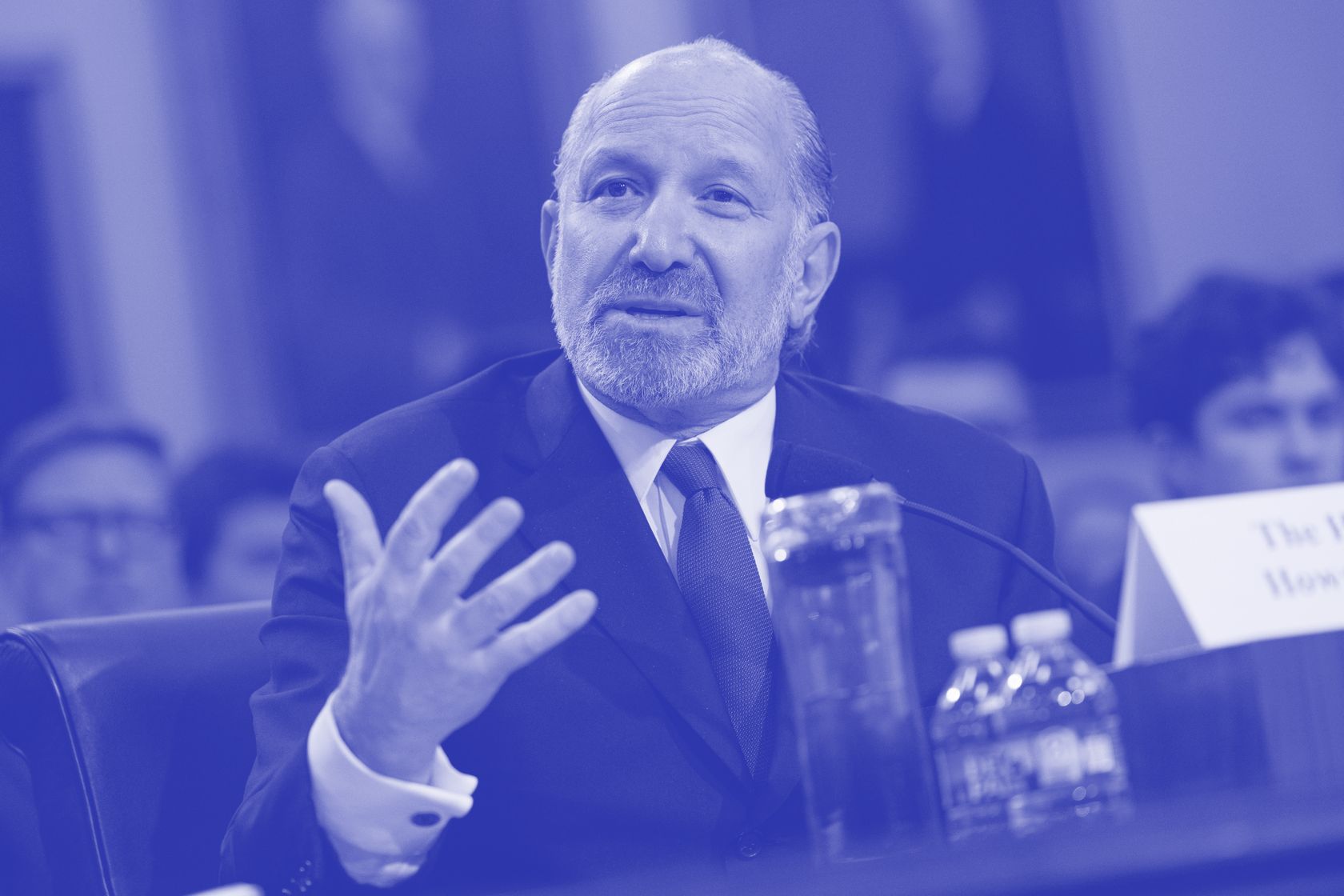
Trade talks: Wall Street investors pushed stocks higher as they tracked US-China trade talks, buoyed by Commerce Secretary Howard Lutnick’s upbeat remarks that negotiations were going well. Trade talks between the US and China stretched through a second full day and into the evening in London on Tuesday, as the two sides pushed for a breakthrough on duelling export controls that have threatened to unravel a delicate tariff truce. The meetings at Lancaster House, led by US Treasury Secretary Scott Bessent and Chinese Vice Premier He Lifeng, paused after more than five hours and were due to resume at 8 pm local time (5am AEST). Earlier on Tuesday, Lutnick said the discussions were “going well” and were expected to continue all day. The S&P 500 closed 0.55% higher. (Reuters)(FT)
2.
Tariff cuts: The World Bank cut its 2025 global growth forecast by 0.4 points to 2.3%, citing rising tariffs and uncertainty as major headwinds. Growth projections were downgraded for nearly 70% of economies, including the US, China and Europe, as well as six emerging market regions. Global trade growth is expected to slow to 1.8% in 2025, down from 3.4% in 2024 and well below the 2000s average of 5.9%. Inflation is forecast at 2.9%, still above pre-COVID levels. Through 2027, global GDP growth is projected to average just 2.5%—the weakest decade since the 1960s. The bank warned that rising trade barriers could result in “global trade seizing up,” a “collapse in confidence,” and “turmoil in financial markets,” though the risk of a global recession remains under 10%. (Capital Brief)(World Bank)
3.
Super AI: Meta has agreed to take a 49% stake in data-labeling firm Scale AI for USD14.8 billion ($22.7 billion), The Information reported, placing CEO Alexandr Wang in a top role inside Meta. The deal, not yet finalised, values Scale at USD28 billion, up from USD13.8 billion last year. Wang will lead a new “superintelligence” lab at Meta alongside other top Scale technical staff, according to financial media reports. Bloomberg said Zuckerberg, frustrated by the response to Meta’s Llama 4 model, is personally recruiting about 50 staff for the lab. Scale generated about USD870 million in revenue last year and expects over USD2 billion in 2025, but missed previous sales and profit targets and lost about USD150 million before interest, taxes, depreciation and amortisation, The Information said. Jason Droege, Scale’s chief strategy officer and a former Uber Eats executive, has been in talks to become Scale’s new CEO, a source said. (Capital Brief)(The Information)(Bloomberg)(FT)
4.
‘I’ll take that as a comment’: The ABC is set to pull the plug on current affairs panel show Q+A after 17 seasons and nearly two decades on air, ending years of speculation about the program’s future. The show went on break at the end of May and was scheduled to return in August. However, sources confirmed to Capital Brief’s John Buckley, who first broke the news, that ABC management has decided to discontinue the program. The show, founded by executive producer Peter McEvoy and first aired in May 2008, screened on Monday evenings and has been hosted on a permanent basis since 2024 by Patricia Karvelas. Karvelas was the show’s seventh host, following Stan Grant, Dan Bourchier, Virginia Trioli, Insiders host David Speers, Hamish Macdonald, and founding host Tony Jones, who led the program for more than a decade. It remains unclear if the show will return to air for a final run as scheduled. (Capital Brief)
5.
Fed bet: Treasury Secretary Scott Bessent is now among the contenders to replace Jerome Powell as chair of the Federal Reserve, Bloomberg reported, citing people familiar with the matter. President Donald Trump said Friday he would name a successor “very soon” to replace Powell, whose term ends in May 2026. The shortlist has included Kevin Warsh, a former Fed official interviewed by Trump for Treasury secretary in November. Two sources said formal interviews have not begun. A senior administration official disputed the report without providing specifics. As Treasury chief, Bessent would traditionally help lead the selection process, though it’s unclear if he would recuse himself. “I have the best job in Washington,” Bessent said in response for a request of comment by Bloomberg. “The president will decide who’s best for the economy and the American people.” Steve Bannon said he was “a safe pair of hands for global capital markets.” (Bloomberg)
6.
NRF reconstructed: Australia’s new Industry and Science Minister Tim Ayres has flagged a revamp of the government's $15 billion manufacturing fund and backed the process behind its near-billion dollar investment in Silicon Valley startup PsiQuantum. Speaking to Capital Brief, Ayers also shed new light on the government's plans to regulate AI and the role unions might play in it, defending its subsidies for domestic solar panel manufacturing. Ayres, who was promoted to the cabinet-level portfolio last month, replacing Ed Husic, said he had met with the National Reconstruction Fund's chair Martijn Wilder and CEO David Gall in recent weeks and was “very focused on the operations of that fund,” pledging to accelerate investment in sovereign industrial capability. On PsiQuantum, Ayers said: “We're certainly not involved in picking losers … PsiQuantum is a really important investment, but we’ve got world-leading quantum technology across the country as well.” (Capital Brief)
7.
AI agency: Employees at the US Securities and Exchange Commission (SEC) are bracing for an incoming restructuring as the Department of Government Efficiency (DOGE) moves forward with its plan to introduce AI. The Information reports that the reorganisation will take shape in the coming months and will see the agency solicit pitches from AI companies including OpenAI, Anthropic, Meta and Google to provide the AI technology. It is unclear whether more layoffs will be involved, as 15% of the SEC’s employees already opted for a deferred resignation offer earlier this year. While Elon Musk played a pivotal role in the establishment of DOGE under Trump’s cost-cutting mandate, his recent departure and spat with the President raises questions about DOGE’s future. The news comes as Defense Secretary Pete Hegseth told Congress that the Pentagon’s collaboration with DOGE found USD6 billion ($9.2 billion) in cuts from the agency’s budget of nearly USD1 trillion. (The Information)(Bloomberg)
8.
Skittish British: UK unemployment rose to a four-year high in the lead up to increases in payroll taxes and minimum wage in April, highlighting strains in the country’s labour market. Data from the UK’s Office for National Statistics (ONS) saw the unemployment rate edge up to 4.6%, a four-year high, up from 4.5% in the three months to March. The largest contractions in payroll numbers were felt in sectors most exposed to the new policy moves introduced by Chancellor Rachel Reeves’ budget policies, including retail and hospitality. Meanwhile, the latest report from the British Retail Consortium and KPMG showed that May retail sales in the UK rose just 1% year-on-year, the slowest growth in 2025 so far, as consumers trim their spending. Also on Tuesday, a Bank of England official flagged that Brits are hoarding cash in the face of extreme uncertainty and increasing concerns about network outages. (Capital Brief)(ONS)(British Retail Consortium & KPMG)(FT)(Bloomberg)
