US states sue TikTok over child addiction
Plus: China’s rally crumbles after policy letdown, markets hit; Albanese apologises for Tourette’s jibe as comment sparks uproar; Aussie startups face VC funding crunch.


Good morning. Here's what happened overnight and what you need to know today.

1.
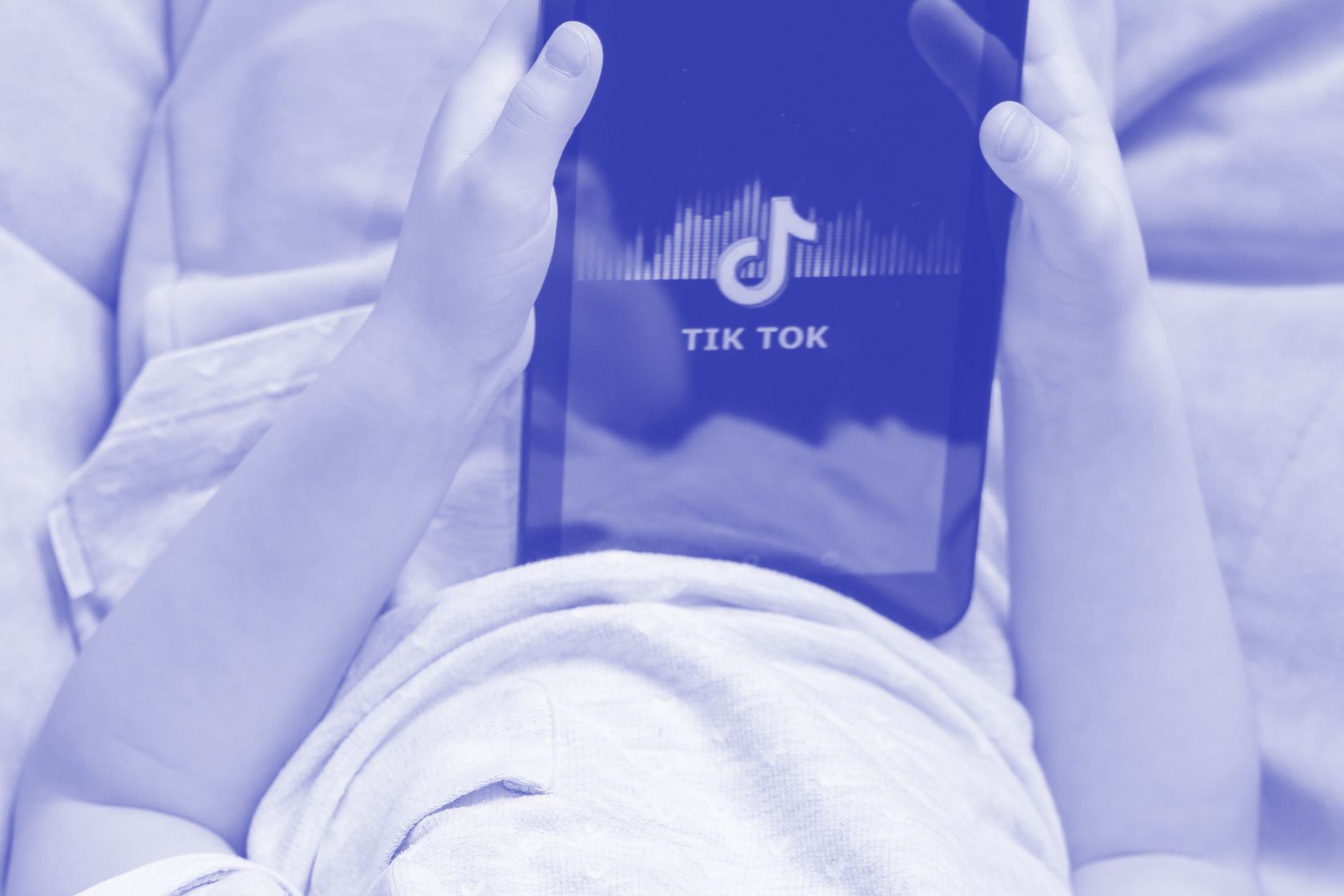
TikTok sued: Thirteen US states and Washington DC sued TikTok, accusing the social media giant of intentionally fostering addiction among younger users through its algorithms, Reuters reported citing the documents. The lawsuits, filed across various states, argue that TikTok's addictive design harms children's mental health and is driven by profit. California Attorney-General Rob Bonta said “TikTok intentionally targets children because they know kids do not yet have the defenses or capacity to create healthy boundaries around addictive content." The lawsuits argue TikTok bakes in harmful and addictive features into the platform children use so that they are hooked. It singles out features like endless scrolling, beauty filters and autoplay. "TikTok cultivates social media addiction to boost corporate profits," Bonta added. TikTok disputes the allegations, saying the company includes safety measures by default in the platform including screen time limits for minors under 16. (Reuters)
2.
Let down: China’s stock market rally fizzled after a press conference by the National Development and Reform Commission on Tuesday disappointed expectations for more fiscal stimulus. “A great deal of hope has been built into the strong rally in recent weeks and we now need to see additional government policy action to support the uptrend," said Vasu Menon, managing director of investment strategy at OCBC in Singapore. Hong Kong’s Hang Seng Index, which has seen its steepest rally in a generation over recent weeks, dropped 9.4%, its worst day since 2008. The Hang Seng Tech index tumbled 12.8%. The disappointment spread into broader markets, pushing the Australian dollar 0.5% lower along with industrial metal prices, including iron ore. Brent crude was 4% lower to USD77.41 ($114.84), and European miners and luxury sector stocks pushed shares in the continent to two-week lows. US equities bucked the trend, trading higher, led by tech. (Capital Brief)
3.
PM’s jibe: Anthony Albanese apologised after being heavily criticised for sarcastically asking Shadow Treasurer Angus Taylor if he has Tourette syndrome. During a heated Question Time, opposition treasury spokesman Angus Taylor pressed Albanese to rule out tax and negative gearing changes in his housing policy reforms. A frustrated Albanese sarcastically said: “This nonsense that they carry on with ... Have you got Tourette’s or something? You know you just sit there, babble, babble, babble.” Facing an immediate lashing for the comments, the prime minister took back his words, saying, “I withdraw. I withdraw. I withdraw and apologise.” Later in the evening, before an almost empty chamber, he elaborated on his apology. “Today, in Question Time, I made comments that were unkind and hurtful… it shouldn't have happened. And I also want to apologise to all Australians who suffer from this disability. I regret saying it. It was wrong, it was insensitive, and I apologise.” (Capital Brief)
4.
Funding down: Australian startups raised $695 million across 92 venture capital deals in Q3 2024, according to the latest Cut Through Quarterly report. That is a big drop in funding compared to the previous quarter where $1.5 billion was raised, despite an increase in the total number of deals, which rose to a five-quarter high, with 92 venture capital deals and 39 accelerator rounds announced. Fintech maintained its position as the top-funded sector for the second consecutive quarter, while Climate Tech led in deal volume. The funding decline was attributed to the absence of mega-deals over $100 million, which have significantly influenced quarterly fluctuations. Despite this, investor sentiment continues to improve, with 49% of investors describing the funding market as more favourable compared to last quarter. Seed-stage deals were particularly active, accounting for a third of all announced non-accelerator investments. (Capital Brief)
5.
Short exposed: Roblox shares fell over 9% after short-seller Hindenburg Research accused the gaming platform of inflating key metrics and prioritising growth over child safety. Hindenburg's report claims Roblox has exaggerated daily active user figures since it listed in 2021 by counting bots and multiple accounts as unique users. A consultant hired by Hindenburg analysed 30.4 million daily users and found engagement hours significantly lower than reported, flagging “zombie” accounts that artificially boosted engagement data. The report also cited predatory behaviour facilitated by lax sign-up processes. A Roblox spokeswoman rejected the claims, telling Reuters they were “simply misleading” and that the authors of the report “have an agenda.” “We firmly believe that Roblox is a safe and secure platform and in the financial metrics we report,” the spokeswoman said. (Capital Brief)
6.
Buyer leverage: Barrenjoey proposed changes to bank’s risk-weighting systems for mortgages to help first home buyers. In a submission to a Senate inquiry, the investment firm suggests rebalancing the risk-weighting system, which could lower interest rates and boost borrowing capacity for younger buyers, without increasing overall capital requirements. The inquiry, chaired by Liberal Senator Andrew Bragg, was launched by the Coalition to address concerns that banks have become too risk-averse in property lending. Barrenjoey's model predicts savings of $37,300 on a $600,000 mortgage over its 30-year life and a slight increase in borrowing capacity for first home buyers. (Capital Brief)
7.
ASEAN stalwart: Indonesia’s next leader, Prabowo Subianto, is poised to reshape ASEAN’s geopolitical landscape with implications for Australia’s strategic interests, though Capital Brief’s Finn McHugh reports he will skip this week’s key regional summit in Laos. As China’s aggression grows and the West pushes back, Anthony Albanese is expected to support Southeast Asia's defiance against Beijing, following an alleged Chinese attack on Vietnamese fishermen. But big questions remain over the direction of Indonesia, one of ASEAN’s main stalwarts, under Prabowo, who is currently defence minister. Prabowo’s expected engagement in geopolitics, compared to his predecessor Joko Widodo, could lead to challenges for Australia. (Capital Brief)
8.
US hydro: A Harvard University study challenges the cost-effectiveness of hydrogen as a fuel in the US, citing high production, storage and transportation costs, The Wall Street Journal reported. The study, published in the scientific journal Joule, suggests that capturing carbon from the atmosphere is a more viable alternative, with green hydrogen costing between USD500 ($741.75) and USD1,250 per metric tonne of carbon dioxide removed, compared to USD100 to USD1,000 for carbon capture and storage. The study, led by Roxana Shafiee, a postdoctoral researcher at the Harvard University Center for the Environment, also points to the challenges of the hydrogen supply chain. The report comes a week after the International Energy Agency said global hydrogen demand reached 97 million tonnes in 2023, up 2.5% from the previous year. Industry leaders believe green hydrogen might instead find success in regions rich in renewables like Brazil and Australia. (WSJ)
